- Languages
- हिंदी | Hindi












Head Coach
-
1st Test, Pakistan in England, 3 Test Series, 2026 at Leedsnotify
 England
 PakistanWed, Aug 19, 2026 - 3:30 PM IST
 -
2nd Test, Pakistan in England, 3 Test Series, 2026 at LondonnotifyEnglandPakistanThu, Aug 27, 2026 - 3:30 PM IST
-
3rd Test, Pakistan in England, 3 Test Series, 2026 at BirminghamnotifyEnglandPakistanWed, Sep 9, 2026 - 3:30 PM IST


-
 Abdul Samad Batsman
 -
Abrar Ahmed Bowler
-
 Babar Azam Batsman
 -
Faheem Ashraf All-Rounder
-
Faisal Akram Bowler
-
 Fakhar Zaman Batsman
 -
Ghazi Ghori Wicket-Keeper
-
Haris Rauf Bowler
-
Hussain Talat All-Rounder
-
Khawaja Nafay Batsman
-
Maaz Sadaqat All-Rounder
-
Mohammad Nawaz All-Rounder
-
Mohammad Rizwan Wicket-Keeper
-
Mohammad Wasim Bowler
-
Naseem Shah Bowler
-
Saad Masood All-Rounder
-
Sahibzada Farhan Batsman
-
Saim Ayub All-Rounder
-
Salman Agha All-Rounder
-
Salman Mirza Bowler
-
 Shadab Khan All-Rounder
 -
 Shaheen Afridi Bowler
 -
Shamyl Hussain Batsman
-
Usman Khan Wicket-Keeper
-
Usman Tariq Bowler
-
3rd ODI, Pakistan in Bangladesh, 3 ODI Series, 2026 at Dhaka, Mar 15, 2026
 Bangladesh290/5 (50.0)
 Pakistan279 (50.0)Bangladesh beat Pakistan by 11 runs
 -
2nd ODI, Pakistan in Bangladesh, 3 ODI Series, 2026 at Dhaka, Mar 13, 2026Bangladesh114 (23.3)Pakistan274 (47.3)Pakistan beat Bangladesh by 128 runs (DLS method)
-
1st ODI, Pakistan in Bangladesh, 3 ODI Series, 2026 at Dhaka, Mar 11, 2026Bangladesh115/2 (15.1)Pakistan114 (30.4)Bangladesh beat Pakistan by 8 wickets
-
Super 8 - Match 10, ICC Men's T20 World Cup, 2026 at Kandy, Feb 28, 2026
 Sri Lanka207/6 (20.0)Pakistan212/8 (20.0)Pakistan beat Sri Lanka by 5 runs
 -
Super 8 - Match 5, ICC Men's T20 World Cup, 2026 at Kandy, Feb 24, 2026
 England166/8 (19.1)Pakistan164/9 (20.0)England beat Pakistan by 2 wickets
-
1ICC Cricket World Cup1992
-
1ICC Champions Trophy2017
-
1ICC World Twenty202009
Pakistan Stats
-
Most Runs
No. Player Score 1 
 Younis Khan
10099 2  Javed Miandad
8832 3
Inzamam-ul-Haq
8829 -
Most Wickets
No. Player Runs 1
Wasim Akram
414 2
Waqar Younis
373 3
Imran Khan
362 -
Most Man of the Matches
No. Player 50s 1
Wasim Akram
17 2
Imran Khan
11 3
Younis Khan
10 -
Most Man of the Series
No. Player 100s 1
Wasim Akram
5 2
Imran Khan
6 3  Yasir Shah
5 -
Highest Scores
No. Player Avg 1
Hanif Mohammad
337 2
Inzamam-ul-Haq
329 3
Younis Khan
313 -
Best Bowling Figures
No. Player SR 1
Abdul Qadir
9/56 2
Sarfraz Nawaz
9/86 3
Yasir Shah
8/41




About Pakistan
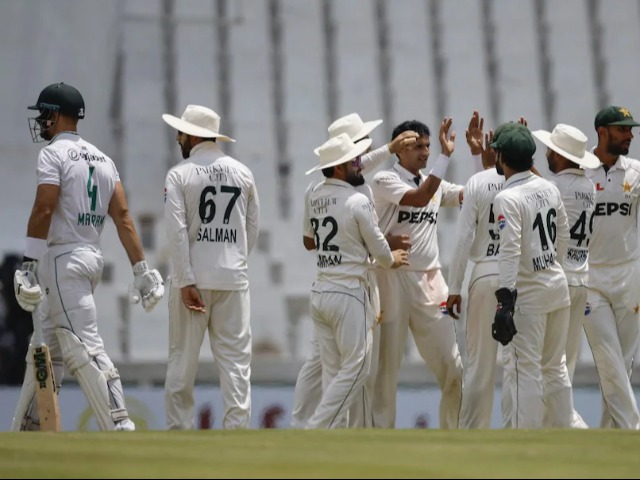
The Pakistan cricket team is administrated by the Pakistan Cricket Board and is a full member of the International Cricket Council with Test and one-day international status. Cricket in Pakistan has been played well before the first team was granted Test playing status. Their first match took place in Delhi against India in 1952 while their first international tour was to England in 1954.
Down the years, Pakistan emerged as a formidable opposition winning the Cricket World Cup in 1992 and being runners-up in the 1999 edition of the same. The country has a history of producing several top-notch bowlers such as Fazal Mahmood, Sarfaraz Nawaz, Imran Khan, Abdul Qadir, Wasim Akram, Waqar Younis and Shoaib Akhtar. The likes of Hanif Mohammad, Saeed Anwar, Mohammad Yousuf, Inzamam-ul-Haq and Javed Miandad have stamped their authority with the willow for Pakistan as well.
The 2007 ICC Cricket World Cup was one of the biggest upsets in World Cup history when Pakistan was knocked out of the competition in a shock defeat to Ireland. The next day, a greater tragedy befell the team when coach Bob Woolmer was found dead in his hotel room in Jamaica. The then skipper Inzamam-ul-Haq resigned from his duties and from one-day internationals subsequently. With a younger side, Pakistan began picking up the pieces and started making positive strides in the inaugural ICC World Twenty20 later that year. The team, however, had to contend with second place after losing to India in a nail-biting final. They compensated for this loss by winning the title in 2009 where they beat Sri Lanka in the finals.
In the 2011 ICC Cricket World Cup, Shahid Afridi led Pakistan to the semi-finals but the team lost to arch-rivals India in a nerve-wracking encounter, which ultimately brought an end to their campaign.
History was created in 2016 when Pakistan, under the captaincy of Misbah, climbed up to the no. 1 spot in the Test rankings for the first time. It was, though, for a brief time only. They haven't quite maintained the same amount of form since the retirement of Misbah-ul-Haq and Younis Khan. A year later, they surprised everybody by lifting the Champions Trophy for the first time, beating their arch-rivals, India. Pakistan also became the No. 1-ranked T20I side in 2018. They struggled to replicate the form they showed in the Champions Trophy, and their shock exit in the Super Fours of the 2018 Asia Cup was evidence of that.
Since 2018, the Pakistan Men’s Cricket Team has navigated a period defined by extreme highs of world-class individual brilliance and the familiar, unpredictable volatility that has long been their hallmark. Pakistan’s recent journey has been one of ‘near-misses’ in major tournaments, though they achieved the World No. 1 ODI ranking in 2023.
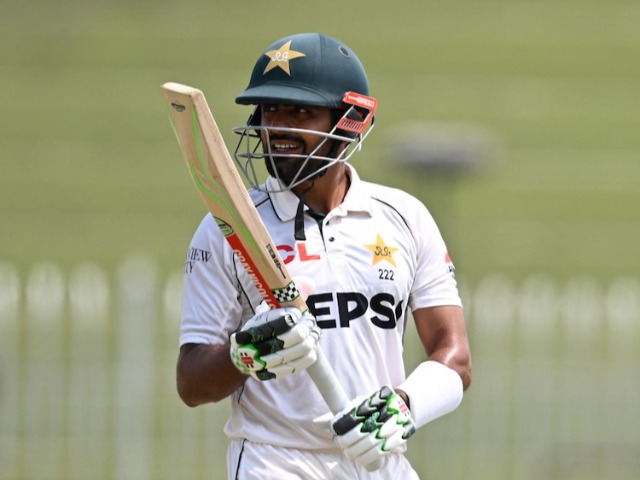
The team has moved away from the long-term captaincy of Babar Azam into a new era of specialized leadership and coaching. Shan Masood is tasked with stabilizing a Test side that has struggled for consistency at home. Meanwhile, Shahee Afridi has been elevated to lead the 50-over format, focusing on an aggressive, bowling-first approach. Salman Ali Agha is the current T20I skipper, a surprise appointment for the 2026 T20 World Cup cycle, signaling a shift toward versatile, all-round utility players.
Despite the ‘mercurial’ tag, Pakistan has produced some of the decade's most statistically dominant players in the form of players like Babar Azam and Shaheen Afridi. However, they have had a tough time as a team in recent ICC events, especially after reaching the 2022 T20 World Cup Final. They failed to make it to the semifinals of the 2023 ODI World Cup and then came a shock defeat against United States of America in the 2024 T20 World Cup, which saw them bow out in the inaugural league stage.
There has been a shift in approach since the 2024 T20 World Cup, especially in the shortest format of the game. In the 2026 T20 World Cup, Pakistan failed to reach the semifinals once again, but there was more bite in the way they played. Sahibzada Farhan stood out as their best player, scoring a record-breaking 382 runs, the most in a single edition of the Men’s T20 World Cup, and it included a couple of centuries too.
The return of full international cricket to Pakistan over the last decade or so has revitalized the domestic scene. The Pakistan Super League (PSL) continues to be the primary engine for the team's T20 success, though the side currently faces the challenge of translating that dominance into a sustainable upward trajectory in international cricket.