












In Federer-Nadal rivalry, best debate is yet to come
With Federer losing to mere tour mortals now and Nadal at the top of his hard courts game this summer, Federer never seemed farther away in his pursuit of Nadal than he was in absentia on Wednesday night.
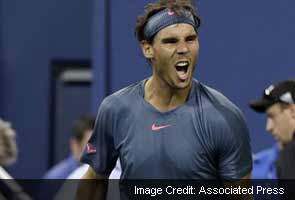 It is safe to assume that Roger Federer would not have had much of a chance against Rafael Nadal had he made it to their anticipated quarterfinal Wednesday night at the U.S. Open. In other news, as they used to say on "Saturday Night Live," Generalissimo Francisco Franco is still dead.
Oh, but wouldn't Federer, despite losing in three sets to Tommy Robredo in the fourth round, have challenged Nadal with a greater arsenal than Robredo, who at best could be characterized as a poor man's Nadal?
Yes, in theory. But if Federer versus Nadal has taught us anything over the past nine years, it is that Federer does not hold up well against the swashbuckling Spaniard. Nadal defeated Federer in straight sets on Florida hard courts the first time they played, in 2004. He has beaten him about two times since for every Federer victory, or 21-10 overall.
With Federer losing to mere tour mortals now and Nadal at the top of his hard courts game this summer, Federer never seemed farther away in his pursuit of Nadal than he was in absentia Wednesday night.
Wasn't that the most alluring part of the rivalry at its summit? While Federer had a firm grip on the No. 1 ranking and was being toasted as the greatest of all time, he more often than not seemed to be chasing in futility after Nadal and his evil topspin forehands.
Parse the numbers any way you want (Federer defenders like to explain it by noting that 13 of Nadal's victories have been on clay, his natural habitat). But if Federer does not soon get his game together and his shattered confidence back, and if Nadal's 27-year-old body can hold up until he is 30, the rivalry will probably shift from head-to-head matchups to Grand Slam titles.
That is the one measure that is concrete, beyond the unwinnable greatest-of-all-time debate. It is Federer's stronghold, his indisputable claim to being the best.
But if Nadal can close the gap, which stands at 17-12, and get within striking distance as he approaches the end of his peak years, the rivalry will thrive no matter what Federer does from here on. It will in certain respects be bigger than ever. It will make a very good argument for itself as the greatest in the history of men's tennis.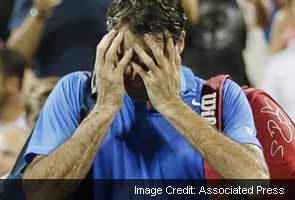 There is a mythology to sports rivalries that sometimes transcends a more sobering truth. HBO did a sweet documentary on John McEnroe and Bjorn Borg, who played a brilliant five-set final at Wimbledon in 1980 that included an unforgettable 18-16 fourth-set tiebreaker. Their matches were marked by classic contrasts of style and comportment. But they played only 14 times, each winning seven, and they were finished as Grand Slam winners by their mid-20s. Longevity matters.
Pete Sampras and Andre Agassi played a robust 34 times, with Sampras winning 20. They met in five Grand Slam finals, but Sampras won four of them and had the far more productive career. He also prevailed in four tiebreaker sets in the 2001 quarterfinals at Arthur Ashe Stadium on a memorably exhausting night.
But if that match reflected Sampras and Agassi at their competitive height, it lacked the gravitas of the Federer-Nadal 2008 Wimbledon final, won by Nadal in the fifth set, 9-7.
Of course, the discussion of best men's players and rivalries gets more complicated when it has to include Rod Laver and the pre-Open era. What would Federer's 17 Grand Slam titles mean had Laver not lost five years of his prime for joining the then-separate professional tour?
Asked about Laver's Grand Slam gap years, Nadal said: "In theory, that was going to be the best years for him. So he would have the chance to win as much as Roger did. You never know."
We can theorize, but we don't know. By the numbers, Federer is the best, and he will remain so for at least a couple more years whether he plays on through the twilight of his career or decides to retreat from the uncomfortable position of faded idol.
© 2013 New York Times News Service