




Can Vaibhav Sooryavanshi Sustain Explosive Power? Sports Medicine Expert Maps Out Blueprint
Arjun Tendulkar might not have received many opportunities to play for the Lucknow Super Giants, but from the perspective of Vaibhav Daga, who heads the Sports Science & Rehabilitation department at Dhirubhai Ambani Hospital in Mumbai, the sheer work he put in outshone everyone.
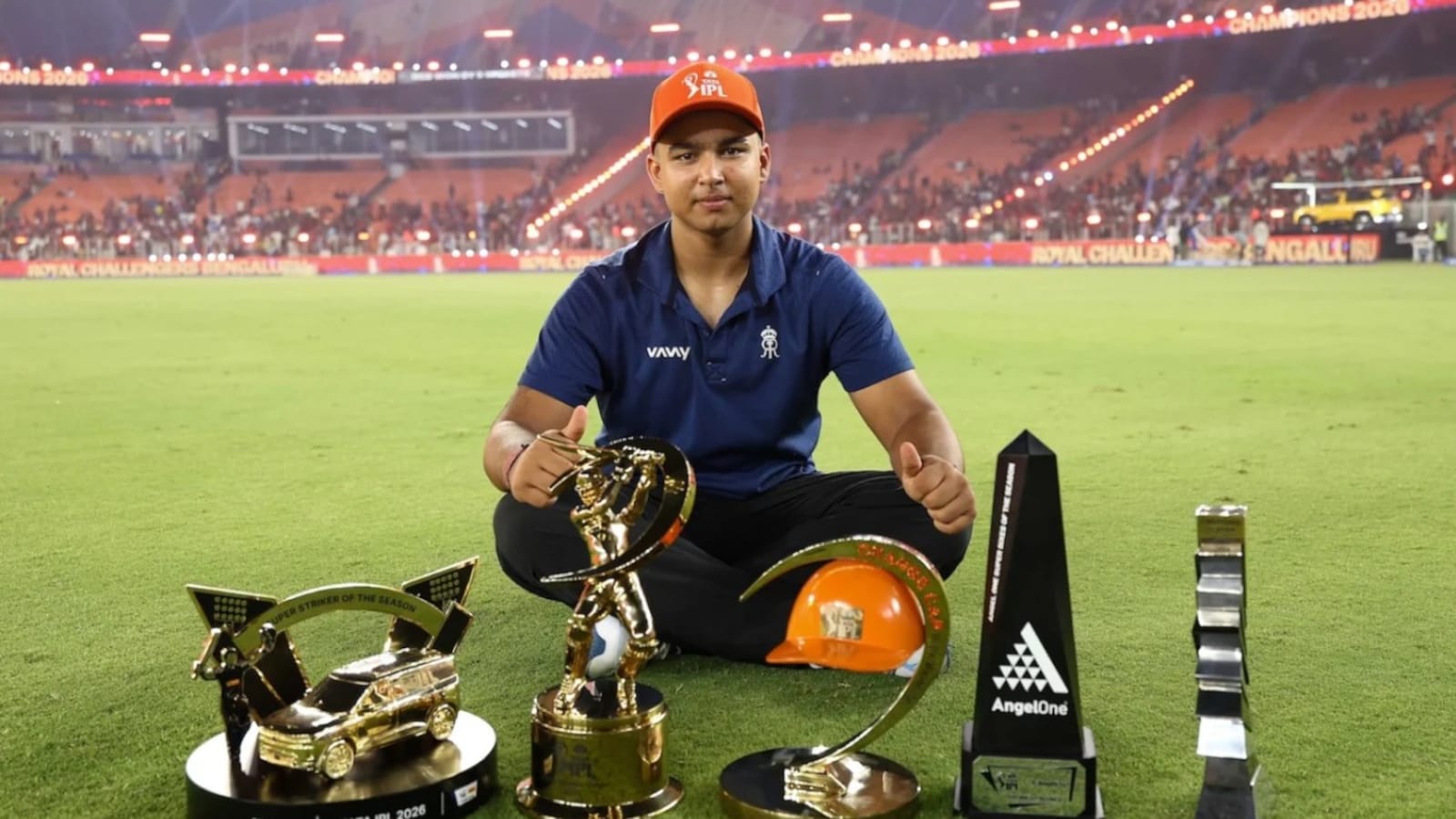
- Vaibhav Sooryavanshi ended IPL 2026 season as the top-scoring batter with 776 runs
- A sports science specialist decoded the secret behind his explosive power and batting swing
- Prehab, recovery routines, and injury prevention are essential for young players' career longevity
Injuries are part and parcel of the game, but the risk varies for every athlete depending on their style of play, preparation, physical fitness, and numerous other factors. As cricket has evolved and become increasingly fast-paced, the risk of injuries has naturally risen. During the Indian Premier League (IPL) 2026 season, high-profile players, including Rohit Sharma, Hardik Pandya, and Rajat Patidar, faced spells on the sidelines due to injury. Conversely, veteran bowler Mohammed Shami managed his fitness exceptionally well. In a lengthy chat with NDTV, Pune-born Vaibhav Daga, who heads the Sports Science & Rehabilitation department at Kokilaben Dhirubhai Ambani Hospital in Mumbai, opened up about his regular conversations with elite cricketers, detailing how he handles their rehabilitation, manages the demands of the modern game, and more.
The prominent sports medicine and rehabilitation specialist also discussed the high-intensity style of play displayed by India's youngest sensation, Vaibhav Sooryavanshi, who finished the IPL 2026 season as the tournament's leading run-scorer, amassing 776 runs at an extraordinary strike rate of 237.
1. Why is IPL-styled intensity driving more power and fatigue-related injuries?
The modern IPL game has become significantly more explosive, featuring higher bat speeds, a greater reliance on power-hitting, and repeated high-intensity efforts with minimal recovery time between matches. This creates a distinct mismatch between load and recovery. When combined with congested schedules, travel fatigue, and format transitions (such as moving from longer formats to T20), we see a rise in soft-tissue injuries, stress-related issues, and workload-induced breakdowns. It is less about one major incident and more about cumulative fatigue exceeding tissue tolerance.
2. How have recovery and rehab evolved from generic rest to data-driven, individualised plans?
Recovery is no longer passive. We now rely heavily on objective data, including GPS loads, force plate metrics, wellness scores, sleep tracking, and biochemical markers, to guide our decisions. Rehabilitation is highly individualised based on the player's role, injury history, and positional demands. Return-to-play protocols are criteria-based rather than time-based, ensuring the athlete is not just pain-free but entirely performance-ready. Seamless integration between physiotherapists, strength and conditioning coaches, and analysts has been key to this evolution.
3. What are the common mistakes players make with training, travel, and recovery?
The most common issue is underestimating recovery, particularly sleep and hydration during travel. Players often either overtrain on "good days" or fail to adjust their training loads after highly fatiguing matches. Another common pitfall is inconsistency, following routines strictly during injury rehabilitation but failing to maintain them once fit. Small, neglected habits like poor sleep hygiene, inadequate nutritional timing, and a lack of mobility work cumulatively increase the risk of injury.
4. How are awareness and prehab habits improving among younger players?
There has been a clear, positive shift. Younger players are far more aware and proactive; they understand the value of prehab, movement quality, and recovery protocols early in their careers. They are highly receptive to monitoring, feedback, and structured routines. Crucially, they now view recovery and injury prevention not as tedious add-ons, but as vital performance tools that directly impact their longevity and consistency.
5. Can you share an anecdote of a player who has returned from injury and recovered better by following an unconventional routine?
I was incredibly impressed by Mohammed Shami. He has his own unique way of training and recovery, and because he has played for so many years, he knows his body exceptionally well. If he feels even the slightest discomfort, he immediately brings it to our attention so we can address it before it develops into a major issue. He also ensured he bowled a high volume of deliveries in practice to guarantee he was match-ready. It was heartening to see the way he performed this season, and the youngsters in the team certainly look up to him. What stood out most was his mindset. He always expressed it in his own unique way: "Whatever I have to give, I must give it. There is no stopping for anything. We will do what we can, and as long as we do it, we will give it everything we have."
6. Of the cricketers you have worked with, who works the hardest? What is their routine like?
Having worked with a wide range of cricketers in the IPL, it is not particularly accurate to say that only a few players "work the hardest." At this elite level, everyone puts in immense effort. As the sports science and medicine team, our role is to ensure they do not overexert themselves and that they recover efficiently.
If you look at specific individuals, one player who stood out this season in terms of commitment and sheer willingness to put in the work was Arjun Tendulkar. He worked incredibly hard and gave absolutely everything to perform at his best. Similarly, Rishabh Pant is someone who can bat for exceptionally long hours while simultaneously ensuring his fitness work is meticulously managed.
7. How is Vaibhav Sooryavanshi able to generate such power with his bat swing at just 15 years old? What are the potential injury risks he could face if not managed well?
It is important to understand that his bat swing and the power he generates are incredibly natural. It is a gift he possesses. While you can refine a bat swing with practice, the foundation he has at this age is pure, natural ability.
On the injury side, it is very difficult to predict anything specific at this stage. He may or may not experience injuries depending on multiple variables such as biomechanics, strength, workload, and how his body adapts over time. Injuries in sport are always a possibility, but they are never guaranteed. The focus must remain on prevention and proper monitoring.
During the final phase of the IPL, he played back-to-back matches with very short turnarounds, scoring heavy runs in consecutive knockout games. In such high-pressure scenarios, preparation is often more about mental readiness. For instance, he was seen sitting near the wicket and visualising before matches. That kind of mental rehearsal plays a massive role in performance when physical recovery time is limited.
From a physical development perspective, strength and conditioning work is absolutely vital at his age. This involves building a strong foundation of core strength, shoulder stability, scapular control, and overall functional strength. He also needs to remain comfortable managing the weight of his bat and the physical demands of his technique over longer periods.
 Mohammad Shami