







A Footballing Empire In Ashes: How Italy Lost Their Way On Global Stage
Italy have failed to qualify for FIFA World Cup for three consecutive editions, despite winning the 2020 European Championships.
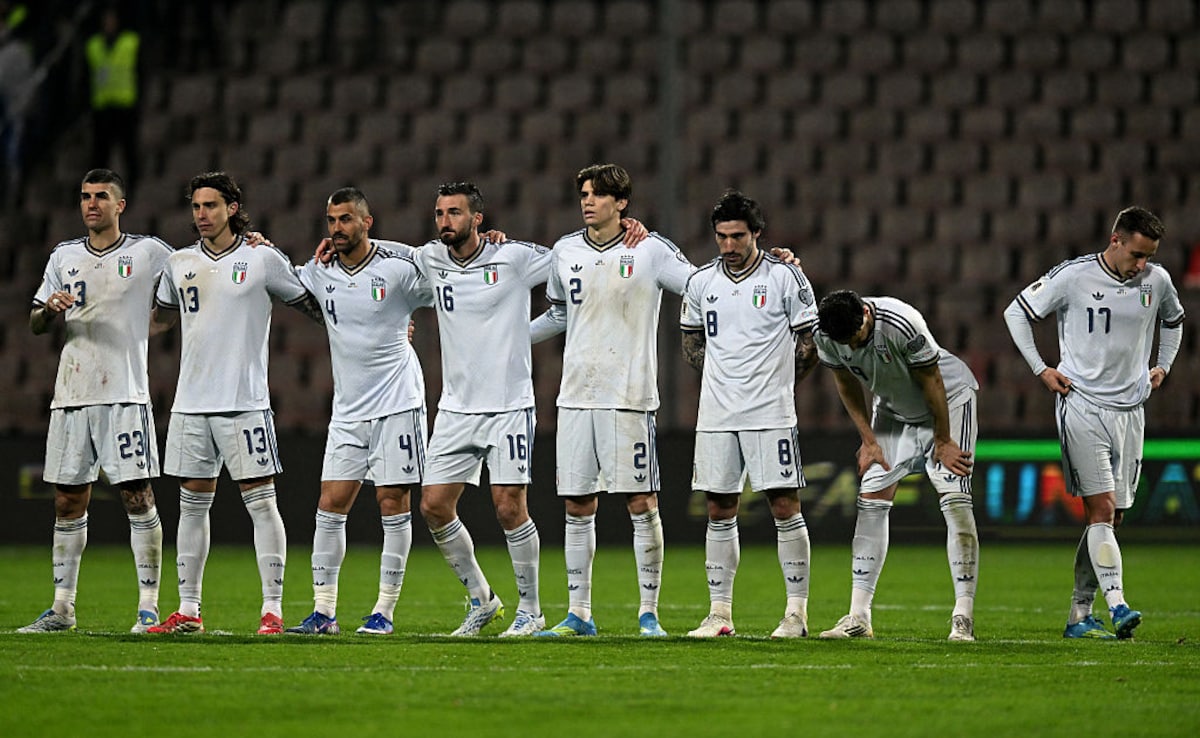
- Italy failed to qualify for the FIFA World Cup for the third consecutive tournament
- Serie A clubs prioritise veterans and foreign imports over developing homegrown youth
- Italy lacks a settled playing style, struggling against defensive teams in qualifiers
For the third consecutive tournament, Italy have failed to qualify for the FIFA World Cup, with their heartbreaking loss to Bosnia and Herzegovina in the play-off final serving as the final nail in the coffin. It is a sobering reality for a nation that once defined footballing excellence, a team that consistently produced all-time legends such as Paolo Maldini, Roberto Baggio, Gianluigi Buffon, Andrea Pirlo, Fabio Cannavaro, and Alessandro Del Piero. The Azzurri now struggle to field an XI capable of overcoming a 71st-ranked Bosnian side. The greatest mystery for football fans remains how Italy can endure a 12-year World Cup exile while remarkably sandwiching a European Championship title in 2020 between those failures.
As we look deeper into this Italian crisis, it becomes clear that it was not mere bad luck that derailed their 2026 qualifying campaign. Instead, structural and philosophical rot has set in, creating issues that threaten to mar the national identity for years to come. It also proves that the Euro 2020 win was merely a mirage, deceiving the world into believing that a return to grace was only a stone's throw away.
Structural and Youth Development Failures
The production line that once churned out world-class talent has seemingly stalled, as Serie A clubs continue to prioritise battle-hardened veterans or affordable foreign imports over homegrown prospects. This "win-now" mentality creates a glass ceiling for young Italians, denying them the vital top-flight minutes needed to develop elite composure. Furthermore, Serie A lags significantly behind the Premier League and Bundesliga in stadium ownership and modernisation. Without owning their grounds, clubs lack the diversified revenue streams necessary to invest heavily in state-of-the-art youth academies, further widening the gap between Italian prospects and their European counterparts.
Tactical and Technical Deficiencies
Italy appear to be caught in a tactical transition, having abandoned their defence-first roots without fully mastering a modern, high-tempo alternative. The national team seems to lack a settled style of play, often appearing toothless when tasked with breaking down "smaller" nations that sit deep. A disastrous qualifying campaign saw them finish six points behind Norway, forcing them into the unpredictable play-off route.
Managerial and Internal Factors
Italian football has faced intense criticism for what many see as a lack of long-term vision and a failure to maximise available talent. Recent managers have been accused of being loyal to a fault, sticking with an ageing core that lacks the physical dynamism required for the modern international game. Additionally, the federation has struggled to implement a unified coaching philosophy across all age groups, leading to a system that lacks clarity.
Financial and Global Challenge
The economic disparity between Italy and the world's richest leagues has reached a breaking point, as Serie A's commercial growth and domestic TV rights deals trail far behind the Premier League in England. This financial deficit limits the ability of Italian clubs to retain their best young talent, who are often lured abroad before they can reach their peak. Moreover, a heavy reliance on foreign talent to maintain league competitiveness has inadvertently stifled the "Italian school" of football, leaving the national team scrambling in critical positions, particularly at centre-forward.
 Italy
Italy