




Visakhapatnam Loss vs New Zealand: A Warning India Can't Ignore
Indias high-risk World Cup bet hit a speed bump in Vizag on Wednesday. With the World Cup just 8 days away, India didnt lose much on the points table in Visakhapatnam.
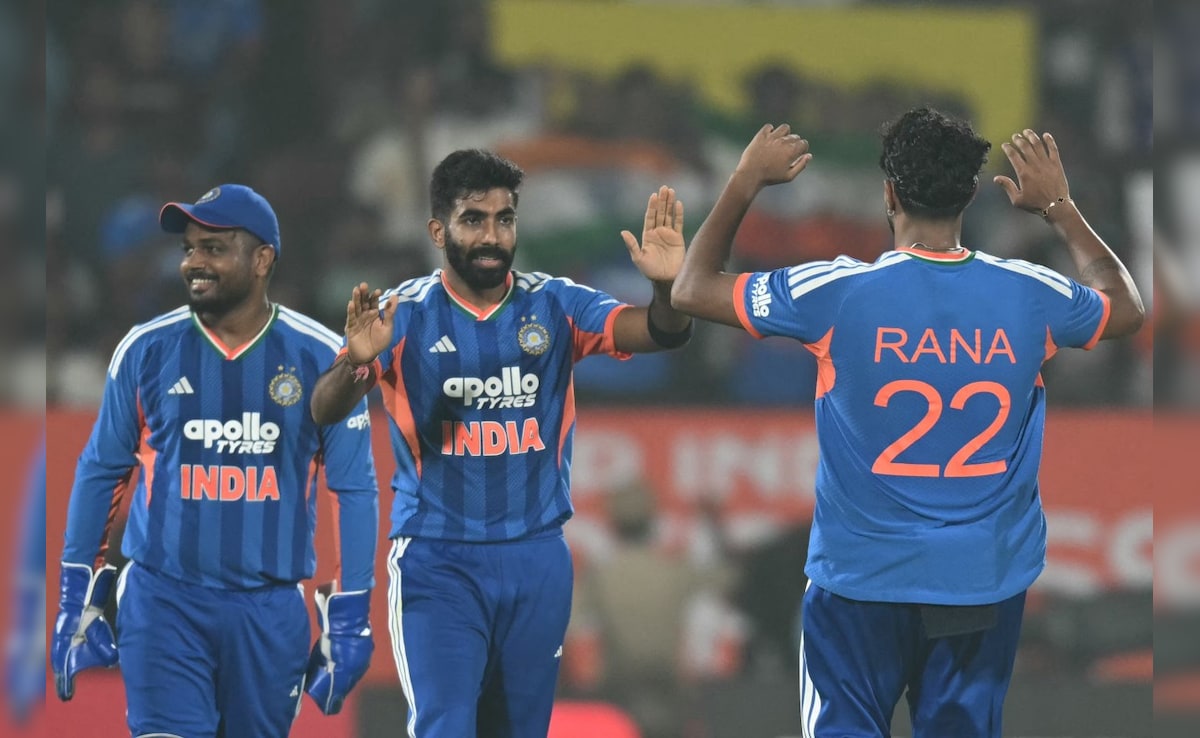
India's high-risk World Cup bet hit a speed bump in Vizag on Wednesday. With the World Cup just 8 days away, India didn't lose much on the points table in Visakhapatnam. The series was already sealed. Momentum, on paper, remained intact. But the 50-run defeat to New Zealand did what good losses often do, it exposed fault lines that wins have managed to paper over. India walked into the Visakhapatnam T20I leaning hard into their high-risk, high-reward identity. One batter fewer. Five specialist bowlers. A statement of intent more than a tactical tweak. It didn't come off. And suddenly, the question felt unavoidable: is India's ultra-aggressive approach the best possible template for a World Cup, or just the most exciting one?
The powerplay remains the most obvious pressure point. Harbhajan Singh had flagged it early on air, openers don't need to swing from ball one; control can be just as valuable as chaos. Yet across four T20Is against New Zealand, India have lost early wickets in every single powerplay. India have often had the depth to recover, but Visakhapatnam showed the cost of repeated early damage. At 82 for five, the burden shifted sharply to Shivam Dube and the lower order. Against a disciplined New Zealand side, that was a step too far. The experiment with five bowlers offered neither control nor cushion.
No player embodies this moment more than Sanju Samson. His numbers are stark 40 runs across his last four innings, without crossing 25 once. Nagpur, Raipur, Guwahati, Visakhapatnam, different venues, same story. Samson's recent T20I history complicates the narrative. Three centuries and a half-century in his last 20 innings aren't small achievements. Those hundreds in Hyderabad, Durban and Johannesburg didn't just revive his career, they reshaped it. They earned him a top-order role and nudged Shubman Gill aside. But the silence of his bat is growing louder as the World Cup draws closer. Elsewhere, Rinku Singh's role has always been simple, finish games, soak pressure, swing late. India strayed from that plan in Visakhapatnam, pushing him to No. 4. It didn't fit. Rinku's value lies in certainty, not experimentation, and the expectation is that India will restore him to familiar territory in Thiruvananthapuram.
Bowling combinations, too, demand sharper thinking. Kuldeep Yadav and Varun Chakravarthy remain the preferred spin pairing, but Ravi Bishnoi's contrasting outings underline how quickly conditions and confidence can shift. And then there's fielding, the quiet differentiator. New Zealand were outstanding in Visakhapatnam, turning half-chances into moments of control. Sunil Gavaskar's praise of Rinku Singh captured the essence of it all — the smile, the energy, the encouragement. Positivity, he reminded us, is a skill too. India don't look underprepared. Far from it. But Visakhapatnam served as a timely pause — a reminder that World Cups aren't won on intent alone. Sometimes, they're won by knowing when to step back, reset, and choose clarity over bravado.