



Ahmedabad Pitch T-0: Why India Would Be Vary Of Playing Varun Chakravarthy In Final
The Ahmedabad pitch for the T20 World Cup 2026 final is prepared using a mix of red and black soil. Spin bowling is expected to be a big challenge on this surface.
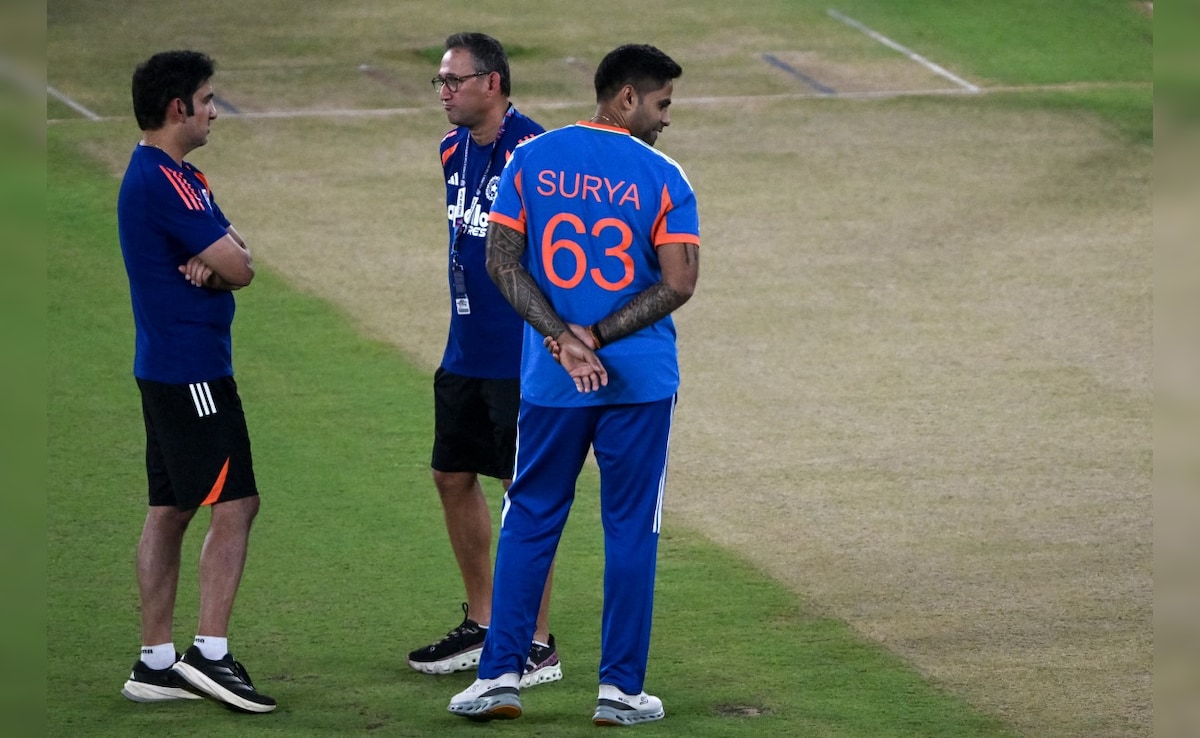
The covers are off, the grass has been shaved, and the rollers have done their work as the Narendra Modi Stadium in Ahmedabad prepares for the T20 World Cup 2026 final between hosts India and their long-standing nemesis in ICC events, New Zealand. The nature of the pitch has been a talking point for some time, especially given India's recent history at the venue. The Men in Blue lost the 2023 ODI World Cup final here, and their only defeat in the ongoing tournament also came in Ahmedabad, against South Africa. (India vs New Zealand Final LIVE Score, T20 World Cup 2026)
The pitch for the final, however, is expected to be very different from those used in India's past defeats at the ground. Yet, there remain concerns for both captains, Suryakumar Yadav and Mitchell Santner.
Reports suggest that the strip is the flattest surface of the tournament, particularly after the high-scoring semi-finals. It is a batting-friendly track with true bounce, favouring aggressive strokeplay.
Among all venues in the 2026 T20 World Cup, Ahmedabad has offered the least assistance to spinners. They have struggled for grip, wickets, and control.
The Spin Dilemma at Ahmedabad
In six matches, spinners bowled only 80 overs, taking 21 wickets at an average of 35.57, an economy rate of 9.33, and a strike rate of 22, the worst spin impact across tournament venues. According to The Indian Express, in 14 T20Is at this stadium, spinners bowled 176.3 overs and claimed 43 wickets at an average of 38.27. Their economy rate stood at 9.32, with a strike rate of 24.6.
This economy rate is higher than the tournament-wide average of 8.16, underlining the consistent lack of assistance for spin.
The flat nature of the pitch creates uncertainty for both captains regarding the role of spin. India, in particular, are concerned about Varun Chakravarthy's form, and the decision over whether to play Kuldeep Yadav becomes even more complicated.
It is worth noting that spinners like Chakravarthy have struggled here before. India used spin overs sparingly in Ahmedabad, bowling just six overs of spin in their defeat against South Africa in the Super Eight stage.
New Zealand captain Mitchell Santner has also found little success at the venue, with zero wickets in two T20Is and an economy rate of 8.75. While the Kiwis may be tempted to use Santner early, especially if Abhishek Sharma opens for India, the extent to which they should rely on spin remains debatable.
What's in Store for Batters?
True bounce and the lack of grip for spinners allow batters to play freely. Every delivery from a spinner demands a strong response to prevent them from settling. The pitch is expected to favour power-hitters and could set the stage for a high-scoring final.
 India Cricket Team
 New Zealand Cricket Team
 Narendra Modi Stadium, Ahmedabad