



Marylebone Cricket Club's Final Verdict On Angkrish Raghuvanshi's 'Obstructing The Field' Dismissal In IPL 2026
The MCC has issued a clarification on 'obstructing the field' law following the controversial dismissal of KKR batter Angkrish Raghuvanshi.
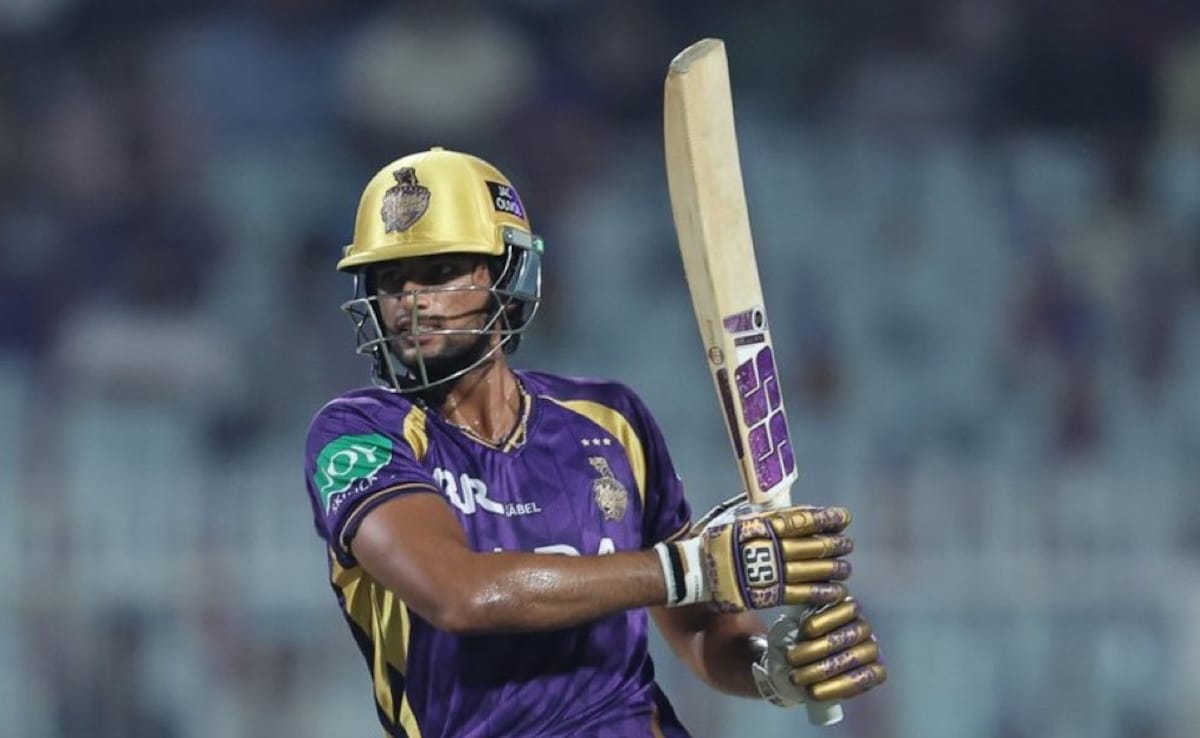
The dismissal of Angkrish Raghuvanshi became a topic of discussion during Kolkata Knight Riders' Indian Premier League 2026 game against Lucknow Super Giants on Sunday. The KKR batter was given out for 'obstructing the field'. He tried to take a single and was sent back by his partner Cameron Green. As the youngster attempted to return to his crease, he changed the direction of his run and ended up stopping a throw directed at his end. LSG appealed for the wicket, and the ground umpire referred it upstairs. The third umpire gave it out, concluding that it was 'obstructing the field' by Raghuvanshi.
The dismissal triggered a huge debate among the cricket fraternity, with opinions divided.
The Marylebone Cricket Club (MCC) has now issued a clarification on 'obstructing the field' law following the controversial dismissal of Raghuvanshi.
Clarifying the rule, the MCC reiterated that a batter can only be given out if there is a deliberate attempt to obstruct or distract the fielding side.
Law 37.1.1 says that "either batter is out obstructing the field if they wilfully attempt to obstruct or distract the fielding side by word or action." That means the obstruction must be deliberate, which can be hard to determine.
The governing body further referred to a long-standing interpretation of the law, as outlined in its official guidelines, that addresses situations in which a batter changes direction while running between the wickets.
According to the MCC, it states, "A batter who changes direction while running, particularly one who changes direction to run on the pitch, or takes any other route that would not be the quickest way to the other end, is making a wilful act."
Applying this interpretation to the Raghuvanshi incident, the MCC explained that the batter's movement across the pitch played a decisive role in the decision.
"Raghuvanshi clearly meets these criteria. When he sets off for his run, he is on the off side of the wicket. As the ball reaches the fielder he crosses to the middle of the pitch - which is not somewhere he should be running in any event - and then turns and runs back on the leg side, putting himself between the ball and the wicket. This is, by definition, a wilful act.
"Had he stayed off the pitch, remaining on the off side, the ball would not have hit him and even there would have been no question of an obstruction. If he had started running down the leg side, then turned and returned to his ground on that same side before being hit by the ball, that would also see him being Not out - he would have been in the way, but not wilfully. It is the wilful crossing of the pitch that caused his downfall," the MCC said in a statement
The MCC also addressed arguments suggesting that the batter might have safely completed the run even without the throw hitting him, stating that such factors are not relevant under the law.
"There has been some suggestion that Raghuvanshi should not have been given out because he would have made his ground even if the throw had not hit him. However, this is not a consideration. Provided the obstruction is not to prevent a catch being taken, whether a dismissal was likely is not a criterion in obstructing the field," it added.
(With IANS Inputs)
Featured Video Of The Day
 Lucknow Super Giants
 Kolkata Knight Riders
Angkrish Raghuvanshi
Marylebone Cricket Club
IPL 2026
Kolkata Knight Riders
Angkrish Raghuvanshi
Marylebone Cricket Club
IPL 2026