



Behind The Billions: The Forgotten Coaches Of Indian Cricket
The WPL, the IPL and international cricket now form a high-octane ecosystem that creates millionaires almost overnight.
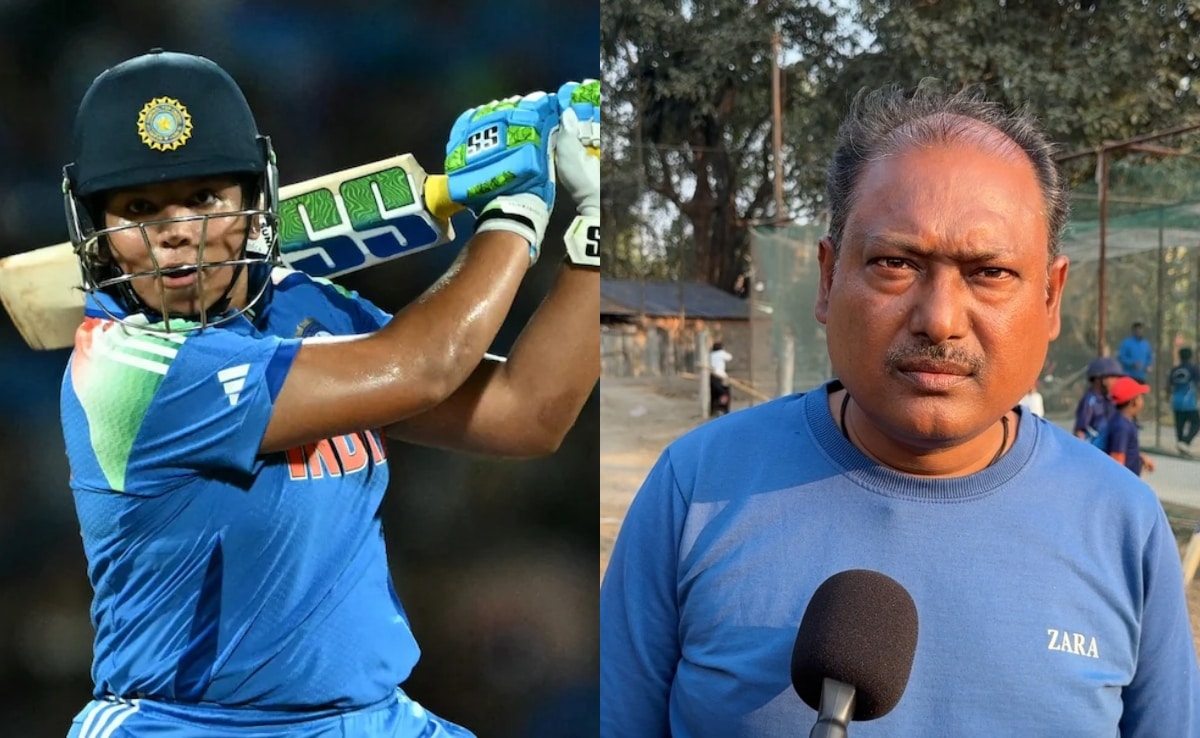
The T20 season is upon us. The WPL, the IPL and international cricket now form a high-octane ecosystem that creates millionaires almost overnight. Stadiums sell out, contracts soar into crores, and Indian cricket continues its commercial ascent. But behind every six that clears the ropes and every jersey sold, there is a quieter, often overlooked story. Of the coaches who spot talent early. Who mould saplings into world-beaters. And who, once the spotlight arrives, quietly fade into the background.
For many of them, life does not change. The grind remains the same-long days at the ground, little time with family, and sacrifices that rarely translate into financial security.
Siliguri: Where It All Began for Richa Ghosh
In a modest academy in Siliguri, West Bengal, Richa Ghosh's journey began. She first walked in at the age of four. By six, she was batting. By ten, she had donned wicketkeeping gloves.
Guiding her through every stage was Gopal Saha-her first coach. Today, Richa Ghosh is a global name. An India regular. A WPL star with a Rs 2.75 crore-per-season contract at Royal Challengers Bengaluru, making her one of the highest-paid cricketers in the country, across genders.
The town celebrates her success.
But for Gopal Saha, life looks much the same. He arrives at the nets before sunrise and leaves after sunset. His academy is crowded, resources stretched. He barely sees his own family. The players are his world.
"She hasn't come here after the World Cup," Saha says. "Now she has WPL commitments. Hopefully when she comes, we can sit and talk. There is talk of a stadium in her name-but we need more grounds like this."
His centres are bursting at the seams-more children, less space, fewer facilities. The financial boom of Indian cricket has barely trickled down to the grassroots coaches who made it possible.
Bengaluru: When the Game Gives Back-Quietly
At 66, Sanath Kumar's resume reads like a who's who of Indian cricket. The Pathan brothers. The Pandya brothers. Robin Uthappa. But a stroke followed by paralysis ended his three-decade-long coaching career. When medical crisis struck, it wasn't institutions that stepped in-it was his former students.
"Some of my students-the Pathan brothers, Robin-they helped me," Sanath says.
He acknowledges that conditions for coaches have improved since the IPL began, but the disparity remains glaring.
"In 2009-10, I was assistant coach with RCB. I was paid five lakhs," he recalls. "Players were paid in crores."
A former bank employee, Sanath says choosing coaching invited ridicule. "People mocked me, laughed at me. But my wife believed in me."
Mumbai: A Pragmatic View from the Ground
Across the country, the stories echo. In Mumbai, Satish Samant-coach to Shivam Dube, USA international Saurabh Netravalkar, and several Mumbai and India Under-19 players-has spent 30 years in coaching.
He started his academy in 2008. Many of his boys have gone on to represent Mumbai, India A and the national age-group teams. Yet Samant offers a pragmatic perspective.
"Money comes to coaches who understand how to use the system and market themselves," he says. "I don't believe in marketing myself. Once a player succeeds, we go back to the ground and continue the work. It should always be the player who names the coach-not the coach naming the player."
The Coaching Paradox
Elite coaches attached to franchises and national teams are rewarded handsomely. But that money rarely reaches the grassroots. It doesn't reach the man or woman who first spotted the raw diamond-and patiently shaped it into a jewel. For every superstar in the spotlight, there is a coach in the shadows-still waiting for the game to remember them.