





Why You Should Still Be Watching Novak Djokovic At This Australian Open
At 38, Novak Djokovic no longer dominates tournaments in straight lines.
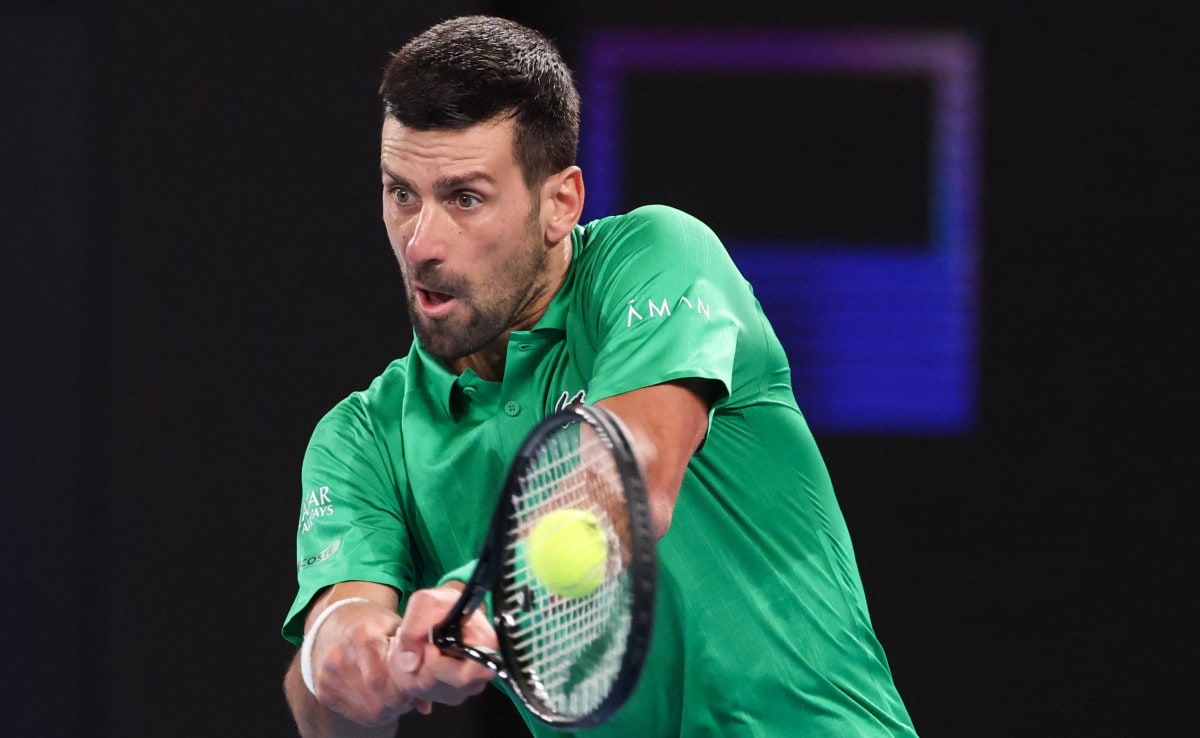
At 38, Novak Djokovic no longer dominates tournaments in straight lines. The wins aren't always clean, the body doesn't always cooperate, and the aura of inevitability now flickers rather than blazes. And yet, here he is again - deep into the Australian Open, history hovering just over his shoulder. That alone is reason enough to keep watching. Djokovic's quarter-final against Lorenzo Musetti was not a celebration of control, but it became a reminder of endurance. By simply walking onto Rod Laver Arena, Djokovic reached another scarcely believable milestone: 1,400 tour-level matches, a club previously reserved for Jimmy Connors and Roger Federer. Among those three, Djokovic owns the highest winning percentage - 83.4% - a statistic that quietly explains why he is still relevant, still dangerous, still here.
The match itself was messy, uncomfortable, and deeply human. Djokovic was outplayed for long stretches, spraying errors, visibly irritated, searching his box for answers that weren't coming. Musetti, fluent and fearless, led by two sets and looked on his way to a breakthrough semi-final. Then the body intervened. A thigh injury stopped Musetti in his tracks, forcing a retirement that left the crowd stunned and Djokovic apologetic rather than triumphant.
"He was a far better player - I was on my way home," Djokovic admitted, words rarely heard from a man who has built a career on inevitability.
Luck has followed him this fortnight. Jakub Mensik withdrew before their fourth-round meeting. Musetti could not finish. Djokovic himself hasn't won a completed set since the third round. This is not the usual Djokovic narrative of suffocation and supremacy.
Djokovic is chasing a standalone 25th Grand Slam singles title - a number that would push him beyond Margaret Court and into undisputed territory. But this pursuit isn't powered by dominance; it's driven by survival. Blisters on his feet required treatment. His serve has lacked bite. The errors have crept in. To win from here, he will need to shorten points, manage his body, and - yes - continue to flirt with fortune.
Yet history suggests dismissing him is dangerous. The Australian Open has always been Djokovic's most faithful stage. Ten titles, countless recoveries, and a habit of finding solutions when matches - and careers - seem to slip away.
With Jannik Sinner, the two-time defending champion, potentially waiting in the semi-finals, the margin for error narrows further. Djokovic knows it. Everyone watching knows it.
This isn't vintage Djokovic. It's something more fragile, more uncertain - and maybe more fascinating. You're not watching perfection anymore. You're watching resilience, instinct, and one last push at immortality.
If this really is the lucky 25th, it won't look like the others. And that's exactly why you shouldn't look away.
 Novak Djokovic