



Five Bowlers, One Clear Message: Harbhajan Singh's T20 World Cup Blueprint for India
The former spinner underlined his point with a familiar cricketing truth: batters may win matches, but bowlers win tournaments.
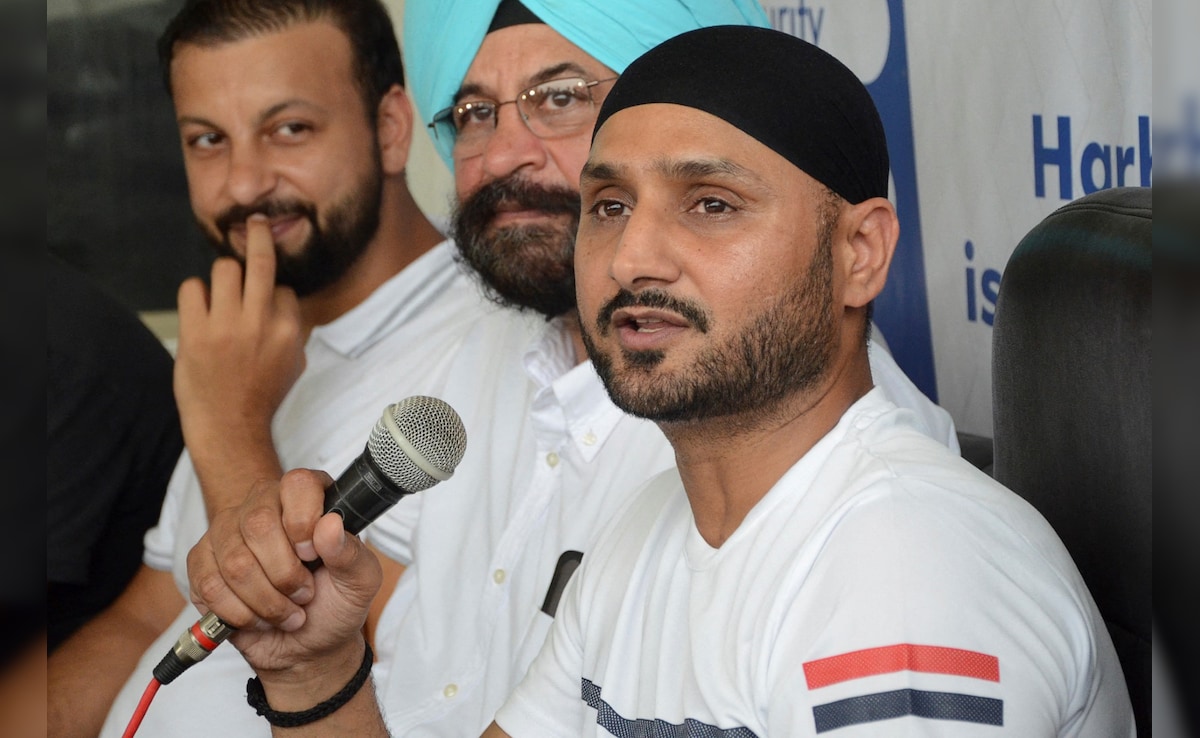
As India fine-tunes its plans ahead of the T20 World Cup, a familiar voice from the past has offered a timely reminder about what wins tournaments. During commentary in the Raipur T20, former India off-spinner Harbhajan Singh made a strong case for a strategic reset - one that prioritises wicket-taking over batting depth. Harbhajan's central argument was simple but pointed: India should play the T20 World Cup with five specialist bowlers. Not as a situational option, but as a default approach. In his view, the obsession with stacking the batting order often comes at the cost of leaving out genuine match-winning bowlers - a compromise he believes India can no longer afford at global events.
The former spinner underlined his point with a familiar cricketing truth: batters may win matches, but bowlers win tournaments. It's a line often repeated, but Harbhajan backed it up with recent evidence. Referring to the India-New Zealand T20 in Raipur, he highlighted the impact of wrist spinners Kuldeep Yadav and Varun Chakravarthy, who shared three wickets while conceding just 70 runs between them on a flat surface with a wet ball.
For Harbhajan, that performance reinforced why Kuldeep and Varun should play together in the World Cup. Both, he argued, are not just containment options but genuine game-changers - the kind of bowlers who can break partnerships and swing momentum when a match is drifting away.
Conditions, too, featured prominently in his analysis. Harbhajan pointed out that dew and a slippery ball often neutralise even the best fast bowlers. Precision becomes harder, yorkers miss their mark, and defensive bowling takes over. In those moments, he said, only true wicket-takers - naming Jasprit Bumrah, Arshdeep Singh, Harshit Rana, Kuldeep Yadav and Varun Chakravarthy - can still force breakthroughs.
Equally important was his critique of batting-heavy combinations. Harbhajan questioned the value of playing an eighth batter in T20s, arguing that such players are rarely used and end up blocking space for a frontline bowler. Instead, he suggested a more measured approach at the top: controlled aggression in the powerplay, rather than an all-or-nothing assault in the first three overs. Even if an early wicket falls, India's depth allows the middle order to manage the innings over 14-15 overs.
Underlying it all was a broader point about mindset. Harbhajan stressed that bilateral series and World Cups demand different thinking. Experiments may be acceptable in home series, but global tournaments require clarity, balance and proven match-winners.
As India debates combinations and roles, Harbhajan's message cuts through the noise. The road to a T20 World Cup title, he believes, begins with trusting bowlers to do what they've always done best - decide tournaments.
India's squad for the T20 World Cup
Suryakumar Yadav (captain), Abhishek Sharma, Tilak Varma, Sanju Samson, Shivam Dube, Ishan Kishan, Hardik Pandya, Arshdeep Singh, Jasprit Bumrah, Harshit Rana, Varun Chakravarthy, Kuldeep Yadav, Axar Patel, Washington Sundar, Rinku Singh.
 Harbhajan Singh
 India Cricket Team