




Truth Behind 'Harmanpreet Kaur Viral Catch' That Everybody Is Talking About
On Thursday, social media was flooded with a video of an Indian women's team player taking an unthinkable catch
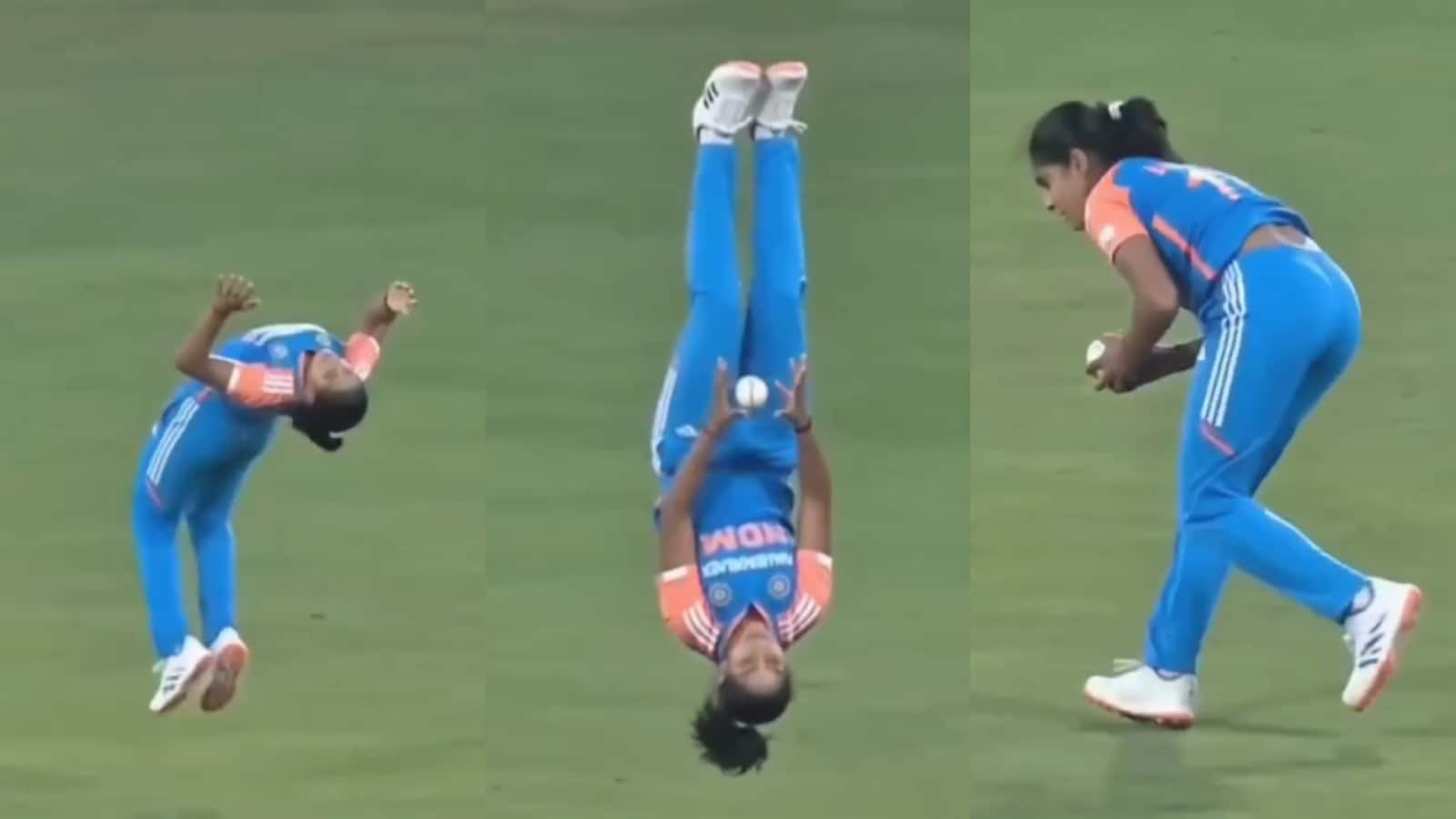
- A viral video showing Harmanpreet Kaur taking a somersault catch is an AI-generated deepfake
- Deepfakes use AI to create fabricated videos or audio using people's faces and voices
- Deepfakes pose risks including defamation, false information, and privacy violations
On Thursday, social media was flooded with a video of an Indian women's team player taking an unthinkable catch, where she runs and then does a somersault while taking the catch. It has been shared multiple times. One handle called it a catch by Harmanpreet Kaur. However, it is a fake/AI-generated video. While most people have shared it for fun, such AI videos can be misleading to unsuspecting fans.
#viralvídeo
— Prof.Sarita Sidh (@profsaritasidh) September 10, 2026
I am confirmed. You have not seen such a catch in your life ☺️ pic.twitter.com/CeRSd1NLtO
Harmanpreet Kaur Viral Catch Video: Real or AI-Generated? Internet Spots Major Clues https://t.co/e4CdYxpEgQ #harmanpreetkaur #harmanpreetkaurviral #harmanpreetkaurviralcatch #aigenerated #cricket #cricketviral #viralcricket #cricketnews #teamindia #indiancricket #viralvideo
— Preeti Sanodiya (@SanodiyaPr33198) September 10, 2026
The viral clip is AI-generated, not a real match incident. The original post presented an Indian women's fielder executing a full mid-air inversion/backflip catch against New Zealand as an unprecedented genuine moment. That claim does not hold.
— KRoshan (@Kroshan4k) September 10, 2026
Deepfake technology has emerged as a major concern in recent years, with people, especially celebrities, increasingly becoming targets of this form of manipulation. Deepfakes are convincing but entirely fabricated media, in the form of AI-generated videos or audio clips, that use people's faces and voices.
Often made with a malicious motive, they pose significant risks to the reputation and privacy of the targeted individuals. These manipulated videos can be used to spread false information, defame people, or even blackmail them. With the advancement of deepfake technology, the line between reality and fabrication is becoming increasingly blurred, making it challenging for both the public and authorities to separate truth from fiction.
How to protect your data from deepfakes?
While there is no sure-shot way to ensure 100% protection, there are several steps you can take to minimise the risk of your media being accessed and exploited by deepfake tools.
Avoid sharing personal images or videos on social media or other public platforms whenever possible. If sharing is necessary, set your privacy settings to the highest level.
Strengthen the security of your online accounts by using strong and unique passwords. This makes it harder for hackers to gain unauthorised access to your images and videos, reducing the likelihood of becoming a target of deepfake tools.
Invest in a good antivirus program to protect your computer from malware that could potentially be used to create deepfakes. This way, you minimise the risk of malicious software gaining access to your media.
Familiarise yourself with the common indicators of deepfake content. If a video or image seems too perfect or unrealistic, be cautious about sharing or believing it. Being aware of the signs can help you identify manipulated media.
Adding watermarks to your pictures and videos can act as a deterrent against unauthorised use. While not foolproof, watermarks make it somewhat more difficult for others to claim your work as their own, providing an additional layer of protection.
Make sure that the metadata embedded in your files accurately reflects ownership details, creation dates, and other relevant information. This can serve as evidence of ownership in case of disputes or conflicts over the use of your media.