



How Mahanaryaman Scindia Went From Ivy League To Cricket Administration
In an exclusive chat with NDTV's Rica Roy, 29-year-old Mahanaryaman Scindia opens up about how the Ivy League graduate got into cricket administration
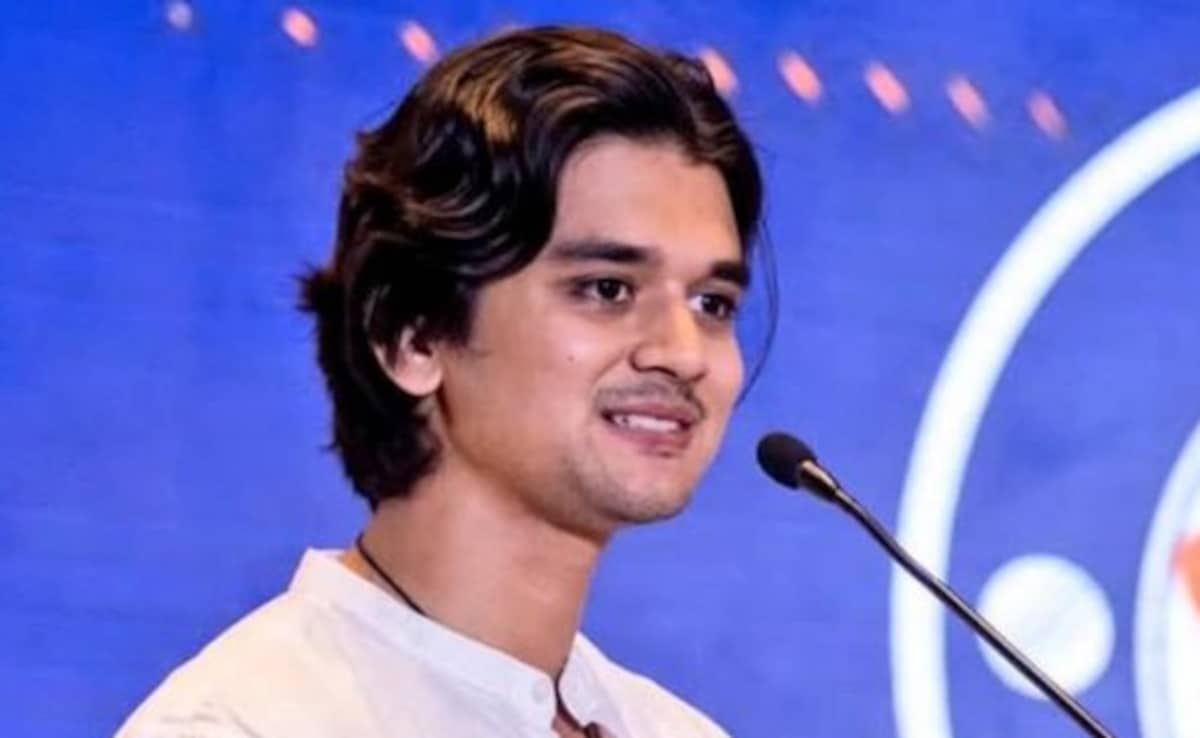
Third generation Scindia - Mahanaryaman, the grandson of Madhav Rao Scindia, the ex-president of BCCI, is the newly minted president of Madhya Pradesh Cricket Association (MPCA). In an exclusive chat with NDTV's Rica Roy, the 29-year-old opens up about how the Ivy League graduate got into cricket administration and has already delivered a profitable cricket league. He also speaks about lessons from Sachin, Dhoni, and Virat that he would imbibe while administering cricket.
RR: I would just like to ask you one thing from your grandfather, one thing from your father that you will pick out and would like to see being imbibed into your administration.
MAS: I think for my grandfather, it was his ability to spot talent-not only encourage them but also give them opportunities and, along with that, a sense of job security. When he was a minister, he would give his teams a chance to have jobs in his railway ministry or his aviation ministry.
Similarly, I would like to do the same: to be able to spot talent, nurture them, and give them opportunities. We are doing that a little bit through MPL, but also want to give them a sense of job security. From my father, definitely his ability to perform excellently in administration.
He has really changed the way MPCA works. He has made it extremely professional. We have hired an amazing CEO, Rohit Pandit, who is really delivering on execution, policy, scouting systems, nurturing systems, and mentorship, but along with that also how to activate and identify the right people in the right positions to get the most moral impact.
So, on one hand, you have this, and also always delivering on the path of righteousness. What is right is right and what is wrong is wrong, and no matter what the issue is or who it involves, never sway from what is right. These two learnings are very important from both my grandfather and my father.
RR: New generations always come in with new thought processes, and the sport has changed so much today. What is your number one priority?
MAS: Today, there are various ways technology is incorporated in training. With AI technology, there are ways to identify how a person is swinging, where he is going wrong, and how his drive is being improved. Even in terms of bowling, you can analyze speeds and the direction of the off-swing.
All these things can be observed with a very microscopic eye using cameras, AI, and data-driven approaches. Currently, in many areas, we still use notebooks to score and then produce profiles of particular cricketers.
I would like to see how we can include technology to create data-driven decisions-even in selections and scouting processes. That's two very straightforward ways where we can integrate technology. The third way, of course, is how to do it in terms of ticketing.
Today, there is huge ticketing infrastructure with QR codes and similar technology. How do we integrate that into new stadiums to make them more modern? That's the third area regarding technology.
In terms of administration, I'd like to work on strengthening compliance, accounting processes, and the relationship between district-level cricket and MPCA. That's an area where we still need some work. I want all my districts to be highly compliant.
Not that they aren't, but there are always issues with new regulations, accounting, etc., which I'd like to focus on. So, apart from scouting and talent building, these are two important areas I'd like to look at.
Arun, one area I want to spotlight, since you're a young administrator, is that fans are a very important and integral part of the sports ecosystem.
RR: But the fan experience in India is far from delightful. What do you think about that as a new-age administrator? What kind of fan experiences do you hope to deliver?
MAS: I think in terms of fan experience around the stadiums, there's a lot of opportunity to create interesting experiences regarding food and entertainment. Kind of like we did with MPL, which is now a huge success-we created a carnival-like environment around the stadiums.
Even though sometimes it's difficult to find food inside stadiums, you can always buy different snacks and drinks while walking in and bring them inside. That's one part. The other is entertainment.
I think inside the stadium, we can improve entertainment. For example, in MPL-though this depends on the cricket format, whether it's the World Cup or a local tournament-each format has its own regulations on airtime and pre/post-match entertainment. Depending on the format and location, entertainment is an area we can definitely improve.
Along with that, I said, in terms of fan experience, we can create experience centers for fans. Now you have AI-how do you integrate AI into the fan experience? For instance, you could visualize your idol cricketer in front of you and take pictures, and have plenty of signed t-shirts and caps for memorabilia sales. That kind of stuff is always included.
RR: Is there a template you want to develop and hand over to BCCI or world cricket?
MAS: With MPL, we've already started something cool. We launched the MPL Stick Cricket game, which allows people to play online.
You know the old stick cricket? We reincorporated it in a more modern way. We have around 12,000 downloads this year, where players choose a team, get a target, and bat based on the direction of the ball.
We're also starting peer-to-peer online matches to make it more engaging. It also gives new talent some eyeball attention-people get to know who these players are and where they come from through player cards. That's another way of player engagement and awareness.
The third area is ad revenue. Many leagues struggle to be profitable enough, so we create ad space within the real estate of your mobile phone. When you open the app, it gives you a stadium-like environment.
Within that, there are different ad spaces-the main screen, the periphery-giving additional income. It expands revenue because you're not limited by stadium capacity; you can reach 1.5-2 million users across India, which increases ad spend capability.
RR: Very interesting. So, you've been profitable since the first year itself?
MAS: This is the second consecutive year we've been highly profitable. Next year, we hope to increase our margins and reinvest in cricket infrastructure, scholarships, and player support systems.
RR: Rajat Patidar has been one of your biggest finds from the state. Who else is in the pipeline that we will see play for India and the IPL?
MAS: There are many players-Venkatesh Iyer, Ankit Verma, Abhishek Khan, Saransh Jain-all young stars brewing from grassroots levels. Our aim is to create more such stars.
Another focus area is better cricket infrastructure at the district level. How do we partner with companies or private institutions to create more cricket grounds and facilities? MPCA may not always invest directly, but partnerships are key.
Second, we want to create an excellent center of cricket-a main center with the best technology, gyms, coaches, and cricket infrastructure.
We want a residential facility where players can stay for one- or two-month training programs with the best nutrition, health care, physiotherapy, gym infrastructure, coaching, and everything. It's like an MPCA hostel, where we find talent, house them, and train them regularly with high standards. That's the ideal.
RR: Let's talk about you. You were in Doon School, then went to an Ivy League college in the U.S. When did the bug to enter cricket administration bite you?
MAS: Honestly, when I started my role in GBCA, I wasn't really into administration. I liked playing, but I wasn't interested in being an administrator.
But when I got the opportunity at GBCA, I realized how much impact you can create as an administrator. Even if you can't be on the field due to injuries or other reasons, you can make a big difference off the field. That inspired me to climb up and create a roadmap for Madhya Pradesh cricket.
That's when the idea of starting the Madhya Pradesh Premier League came in.
RR: I'll use that operative word you gave me: IMPACT. I'll name three impact players for India across generations. Tell me one trait from each you'd like to pick up. Number one: Sachin Tendulkar. Number two: MS Dhoni. Number three: Virat Kohli.
MAS: For Sachin Tendulkar, it's consistency-his ability to perform at the highest level under immense pressure.
He's like the Messi of cricket. Then MS Dhoni shows real willpower and determination-his adaptability whether as wicketkeeper or batting lower down the order, yet still delivering for the country. So adaptability and determination along with consistency.
Virat Kohli is the power of youth. Even though he's not a young symbol anymore, his name still symbolizes transformation-making cricket a healthier sport focused on nutrition and fitness. He changed how cricket is viewed in India, inspiring players to be high-performing athletes.
RR: When we talk about any sport, athletes start at village or panchayat level, then state, national, international. You've crossed a few of those roads. As an administrator, you're at the state level, growing state cricket. What's next for you?
MAS: Right now, I'm focusing on my state. My vision is to create impact locally first.
Instead of looking up, it's important to look down and focus on those around and below you. If you create impact there, when the chance arises, the people around and below you will push you up.
RR: Many players speak about visualization. As an administrator, do you visualize yourself in your grandfather's chair one day?
MAS: Yes, both my grandfather and father are my idols. Given the chance, I'd love to get there.
But as I said earlier, my main focus is to create impact where I am and give my 100% here, making my people, fellow sportsmen, and youngsters proud.
RR: Well, an absolute delight talking to you. Keep making those impacts and changes every day.