




Controversial Or Correct? ICC Rules Clarify India-Japan T20I Wide Reversal Call
While Axar Patel held his nerve in the final over to seal a two-run win for India, the victory was overshadowed by a controversial on-field call from umpire Chris Thurgate.
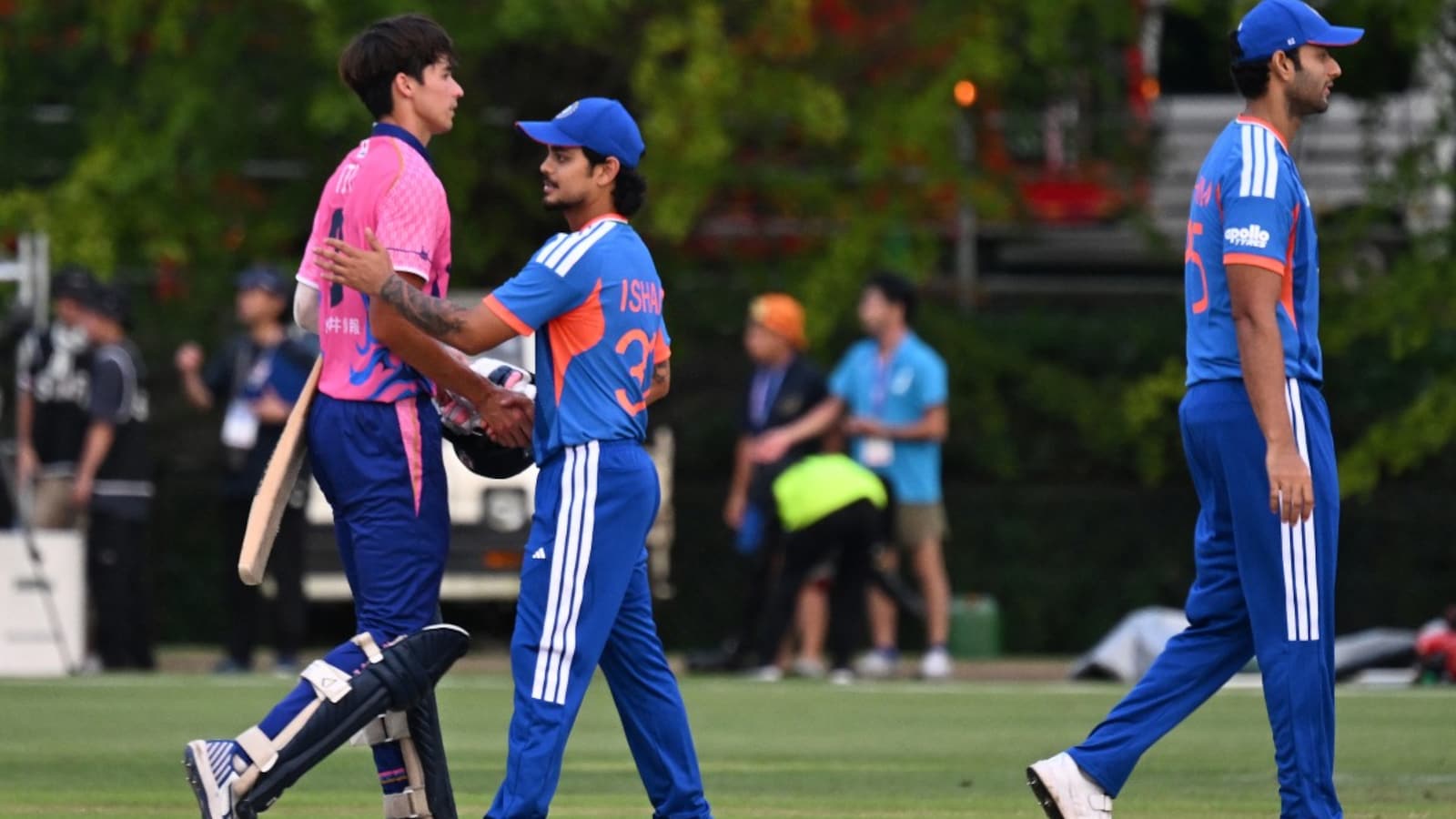
- India's win over Japan was overshadowed by a controversial on-field call from umpire Chris Thurgate
- The reversal of a wide after Alexander Shirai-Patmore attempted a reverse hit grabbed headlines
- ICC rules treat both sides of the wicket as off side for reverse or switch hits, affecting wide ball calls
India avoided what would have been a historic upset against Japan in a rain-hit one-off T20I at the Sano International Cricket Stadium on Tuesday. Persistent rain reduced the contest to five overs per side, and India's decision to bat first on a spongy surface nearly proved costly. Captain Shreyas Iyer's side struggled to get going and could manage only 32/4 from their allotted five overs. Japan, led by Kendel Kadowaki-Fleming, then mounted a spirited chase and pushed India all the way. The hosts kept themselves firmly in the contest and needed just eight runs from the final over, raising the prospect of one of the biggest upsets in Indian cricket history.
While Axar Patel held his nerve in the final over to seal a two-run win for India, the victory was overshadowed by a controversial on-field call from umpire Chris Thurgate.
The reversal of a wide after left-handed batter Alexander Shirai-Patmore attempted a reverse hit against Axar grabbed headlines for all the wrong reasons.
Initially, Thurgate signalled a wide, much to the bemusement of the Indian players. However, India's frustration turned into anger moments later, prompting protests from both Axar and captain Shreyas Iyer.
At that point, leg umpire Chris Brown, a member of the ICC Elite Panel, advised his colleague to review the decision, and Thurgate subsequently overturned the call.
As per the ICC rules, umpires are instructed that if a batter attempts a reverse or switch hit, both sides of the wicket are treated as the off side. As a result, the ball must be 75cm outside the outer stump to be called a wide.
Even if the batter initially changes stance and then reverts to the original stance, both sides continue to be deemed off side.
In the end, the correct decision was made, as deliveries of that nature have not been called wides in international cricket for nearly a decade.
The change proved crucial, shifting the equation from six runs needed off four balls to seven required from three deliveries. Despite a spirited effort, Japan finished on 30/3 in five overs, falling just two runs short of a famous victory.
 India Cricket Team
 Axar Patel