



Ajit Agarkar Set For Make-or-Break Meeting As BCCI Contemplates His Future As Chief Selector: Report
Ajit Agarkar's tenure as BCCI chief selector has been an eventful one. Agarkar was appointed the BCCI chief selector on July 4, 2023
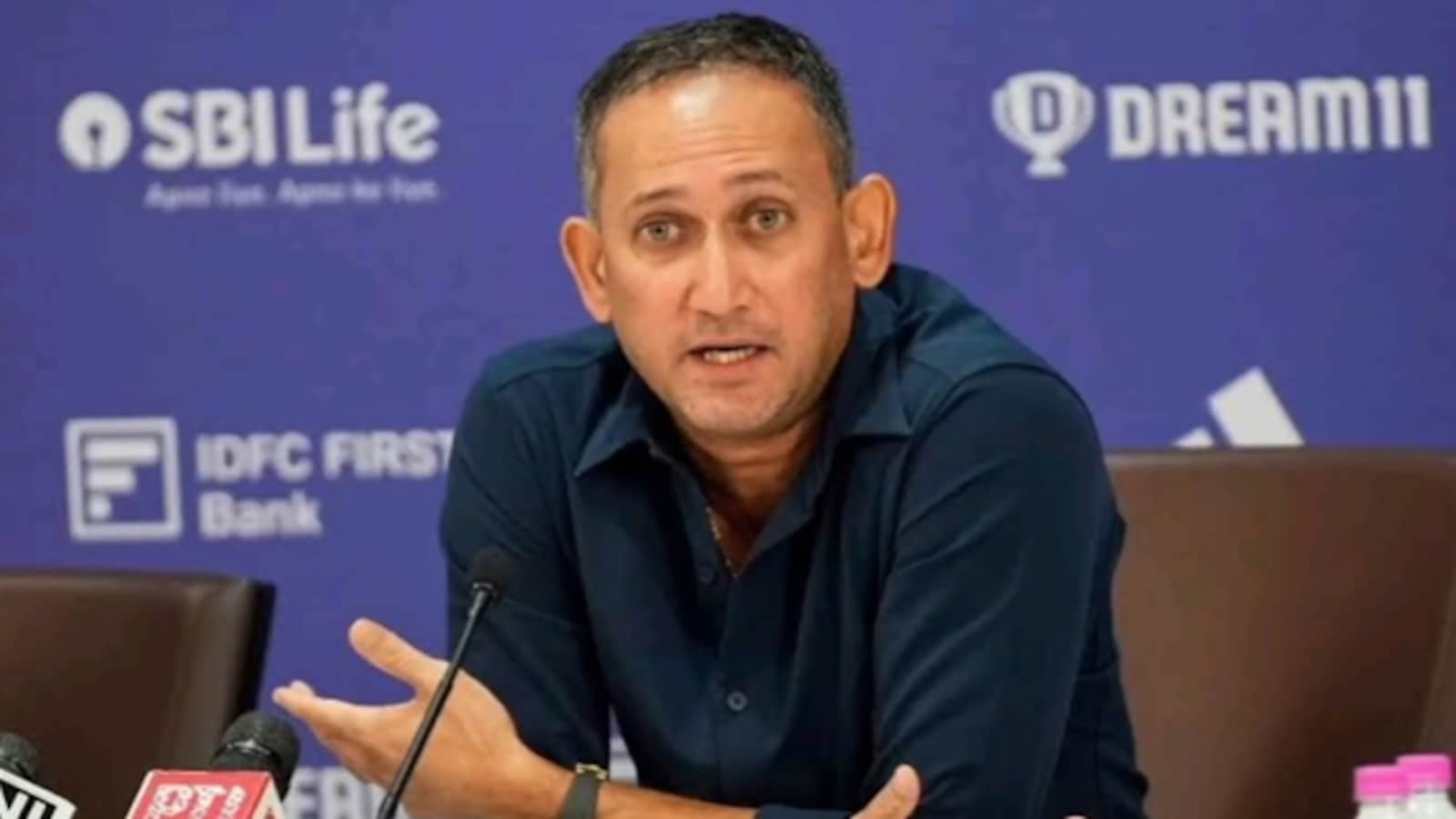
- Ajit Agarkar was appointed BCCI chief selector on July 4, 2023
- Agarkar received a three-month extension beyond his June 2026 contract end
- BCCI officials will soon decide on Agarkar's continuation as chief selector
Ajit Agarkar's tenure as BCCI chief selector has been an eventful one. Agarkar was appointed the BCCI chief selector on July 4, 2023. During his tenure as the head of the selection committee, the Indian cricket team won the 2024 T20 World Cup and the 2025 Champions Trophy. His tenure has also seen the retirement of stalwarts like Virat Kohli (T20Is and Tests), Rohit Sharma (T20Is and Tests), and Ravichandran Ashwin (international cricket). His contract was set to end in June 2026, but he was given a three-month extension by the board.
It was expected that the former pace bowler would get another extension that would keep him in the chair until the conclusion of the 2027 ODI World Cup.
Now, a report in India Today has claimed that Agarkar's future as BCCI chief selector is set to be decided soon. The report added that senior BCCI officials will meet Agarkar and discuss whether he will continue as chairman of the selection committee.
The report quoted sources as saying that people within the BCCI and Indian cricket are keen on Ajit Agarkar continuing. It further stated that the BCCI is happy to offer Agarkar an extension, but he has to personally agree. The final decision rests with Agarkar himself.
Agarkar's tenure has been marked by calls that demanded conviction and could withstand criticism. His bullish backing of Suryakumar Yadav as a long-term T20I captain over Hardik Pandya was one such move.
Far more sensitive was the decision to replace the extremely successful and sentimental favourite, Rohit Sharma, as ODI captain.
In both instances, Agarkar did not attempt to hide behind silence. He fronted up, taking the inevitable bullets that came with high-profile calls.
If statistics alone were the parameter, every cricket lover could pick their own playing eleven. But selection is rarely that straightforward.
Maybe for Agarkar, the most crucial realisation has been that a selector cannot afford to be a people-pleaser.
The role demands distance, clarity, and the courage to accept that popularity cannot be the yardstick for every decision. It has not been an easy path.
One can say with certainty that Agarkar has rarely had anyone providing cover fire for the decisions he has taken.
The criticism and accompanying questions have largely come his way, and he has faced them head-on.
One of the less visible aspects of his tenure has been his insistence on maintaining the sanctity of conversations with players who have been dropped.
In an era of dressing-room whispers becoming public discourse, that discretion has mattered.
There have, of course, been questions. Some have wondered why Agarkar spends more time travelling with the national team rather than watching domestic cricket.
There have also been questions about whether his presence alongside the Indian think tank helps in lending added balance to decision-making that might otherwise tilt in a unilateral direction.
No tenure is without blemishes.
With PTI inputs
 India Cricket Team