



India Introduce New Fielding Tactic Ahead Of Asia Cup Clash Against Pakistan
Indian cricket team fielding coach T Dilip has introduced a new fielding drill in order to enhance the ability of the cricketers to cut the gaps in the field ahead of the Asia Cup 2025 match against Pakistan.
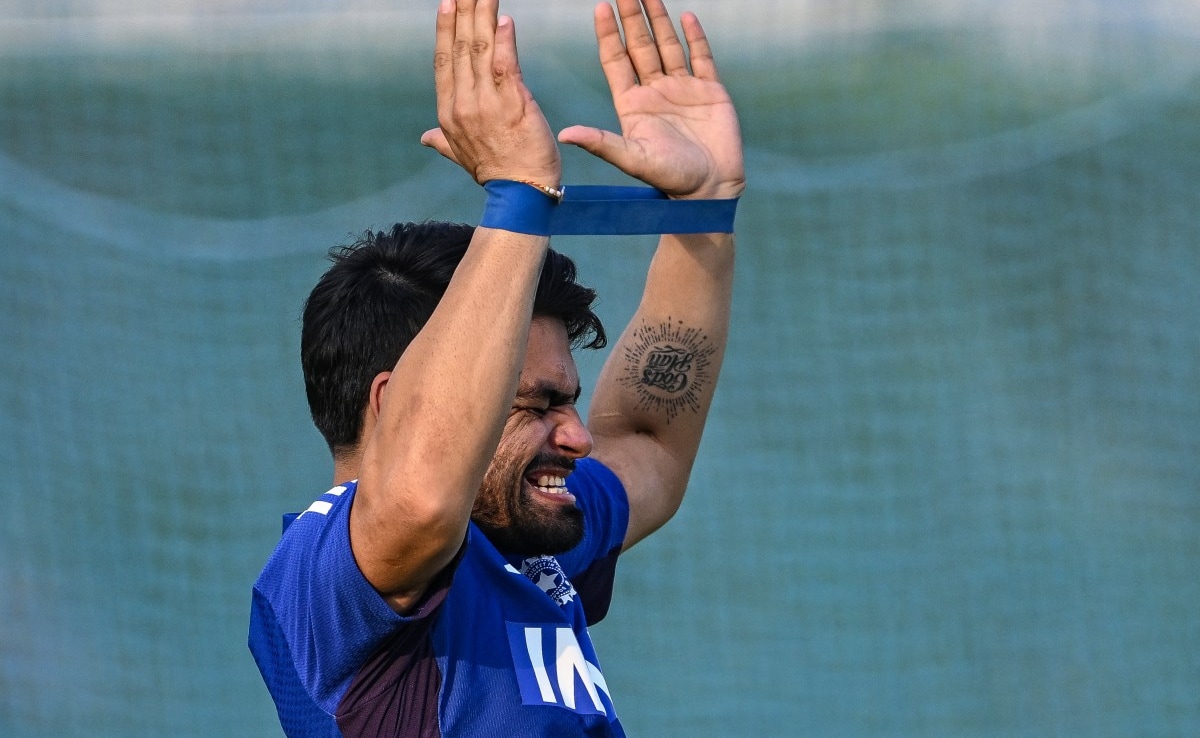
Indian cricket team fielding coach T Dilip has introduced a new fielding drill in order to enhance the ability of the cricketers to cut the gaps in the field ahead of the Asia Cup 2025 match against Pakistan, according to a report by Times Of India. The report claimed that it is like a goalkeeper's drill where there is a goalpost-sized safety net which is put up far away from the batting nets. The drill involves new balls as they travel quickly and each player has to protect their goal while completing two sets of five catches. Players kept changing guards as several India cricketers took part in the drill with Hardik Pandya starting things off with a miss followed by a blinder.
Hardik took another stunning catch to finish his quota and his effort left even Shivam Dube impressed.
Shubman GIll and Rinku Singh were up next. Gill took four full-stretched catches and even earned praise from the fielding coach who shouted, "You are making it a habit."
RInku struggled in his first set but bounced back in the second with a bit of help from Gill. Abhishek Sharma and Tilak Varma were both quite impressive in their respective attempts.
Earlier in the day, the squad was divided into two groups and they were given three targets to hit. Although Shivam Dube was the first one to hit the target, it was RInku who ended up winning the drill and he was later awarded a medal by the fielding coach T Dilip.
Earlier, India strength and conditioning coach Adrian Le Roux opened up about the Bronco Test.
Speaking in BCCI's video, Roux said, "The run we did today is Bronco run. It is not a new run or a measurement. It has been around since years in different sporting codes. It is something we introduced in team's environment. It is two-fold in use: We can use it as a training mechanism, and secondly, as a measurement. We get a good idea of where the players are in terms of their aerobic fitness and if we are moving in the right direction."
"It is a field test. We can do it at any place, any ground around the world. As we travel, we can always use it. It allows players to assess themselves at times. So it is a very functional test that you can do any place," he added.
 India Cricket Team
 Pakistan Cricket Team
 Hardik Pandya