






Sumit Nagal Falls In Reverse Singles, Fifth Rubber To Decide India-Netherlands Davis Cup Tie
The Davis Cup Qualifiers tie between India and the Netherlands headed for a winner-takes-all finish after Sumit Nagal's defeat in the reverse singles brought the visitors back on level terms at 2-2.
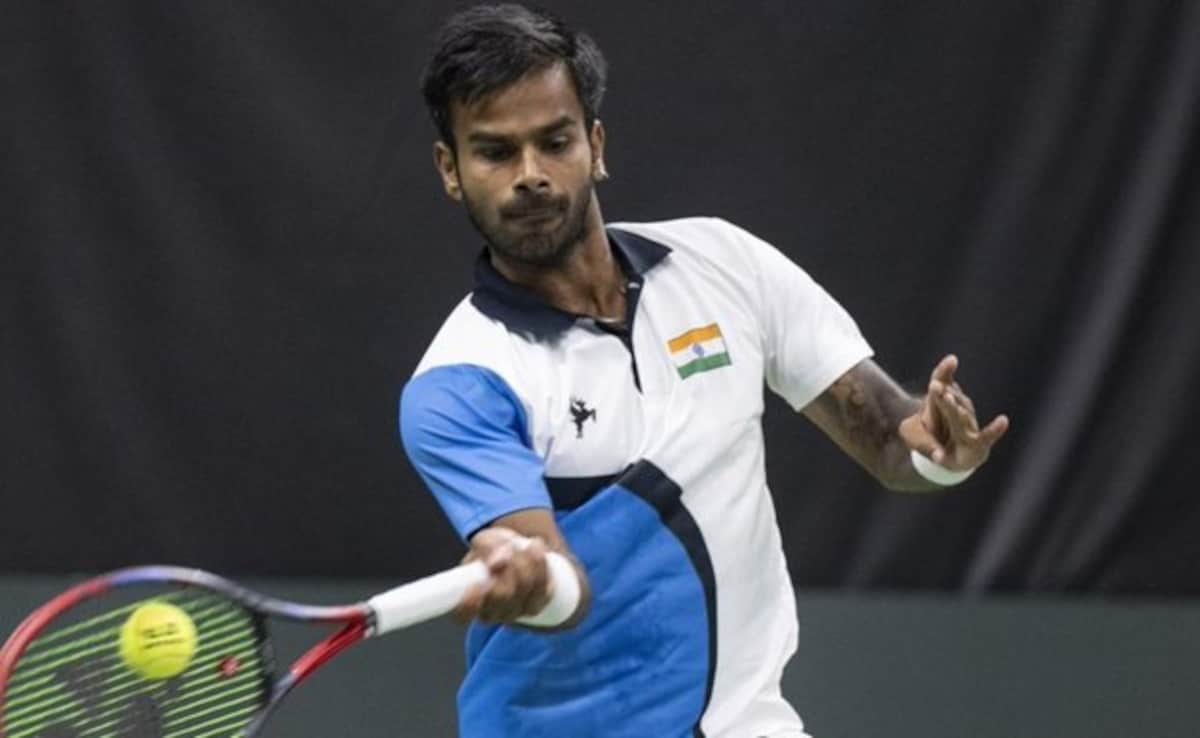
The Davis Cup Qualifiers tie between India and the Netherlands headed for a winner-takes-all finish after Sumit Nagal's defeat in the reverse singles brought the visitors back on level terms at 2-2, nullifying the advantage gained by Yuki Bhambri and Dhakshineswar Suresh in the doubles and turning the fifth rubber into a decisive showdown in Bengaluru on Sunday. Nagal had a one-set advantage but lost 7-5 1-6 4-6 to world number 88 Jesper de Jong in an energy-sapping reverse singles that lasted nearly three hours.
With the tie now locked at 2-2, the spotlight shifts firmly to the fifth and final singles rubber, where India will look to Dhakshineswar Suresh to deliver once again after his stirring win over De Jong on Saturday. He is up against Guy de Ouden, the Dutch debutant who beat Nagal on Saturday.
Bhambri and Dhakshineswar Suresh had prevailed in a marathon doubles rubber, outlasting David Pel and Sander Arends 7-6 (0) 3-6, 7-6 (1) to put India ahead 2-1.
Nagal had just the start India needed, breaking world number 88 De Jong in the opening game as he moved well and kept unforced errors to a minimum. However, the Indian gradually lost control as De Jong reeled off three games on the trot to edge ahead 5-4.
The Dutchman broke Nagal in the eighth game after the Indian pushed a forehand wide and followed it up with a lob that drifted long, bringing the set back on serve.
Nagal, though, found another lift, securing his second break in the 11th game when a perfectly placed lob forced De Jong into an awkward reply. The Dutch player then hit a forehand long on break point, allowing Nagal to serve out the set at love, sealing it with a crushing forehand winner.
The cooler conditions slowed the court and appeared to suit Nagal's counter-punching style, but De Jong wrested back control in the second set, racing to a 5-1 lead after a double break. Nagal saved five break points in a gruelling sixth game, but De Jong eventually converted the sixth with a sharp inside-out forehand to force the decider.
De Jong struck early in the final set, converting his fifth break point of the opening game, and though Nagal had two chances to break back in the second, the Dutchman held firm. As the match grew increasingly physical, Nagal slipped further behind at 1-4 after another break, sending a backhand wide on break point, from where De Jong closed out the contest to draw the tie level despite Nagal getting the break back in game eight.
Earlier, in a contest that swung repeatedly for exactly three hours, India captain Rohit Rajpal's call to bring in Dhakshineswar in place of N Sriram Balaji for the high-stakes doubles proved decisive. Bhambri's serve was under sustained pressure, particularly in the seventh game when his first serve deserted him. A double fault at 30-all handed the Dutch a break point, but Bhambri responded with deep, probing returns to snuff out the threat.
Dhakshineswar then missed a regulation backhand volley on game point, and Arends' awkward yet effective overhead smash aimed at his legs earned the visitors another break chance.
Once again, the Indian pair survived, Dhakshineswar showing deft touch at the net before Arends finally erred with a long return to end a prolonged game.
India earned its first break opportunity in the following game when Dhakshineswar threaded a forehand winner between Pel and Arends at 30-all, but the Dutch pair escaped.
Bhambri was once again under siege in the 11th game, as the Indians faced five break points before somehow holding on, drawing loud cheers from the home crowd.
With neither side able to force a breakthrough, the set went into a tie-break, where the Indians suddenly found another gear. Bhambri and Dhakshineswar raced to a 4-0 lead and closed it out without dropping a point, highlighted by Dhakshineswar's sharply angled passing winner and Bhambri's clean service return winner at 5-0.
The momentum, however, shifted in the second set. Left-handed Pel struggled initially with his first serve, serving two double faults in the third game, but the Indians failed to capitalise.
Bhambri's first-serve troubles resurfaced, and another double fault handed the Netherlands a crucial break opportunity. Arends converted with a crisp backhand volley return winner, opening up a 4-2 lead. Pel consolidated the break as the visitors tightened their grip, levelling the match at one set apiece.
The deciding set was a battle of attrition. India had multiple chances to break early, most notably when Pel fell to 0-40 after serving two double faults and Bhambri lasered a return winner, but the home pair squandered all three opportunities.
Dhakshineswar then showed composure under pressure to save a break point in the next game.
India continued to push, creating chances on Pel's serve again in the eighth game, with Dhakshineswar producing two exquisite return winners, only for the Dutch to escape yet again. Arends too came under pressure at 0-30 in his following service game.
The turning point came when Arends took a medical timeout for treatment on his left hand, with his little and ring fingers taped. From there, the Dutch player struggled to serve with the same effectiveness, allowing the Indians to finally seize control and close out the match.
(Except for the headline, this story has not been edited by NDTV staff and is published from a syndicated feed.)