







High-Altitude Tennis: Bengaluru's Impact On India-Netherlands Davis Cup Tie
In team competitions like the Davis Cup, where margins are thin and preparation is decisive, altitude can quietly become the tie-breaker.
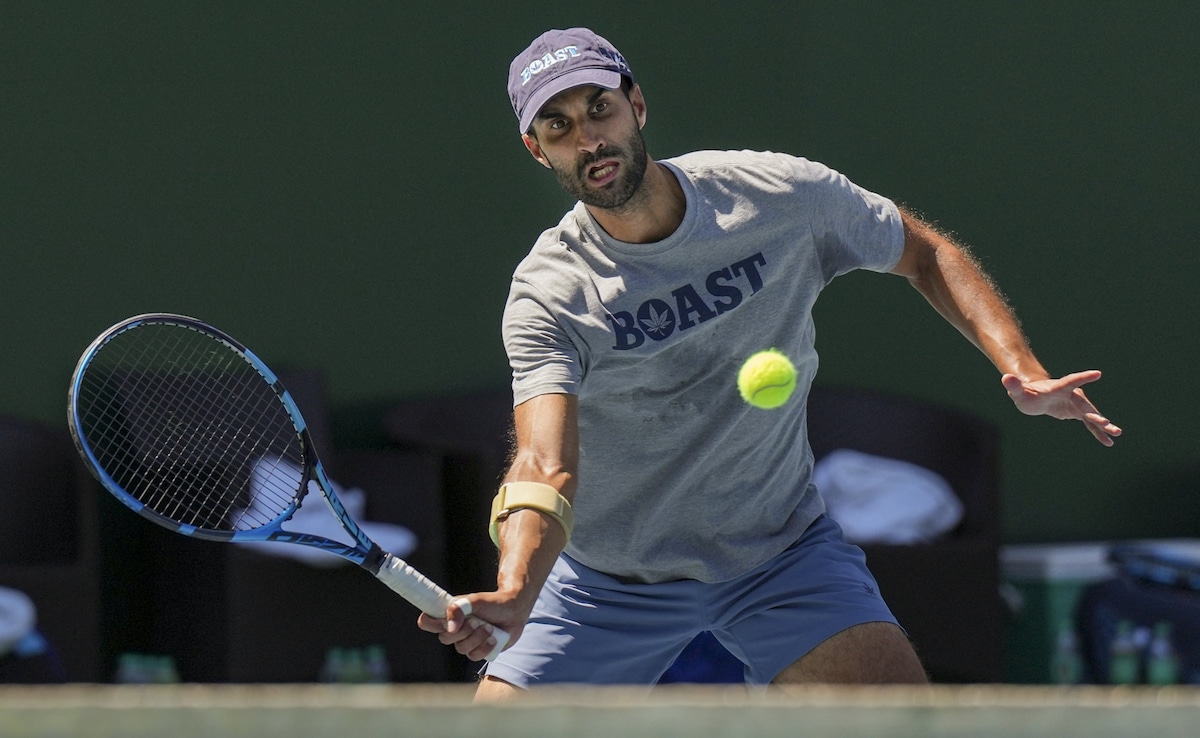
When India and the Netherlands walk out for their Davis Cup tie in Bengaluru this weekend, they won't just be competing against each other but also negotiating one of tennis's most demanding variables: altitude. At 900 metres (2,950 feet) above sea level, Bengaluru stands as India's highest-altitude tennis venue, well above Pune (550m). While it may not be as extreme as venues like Quito (2850m) or La Paz (3500m), the thinner air is still significant enough to materially alter how the ball travels, how the body responds, and how players must construct points.
In team competitions like the Davis Cup, where margins are thin and preparation is decisive, altitude can quietly become the tie-breaker.
How altitude changes the game
At higher altitudes, the air is thinner and offers less resistance. The immediate effect is on ball speed -- shots travel faster, bounce higher, and carry deeper than players are accustomed to at sea level. What feels like a controlled rally ball elsewhere can suddenly sail long in Bengaluru.
This has a cascading effect on every aspect of the game: from racquet preparation and stroke mechanics to tactics and physical endurance.
One of the first adjustments players must make is with racquet string tension. Because the ball tends to "fly" more in thinner air, players generally need to string their racquets tighter than usual.
Loose strings amplify the trampoline effect, reducing control and increasing the risk of over-hitting. Finding the correct tension is a personal equation, but altitude almost always pushes that number upward.
Crucially, this isn't something that can be perfected overnight. Players often need several days of hitting to fine-tune the string tension that allows them to swing freely without fear.
Control becomes the premium skill
Altitude rewards aggression but punishes recklessness. One of the most difficult shots to manage in these conditions is the lob. With less air resistance, lobs tend to float longer and drift unpredictably, making depth judgment tricky for both the striker and the defender. Players attempting defensive lobs risk sending the ball long, while those chasing them can struggle to read the bounce.
Because of this, players are often advised to play with a slightly bigger safety margin. That doesn't mean retreating into passive tennis. It means adjusting spin, net clearance, and target zones.
Adding extra topspin is one of the most reliable ways to regain control. Topspin helps bring the ball down inside the baseline despite the thinner air, allowing players to maintain aggression without bleeding errors. Players who naturally generate heavy spin often adapt quicker to altitude than flat hitters.
Tactical shifts: What works at altitude
From a tactical standpoint, altitude tennis tends to favour big servers and aggressive returners who step inside the baseline to rush opponents. It also helps athletes with fast recovery, who can handle quicker points and bounces.
Serves become more potent at altitude, travelling faster and kicking higher, which makes holding serve easier for confident servers. However, returners who read the serve well can also benefit, as even modest blocks can land deep.
Players are often encouraged to shorten points when possible, but not at the cost of discipline. Overpressing is a common mistake, especially early in matches when depth perception hasn't fully settled.
The physical challenge: Oxygen and acclimatisation
Beyond the ball, the body too feels the altitude. With less oxygen in the air, players can run out of breath more quickly than expected, particularly during long rallies or extended matches. Recovery between points and games becomes more demanding.
This makes acclimatisation critical. Teams that arrive early and practice several extra days at the venue gain a measurable advantage. Those sessions aren't just about hitting balls, they allow players to adjust breathing patterns, pacing, and physical recovery.
Without adequate acclimatisation, even well-conditioned players can find themselves struggling late in the sets, where Davis Cup matches are often decided.
What to Expect from the players
Expect players to start cautiously, especially in the opening singles rubbers, as they calibrate depth and timing. Errors may spike early, particularly off the forehand wing, before settling.
As the tie progresses, it won't be a surprise to see topspin-heavy rallies, fewer defensive lobs and tactical use of serve-plus-one patterns. Doubles, in particular, can be volatile at altitudes, where reflex volleys and return depth are harder to judge.
The bottom line
Altitude doesn't change who the better tennis players are, but it often decides who adapts faster. In Bengaluru, preparation, patience, and precision will matter as much as raw talent.
For India and the Netherlands, this Davis Cup tie will test not just skill but understanding of the conditions -- and in high-altitude tennis, that understanding can be the difference between control and chaos.
(Except for the headline, this story has not been edited by NDTV staff and is published from a syndicated feed.)