







Why Formula 1 Is Gearing Up For A Tectonic Shift In 2026 - A Look Into The Future
In 2026, on the back of crowning a new champion, Formula 1 is set to embrace its biggest regulation changes in more than a decade.
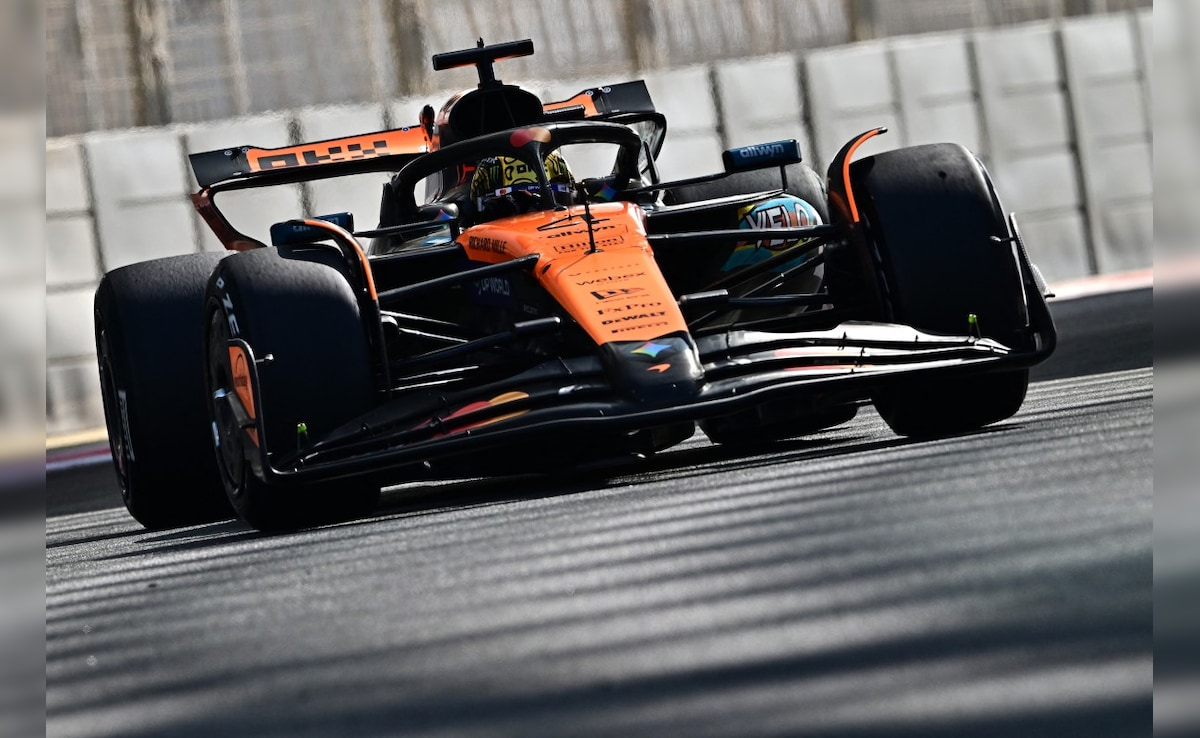
For a sport that has just celebrated its Platinum Jubilee (75th anniversary), it might seem strange to say it could witness its most drastic change next year - 2026. Yet, as Formula 1 crowns Lando Norris as World Drivers' Champion for the very first time, it may well be standing on the doorstep of a completely new universe. And I say that despite the cars looking similar and the drivers staying mostly the same. So what's changing? Let's take a look.
A new champion, a new team, a new pecking order
For the first time in four years, the No. 1 will not be painted on the dark blue of a Red Bull, but instead on the papaya of a McLaren. Lando Norris overcame his fair share of dark moments to put together a consistent run that saw him clinch what turned out to be a fairly-thrilling championship finale in 2025.
After years of back and forth, F1 will have 11 teams once again. Cadillac are entering the field, and they're bringing back two of F1's most established names - Valtteri Bottas and Sergio Perez. Sauber will also be rebranded as Audi.
With the biggest regulation change in more than a decade, a new pecking order is inevitable. Some of the top teams will remain, but there is every chance a team rises from the midfield and starts fighting for podiums, or even wins? Which team will that be is anyone's guess.
A bid to make racing better
Max Verstappen won nearly 60 per cent of the races during F1's ground-effect era between 2021 and 2025, taking the chequered flag first in 55 out of the 92 races. In one year, he even won 19 of the 22 races, taking domination to heights F1 had never seen, and may never see again.
But Verstappen winning so many races wasn't what made F1 "boring" to many fans in this era.
Instead, it was the cumbersome nature of the cars that made overtaking, wheel-to-wheel racing and racing in the rain - three of the most exciting aspects of F1 - extremely hard to do.
Well, F1 has made the cars for 2026 and beyond smaller and lighter. This should make cars more responsive and give drivers the ability to race closer to each other.
The side-effect? F1 is saying goodbye to DRS (Drag Reduction System), the tool that allowed the car behind to gain extra speed in certain zones if it's within a second of the car in front.
What's coming instead?
A set of rules that are complicated to read on paper, to say the least, are coming to Formula 1 in 2026. Active Aero and Overtake Mode are the two biggest changes. Active Aero allows drivers to manually open and close both the front and rear wings at the same time depending on where the car is on the track.
On the other hand, Overtake Mode is set to be the biggest game-changer and difference-maker, and essentially the replacement of DRS. Drivers will be able to activate it at a single point of the track, provided they are within a second of the car in front. If used effectively, drivers can gain dramatic boosts during a lap.
There will also be the Boost button, which will be used to deploy electrical battery over the course of a lap.
Why is it drastic?
The dynamic wings and the presence of the Overtake Mode and Boost button is set to throw a great deal of tactical responsibility on the driver and his race engineer. Communication between driver and race engineer is expected to increase.
Accurately planning the usage of the modes, cleverly recharging the electrical battery, and plotting an unpredictable yet effective attack will be of utmost importance. Now, more than ever before, a driver may have to rely more on the tactical usage of their tools, rather than relying on their raw speed.
The drivers who crack the code and find a balance quicker may enjoy exponential benefits.
Last, but not the least
It is still a stretch, and at the moment a distant possibility, but 2026 could potentially be the farewell season of two all-time greats - seven-time champion Lewis Hamilton and two-time winner Fernando Alonso.
Both Hamilton and Alonso are well into their 40s. The fact that they can both still claim to be two of the best in the business is a remarkable aspect in itself. Arguably, both are the purest wheel-to-wheel racers in the sport, even at their age.
But whether Alonso, 43, and Hamilton, 40, will get the car and maintain the form to launch a bid for one final world title, remains to be seen. And if they aren't able to, will they still have the hunger to race?
Featured Video Of The Day
 McLaren
 Mercedes
 Ferrari
 Red Bull
Lando Norris
Red Bull
Lando Norris
 Lewis Hamilton
 Max Verstappen
 Fernando Alonso
Charles Leclerc
George Russell
Oscar Piastri
Fernando Alonso
Charles Leclerc
George Russell
Oscar Piastri
 Carlos Sainz Jr.
yearender2025
Carlos Sainz Jr.
yearender2025