


Remarks Against India, Politics: What Makes PCB Chief Mohsin Naqvi Controversial
For the second consecutive tournament, the BCCI refused to accept a trophy from the hands of Asian Cricket Council chairman Mohsin Naqvi, who is also a political leader in Pakistan.
- India's cricket teams refused to accept the Asia Cup trophies from Mohsin Naqvi two years in a row
- Naqvi also serves as Pakistan's federal Minister of Interior and Narcotics Control
- BCCI sees engaging with Naqvi as mixing sports with sensitive political and security issues
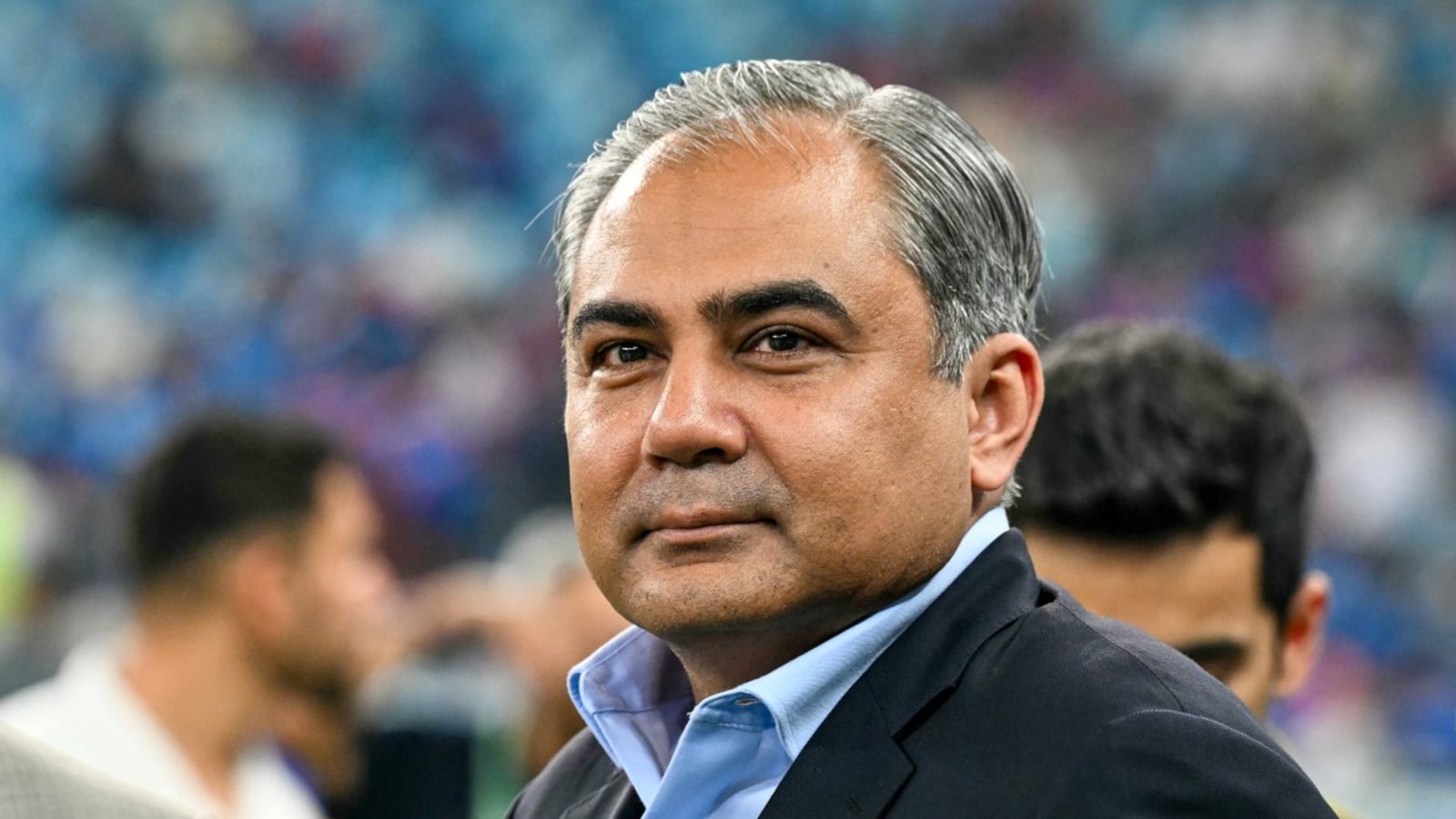
For the second year in a row, the Board of Control for Cricket in India (BCCI) has refrained from allowing its team to accept the Asia Cup trophy from Mohsin Naqvi, who is the chairman of both the Asian Cricket Council (ACC) and the Pakistan Cricket Board (PCB). Last year, it was the Suryakumar Yadav-led men's team. This year, Harmanpreet Kaur & Co. did the same, snubbing Naqvi even at the cost of the trophy. But what makes Naqvi such a controversial figure for India and the BCCI?
The trophy snub began last year after the BCCI advised the men's national team against exchanging pleasantries with the Pakistan team or its officials following the Pahalgam terror attack. Suryakumar Yadav, who captained India's T20 team in the Asia Cup, did not shake hands with his Pakistani counterpart, Salman Ali Agha, or any other team member during their encounters in the tournament.
In the presentation ceremony later, Naqvi reportedly had to wait for over an hour for the Indian team to collect the trophy and winners' medals from him. India insisted on collecting them from another ACC official, resulting in a deadlock situation. In the end, the trophy was removed from the stage, and even today, it hasn't been handed over to the Indian team.
What Makes Mohsin Naqvi Controversial?
Beyond his dual roles as a cricket administrator, Naqvi is also Pakistan's federal Minister of Interior and Narcotics Control. For India and the BCCI, conducting cricket diplomacy with a serving Pakistani cabinet minister, especially one who holds the sensitive internal security portfolio, blurs the line between sports and state politics.
In Pakistan's domestic political landscape, Naqvi is widely recognised as a powerful establishment figure and a key confidant of the military leadership. The BCCI and Indian authorities view engagement with him as similar to dealing with the top brass of Pakistani state politics, making normal sporting exchanges highly sensitive given the bilateral tensions between the two countries.
READ | Mohsin Naqvi's Stance Revealed As Asia Cup Drama Snowballs Into Fresh Row
Naqvi's public and digital statements against India further complicate any prospect of a cordial relationship. He has engaged in direct online jibes at the Indian leadership and posted content referencing cross-border security disputes and military flashpoints.
India views this blending of geopolitical hostility with sports administration as a direct violation of the principle that politics and sports should remain separate.
 India Women