



Form Is Temporary For Abhishek Sharma, But Is A Place In Indian Team Permanent?
ICC's No. 2-ranked T20 batter, who began the year at No. 1, returned from Zimbabwe with 11 runs in three innings at an average of 3.66. That is not an isolated failure. It is the latest chapter in a slump that has stretched for months.
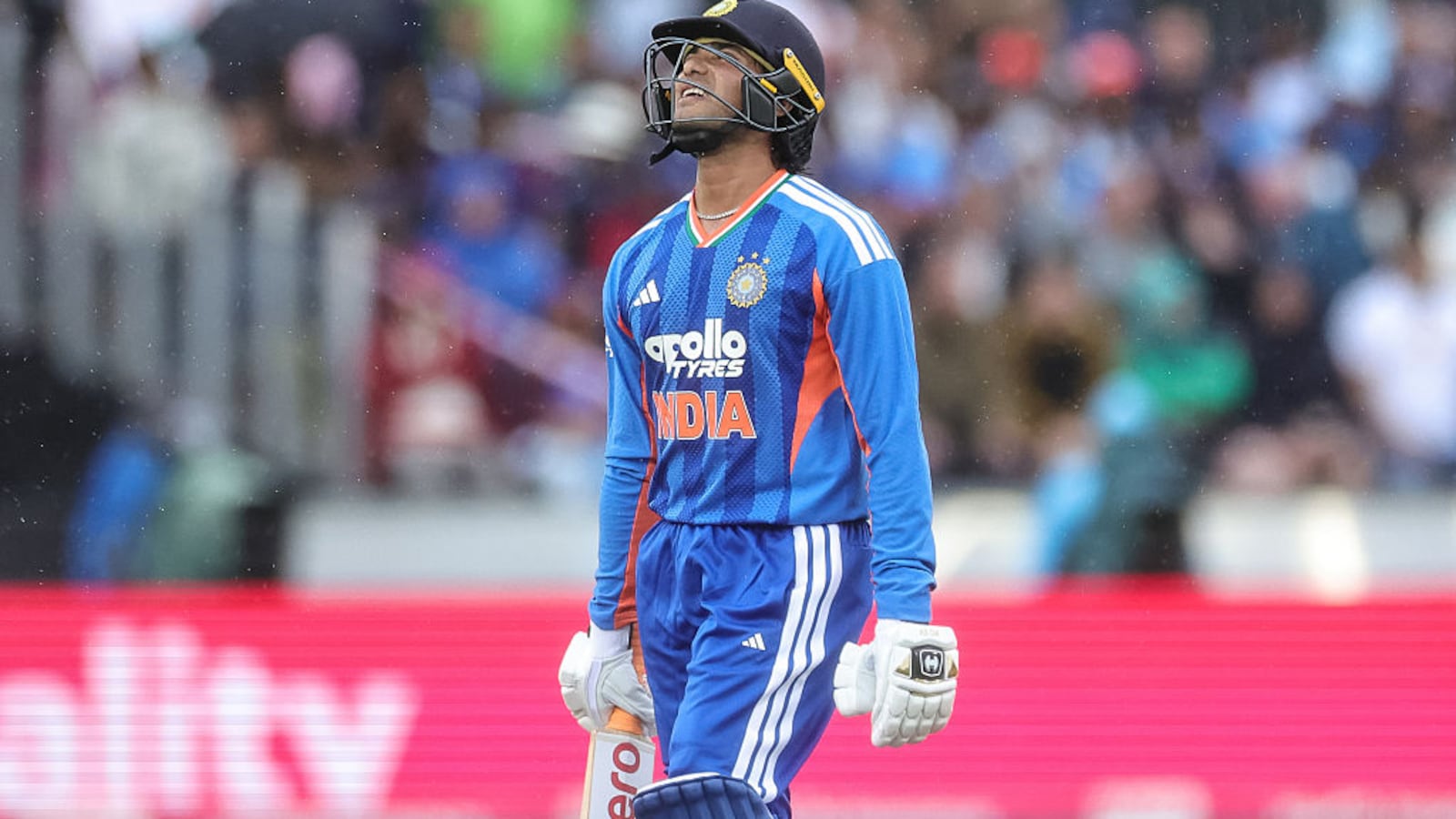
Google Abhishek Sharma today and the headlines are about his bowling. His figures of 3 for 17 in the second T20I against Zimbabwe that helped India seal the series before completing a 3-0 sweep. It was exactly the kind of tour India needed after the battering in the British Isles. A weaker opponent, three comfortable wins and a chance for struggling players to rebuild confidence. Most did. Abhishek didn't. His numbers since the start of the year paint an uncomfortable picture.
ICC's No. 2-ranked T20 batter, who began the year at No. 1, returned from Zimbabwe with 11 runs in three innings at an average of 3.66. That is not an isolated failure. It is the latest chapter in a slump that has stretched for months.
Against England, he scored 131 runs in five T20Is at an average of 26.2. Against Ireland, he managed 49 runs in two matches at 24.5. Across his last 10 T20 innings, there has been just one fifty.
More worrying than the runs is the manner of the dismissals.
Blessing Muzarabani dismissed him in all three games against Zimbabwe.
The first time, Abhishek threw his hands at a wide delivery and sliced a simple catch into the deep.
The second time, he poked at a rising ball and chipped it straight to backward point.
The third time, he tried to manufacture room against the angle, edged behind and walked off shaking his head.
These were three different shots, but the same mistake. He never looked in control against pace outside off stump.
This was Zimbabwe, not Australia or South Africa. If this series was designed as a confidence-builder, it achieved the opposite for Abhishek.
Zimbabwe had clearly done their homework. They began with Sikandar Raza's off-spin, the same type of bowling that exposed Abhishek repeatedly during the T20 World Cup. Once he survived that examination, Muzarabani finished the job with pace.
The decline is evident in the numbers too.
Before the T20 World Cup, Abhishek averaged 37.05 with a strike rate close to 195. Since then, the average has crashed to 19.4 while the strike rate has dipped to 165.
It looks like a batter caught between two minds. The aggression that made him dangerous has faded, but the consistency needed to justify the change hasn't arrived.
This selection committee has shown little sentiment in moving on from established names. Players deemed unlikely to fit into the next cycle have been pushed aside without much hesitation.
Sanju Samson remains an obvious and the biggest example.
Five poor innings before the T20 World Cup cost him his place. He responded with scores of 97 not out, 89 and 89 in the knockout stages as India lifted the title.
Three matches later, he was out of the Zimbabwe tour.
Ishan Kishan, who is now the No.1 batter, survived the cut but was immediately shifted down the order after a couple of modest outings.
Abhishek, meanwhile, continues to enjoy unwavering backing despite a prolonged lean run.
Backing a talented young player is not the issue. Every successful team invests in potential.
The issue has been his inconsistency.
If India believes players should be judged over extended periods, that standard has to apply across the board. If performance dictates selection, then prolonged failure cannot be ignored simply because the player is viewed as part of the future.
Indian cricket often prides itself on ruthless competition. Every place is said to be earned. Every innings is supposed to matter.
Except, at the moment, one appears to matter a little less than the others.
Abhishek Sharma may well justify the faith eventually. But until he does, the set of events of the last one and a half months will remain a far bigger talking point than his batting.
 India Cricket Team