




Exclusive: Rohit Ranaut Maps Out The Road To India's Next Olympic Badminton Champion
A former national-level player who represented India internationally, Ranaut has spent more than 13 years in high-performance coaching, working with the Badminton Association of India, the National Centre of Excellence, and the Indian National Coaching Camp at the Pullela Gopichand Academy.
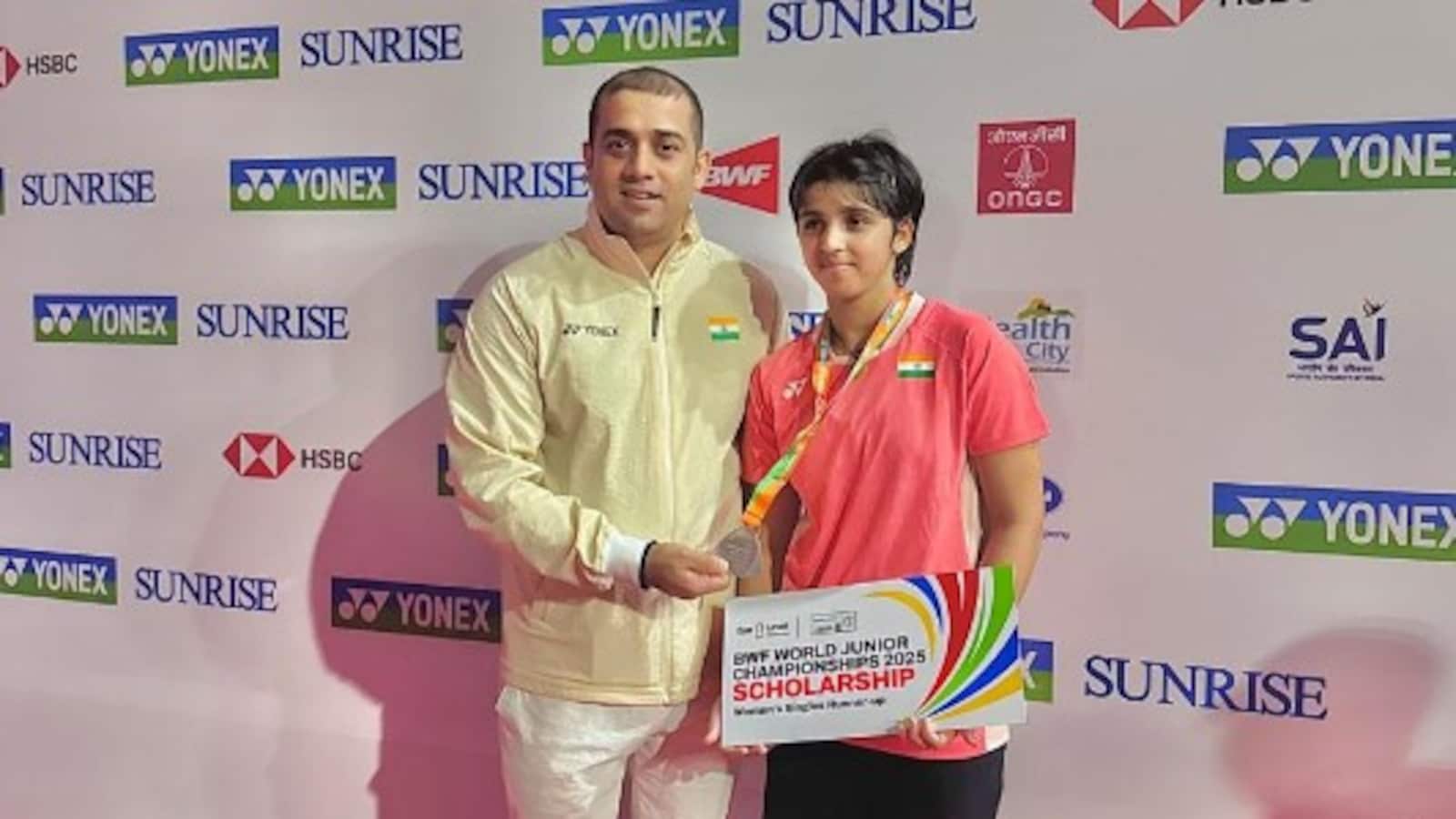
Behind every successful athlete is a coach whose influence often goes unnoticed. In Indian badminton, Rohit Ranaut has emerged as one of those influential figures, playing a pivotal role in shaping the country's next generation of talent. A former national-level player who represented India internationally, Ranaut has spent more than 13 years in high-performance coaching, working with the Badminton Association of India, the National Centre of Excellence, and the Indian National Coaching Camp at the Pullela Gopichand Academy. His coaching journey includes mentoring World No. 1 junior Tanvi Sharma and several other promising Indian shuttlers, while championing a modern, science-driven approach to athlete development. In this exclusive interview with NDTV, Ranaut speaks about India's evolving badminton landscape, the ingredients required to build world champions, the role of parents and coaches in an athlete's journey, and his vision for making India a sustained global powerhouse in the sport.
1. Indian badminton has produced stars like Saina Nehwal and PV Sindhu. What do you think the next generation needs to do differently to consistently challenge for Olympic and World Championship titles?
India has already shown that it can produce Olympic medalists and world-class players. The next challenge is creating consistency by developing a larger pool of elite athletes rather than depending on a few exceptional talents.
Having coached athletes at the National Centre of Excellence and with the Indian National Team, I believe success today requires much more than technical ability. Modern badminton demands tactical intelligence, physical conditioning, sports science, nutrition, recovery, and mental resilience working together.
Young athletes also need greater exposure to international competition from an early age. Playing against different styles and adapting under pressure is invaluable. If India continues investing in long-term athlete development while strengthening grassroots coaching and high-performance systems, I believe we can consistently challenge for Olympic and World Championship titles.
2. You have worked closely with young athletes during their formative years. What are the biggest mistakes parents and academies make while trying to fast-track a child's badminton career?
One of the biggest mistakes is focusing too much on early results instead of long-term development.
Winning junior tournaments is encouraging, but success at the senior international level depends on building strong technical fundamentals, movement quality, decision-making, discipline, and mental toughness over many years.
Parents sometimes compare children or expect rapid progress, which creates unnecessary pressure. Likewise, some academies prioritize tournament schedules over systematic skill development.
Every athlete develops differently. Coaches, parents, and support staff must work together to create an environment where learning, consistency, and character are valued more than short-term success. In my experience, players who enjoy the process and remain patient often have the longest and most successful careers.
3. Tanvi Sharma's rise has drawn significant attention. Was there a specific moment in training when you realised she had the potential to become a world-class player?
There wasn't one defining moment-it was a combination of qualities that became evident over time.
From an early stage, Tanvi consistently displayed exceptional discipline, an eagerness to learn, and the ability to absorb feedback quickly. She approached every training session with professionalism and always wanted to improve rather than simply win.
As coaches, we evaluate much more than results. We observe how an athlete responds to pressure, adapts tactically during matches, recovers from setbacks, and maintains consistency over time.
Working closely with her, I believed she possessed the qualities needed to compete at the highest level. It has been incredibly rewarding to see her progress to become the World No. 1 in the BWF Junior Rankings and win the silver medal at the 2025 BWF World Junior Championships. Those achievements are the result of years of dedication by the athlete, the coaching staff, and everyone who supported her journey.
4. With the badminton calendar becoming increasingly demanding, how do you balance pushing athletes to improve while also preventing burnout and overtraining, especially among teenagers?
The objective of coaching is not to train the hardest-it is to train intelligently.
Young athletes require carefully planned workloads that balance technical training, physical conditioning, competition, education, and recovery. Recovery should never be viewed as time away from training; it is an essential part of performance.
Throughout my coaching career, including my work with the Indian National Team, we have emphasized monitoring workload, fatigue, injury prevention, and mental well-being alongside performance.
Sometimes the best coaching decision is reducing training intensity instead of increasing it. Protecting an athlete's long-term career is always more important than chasing short-term results.
5. International badminton is evolving rapidly, with countries investing heavily in data analytics and sports science. Where does India currently stand in that race, and what areas still need urgent improvement?
India has made tremendous progress over the past decade.
During my time with the National Coaching Camp at the Pullela Gopichand Academy, we incorporated video analysis, individualized training plans, match-specific tactical preparation, and sports science while preparing elite athletes for major international events such as the Asian Games, World Championships, and the Olympic cycle.
However, these resources are still concentrated at the highest-performance centers. The next step is ensuring that young athletes across India have access to similar support systems, regardless of where they train.
I believe biomechanics, injury prevention, nutrition, psychology, match analytics, and individualized performance planning should become standard parts of athlete development. Technology should complement coaching experience and help athletes make smarter decisions on and off the court.
6. If you were given the responsibility to design a 10-year roadmap for Indian badminton, what would be the three changes you would implement immediately to build a stronger pipeline of champions?
The first priority would be strengthening grassroots talent identification so talented players from every part of the country receive equal opportunities regardless of their background.
Second, I would invest significantly in coach education. Better coaches produce better athletes. Continuous learning, certification, and exposure to international coaching methods are essential if India wants sustainable success.
Third, I would create an integrated high-performance pathway where sports science, nutrition, psychology, medical support, and international tournament planning are available throughout an athlete's development rather than only at the elite level.
If these three areas are developed together, India will continue producing world-class players and establish itself as one of the strongest badminton nations globally.
7. Tell us about yourself, your journey as a badminton player and coach. And what are your future plans?
My journey in badminton began as a competitive player, where I had the honor of representing India at the Asian Satellite Badminton Championships. During my playing career, I achieved a Top-15 All India Ranking in Men's Singles, Junior U-19 Singles Rank No. 7, and All India Junior Mixed Doubles Rank No. 6. Those experiences helped shape my understanding of what it takes to compete at the highest level.
Over the last 13 years, I have dedicated myself to coaching and athlete development. I have had the privilege of serving with the Badminton Association of India, contributing to the National Centre of Excellence, and working as part of the Indian National Coaching Camp at the Pullela Gopichand Academy, where we prepared elite athletes for the Asian Games, World Championships, and the Olympic Games.
One of the most fulfilling aspects of my career has been mentoring India's next generation of badminton players. Under my coaching, Tanvi Sharma became the World No. 1 in the BWF Junior Rankings and won the silver medal at the 2025 BWF World Junior Championships. I also coached Rounak Chouhan, who reached the semifinals of the 2026 U.S. Open, along with several other talented Indian players competing at the international level. Watching these athletes grow through discipline, hard work, and perseverance has been incredibly rewarding.
As a coach, I believe success is built on strong technical fundamentals, tactical awareness, physical preparation, mental resilience, and continuous learning. Every athlete is unique, so I focus on creating individualized development plans while maintaining the highest standards of professionalism and discipline.
Looking ahead, my goal is to continue contributing to high-performance badminton by developing future champions, mentoring young coaches, and helping strengthen India's position among the world's leading badminton nations. I also hope to contribute internationally by sharing coaching knowledge, embracing modern sports science and performance analytics, and supporting athlete development at the highest level.