






London Marathon Record Sparks Shoe Debate: As Marathon Times Fall, Don't Forget the Athlete
From the marathon at the 1908 London Olympics to now, in 118 years of history, Kenya's Sebastian Sawe and Ethiopia's Yomif Kejelcha became the first humans ever to complete the London Marathon's 42.2 km (26.2 miles) distance in under two hours.
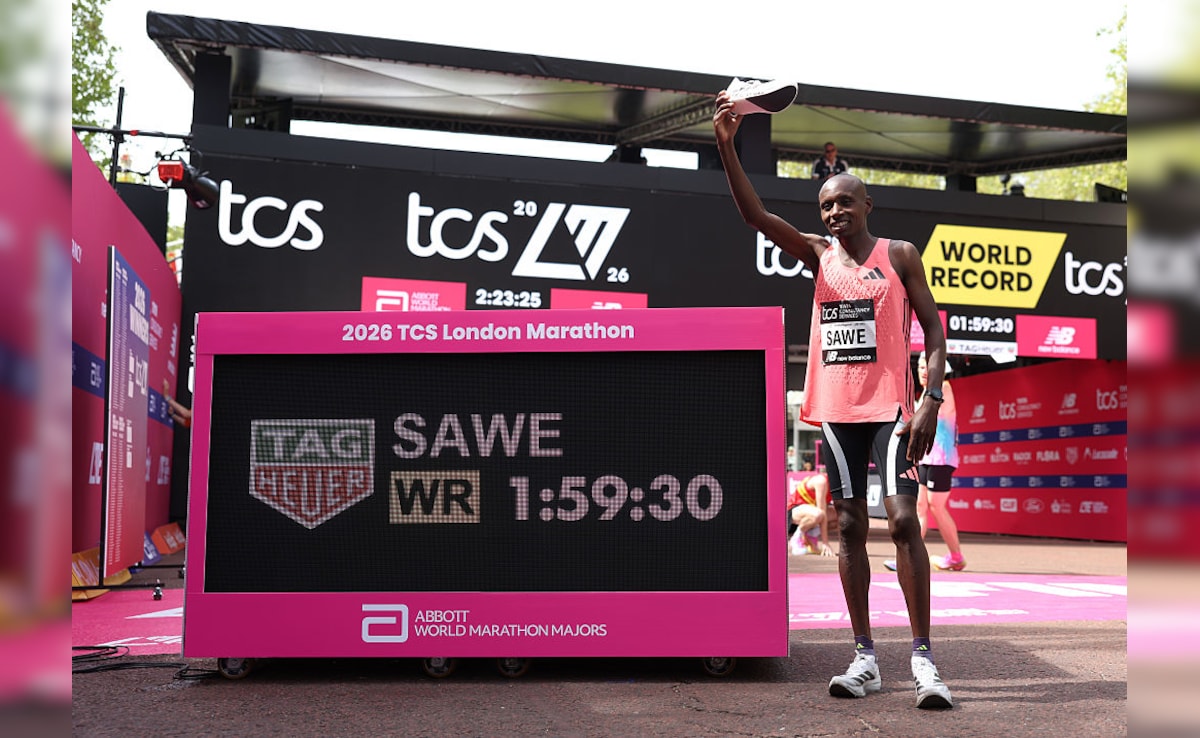
From the marathon at the 1908 London Olympics to now, in 118 years of history, Kenya's Sebastian Sawe and Ethiopia's Yomif Kejelcha became the first humans ever to complete the London Marathon's 42.2 km (26.2 miles) distance in under two hours. This is such a monumental achievement in sport that it can perhaps be compared with Sir Don Bradman's astonishing Test average of 99.94 in cricket, Usain Bolt's 9.58-second 100m world record, Michael Phelps' record 23 Olympic gold medals, or the United States team's 239 medals at the 1904 St. Louis Olympics.
Social Media Debate Over Shoes
There is no doubt that, like Formula One cars, equipment, apparel and technology influence sport. But the athlete always remains the most important factor.
At present, a fierce debate has erupted on social media over Adidas and Nike shoes.
To win this race, Adidas clearly invested heavily - in the athlete, in testing Sebastian Sawe extensively to avoid doping allegations, and in shoe research and design.
On social media platform X, user Anish Moonka (@anishmoonka) posted a widely shared thread explaining the marathon process. It has received over 4.2 million views and more than 25,000 likes. NDTV does not independently verify the claims made in that post, but it offers an informative narrative.
Anish wrote: "Nike spent ten years trying to break the two-hour marathon barrier. They named it a project, built special shoes, and paid the world's greatest marathoner to achieve it. Yesterday, a Kenyan runner finally did it in 1:59:30 - wearing Adidas."
He added that Sawe had previously been a pacemaker - runners hired to set the pace early in races before stepping aside.
According to the post, Sawe was hired in 2022 for a half-marathon in Spain as a pacemaker, but instead ran the full race and won it. Adidas later signed him, and four years later he became the first man to run an official sub-two-hour marathon.
Nike's Earlier Attempt
Anish also described Nike's famous Breaking 2 project launched in 2016.
Nike funded shoes, pacemakers, science labs and Eliud Kipchoge, who ran 1:59:40 in Vienna in 2019. But that event was considered an exhibition run, with rotating pacemakers and a pace car using laser lines. It was never officially ratified as a world record.
The thread further claimed Nike later lost market share in the running shoe business while rivals On Running and Hoka grew rapidly.
Adidas' Counterattack
According to the same thread, Adidas spent three years developing the Adizero Adios Pro Evo 3.
The shoe reportedly weighs only 97 grams - lighter than a deck of cards.
The post cited a Wall Street Journal study claiming that reducing shoe weight by 3.5 ounces can save a runner around 57 seconds over a marathon. Sawe won by 58 seconds.
Adidas also reportedly funded extra anti-doping testing for Sawe before major races.
The shoe is priced around $500 and remains difficult to obtain.
Adidas celebrated on X: "Welcome to a new era of fast. The #Adizero Adios Pro Evo 3. Now officially the sub-2 shoe."
Science Matters - But Don't Forget the Athlete
Shoes, clothing, nutrition, hydration and sports science are all essential parts of elite performance. Adidas deserves praise for patient research and investment.
But amid the technology race, the athlete's brilliance must not be overshadowed.
Kenya's 30-year-old Sebastian Sawe achieved what had remained almost mythical for over a century. On April 26, he completed the London Marathon in 1:59:30. Ethiopia's Yomif Kejelcha followed in 1:59:41, making it the first time two humans broke the two-hour barrier in the same marathon.
118 Years to Cut 55 Minutes
In the 1908 London Olympics, America's Johnny Hayes won the marathon in 2:55:18.4.
From there, the sport evolved:
Time Athlete Year Country
2:55:18.4 Johnny Hayes 1908 USA
2:20:42.2 Jim Peters 1952 England
2:09:36.4 Derek Clayton 1967 Australia
2:05:42 Khalid Khannouchi 1999 Morocco / USA
2:00:35 Kelvin Kiptum 2023 Kenya
1:59:30 Sebastian Sawe 2026 Kenya
It took 118 years to reduce marathon times by 55 minutes. The shoes matter, the science matters. But history was made by human legs, lungs, discipline and courage.