


Dominance To Helping Hand: The Delhi Connection In Jammu And Kashmir's Cricket Rise
Jammu and Kashmir has gone from being a punching bag to a force to be reckoned with, and Delhi has played a role in it.
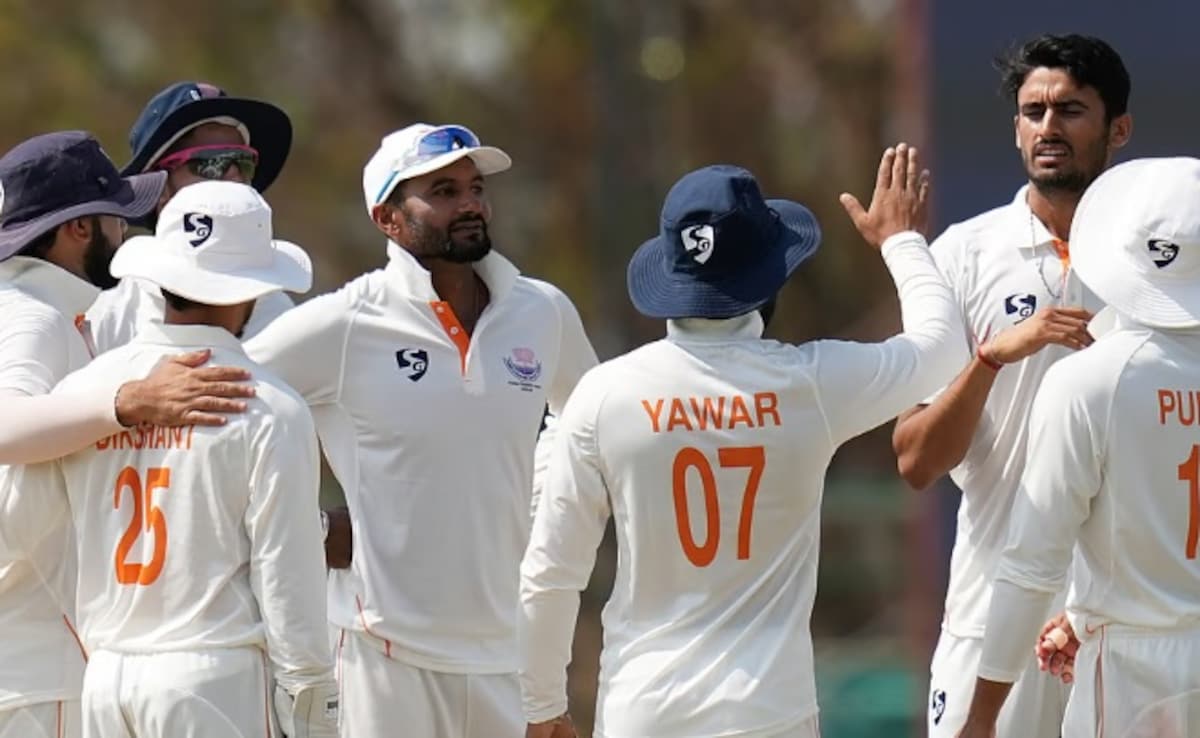
This story dates back to the '90s when Ranji Trophy was played in a zonal format till the knockout rounds. Every big gun knew just who would be the target of their "annual run fest". For Bengal, it used to be Tripura in the East Zone. Down south, Tamil Nadu and Karnataka would thrash Goa for fun. Up north, the Delhi legends would eye the game against Jammu and Kashmir to prop up their seasonal numbers. A former Delhi captain, who also went on to play Tests and ODIs for India, narrated this funny anecdote.
"It was my first season in first class cricket and we had just opted to bat against J&K. `Now normally batters till No. 5 pad up at start of the day. I remember that our No. 5, who was a domestic run machine was padding up. Our equally eminent No. 3 asked what he thought was a 'pertinent question'," the former skipper recalled.
"Bhai tu pad kyon pahen raha hai? (Bro, why are you padding up?)," the No.3 asked in jest.
A sharp expletive-laden reply came from batter No. 5: "Jammu and Kashmir hai toh kya pad bhi na pahnoon? (So what if It's J&K, you don't even want me to wear pads?)." The No. 3's retort was that his turn might not even come given that it was J&K on the other side.
On Saturday, Jammu and Kashmir's maiden Ranji triumph meant that this three-decade-old story became an indicator of how far the team has come battling all odds.
Back in the '80s and early '90s, Delhi was one of the domestic heavyweights with six to seven India stars coming back for Ranji Trophy to score double tons and boost their averages.
If late Raman Lamba and current J&K coach Ajay Sharma would be out in the middle, there was little chance that Kirti Azad, KP Bhaskar or Bantoo Singh would get a chance to bat.
Another India player from Delhi recalled the time when the simply the presence of the legendary Mohinder Amarnath would be enough for J&K to over-awed.
"For them, Jimmy paa came from another planet. The J&K players of that generation would be awe-struck. Bowling kya daalenge, unko yeh belief hi nahi hota tha ki Jimmy paa unka bowling khel rahe hain (Amarnath was a man from another planet for them. They were overawed that Amarnath was facing them)," he laughed.
Gone are those days of Delhi being the "Dada" of domestic arena and on Saturday, the days of J&K being the minnows also seem over.
In fact, things changed for the better at the turn of millennium itself despite the fact that Jammu and Kashmir Cricket Association was not doing a commendable job.
And it was the Delhi connection that changed things over the years.
Bishan Singh Bedi's entry as an uncompromising coach was the first sign that there could be a change.
"Bedi sir would tell us, 'Son you are not there to make up numbers. You are there to compete. Don't indulge in association politics and be the best version of what you can be'," valley's first ever India cricketer Parvez Rasool fondly recalled the advice of the late Indian captain.
Bedi also worked hard to end the Jammu vs Kashmir conflict in team selections.
"He made us believe that we need to do well in Ranji and aim for bigger prize. I felt I can play for India. He brought cricketing smarts and a very Delhi like toughness in our game," Rasool said.
After Bedi, it was Sanjeev Sharma, another former India seamer and Delhi thoroughbred, who did his bit for J&K as their coach.
But it required a Mithun Manhas, empowered by the BCCI, to turn J&K into a champion outfit.
Manhas, a Kashmiri Pandit hailing from Jammu, had left for Delhi during his teenage years and went onto become one of their best batters.
However, towards the end of his career, Manhas headed home and retired from first class cricket from J&K.
He returned as an administrator for J&K and his calm demeanour and years of navigating through choppy waters of Delhi's controversial state unit DDCA had made him a battle-hardened veteran.
Once the corruption-mired JKCA was taken over by the BCCI, it was the then Board secretary Jay Shah who put Manhas on the hot seat as an administrator.
Not everyone liked Manhas' entry as he was more the man from South Delhi than Jammu but Manhas weeded out the disturbing elements. It helped that BCCI and Shah backed him to the hilt with one directive: "Utilise full potential of J&K players".
From organising age group camps to creating a pool of pacers and also beating Delhi to become the first north zone state to have both black and red soil tracks, Manhas executed his brief.
But his best decision was to get Ajay Sharma on board as J&K head coach, giving him a shot at redemption after his image and reputation got tarnished in the match-fixing scandal back in the day.
Sharma was one cricketer who would scare the daylights out of opposition states whenever he came out to bat wearing that white helmet.
"I always knew that Ajay bhai is the right man for the job. It wasn't difficult to convince him as my vision was to see J&K win Ranji Trophy," Manhas had told PTI after their semifinal win.
If Bedi brought Delhi's competitive streak, Manhas and Sharma inculcated the once upon a time Delhi ruthlessness in the team.
If J&K batted out Karnataka for nearly two and half days, it came out of Sharma's Delhi playbook of batting forever and outclassing the opposition.
As Paras Dogra prepares to lift the Trophy (incidentally another Delhi boy who played for HP), the Capital imprint will be firmly there.
Delhi is no longer the Delhi it was.
It has passed over the baton to J&K.
(This story has not been edited by NDTV staff and is auto-generated from a syndicated feed.)
 Jammu and Kashmir