





Time is right for Russia to host
The fantastic pace of construction and renovation all over Russia - in preparation for Sochi Winter Olympics - has left everybody rubbing their eyes.
That Olympic organizers spent a record $50 billion - capital improvements and allegations of bribes included - and did not quite get a finished product is difficult to fathom.
That the International Olympic Committee decided to put its winter crown jewel in this rough neighborhood in the Caucasus is highly debatable.
But that the Winter Games are finally being staged in Russia is nothing but logical.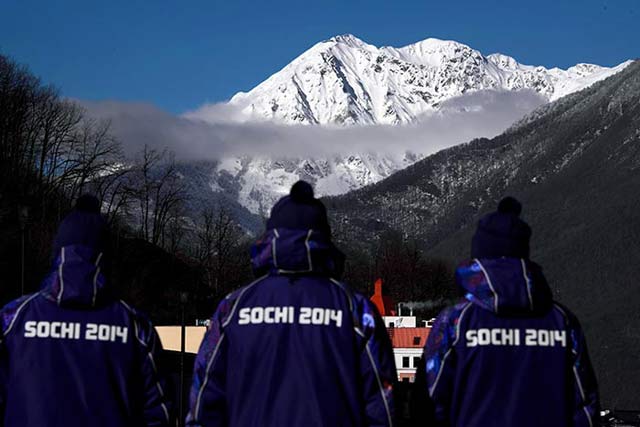 Norwegians, Canadians and other frozen folk might argue the point, but what other nation has a deeper historical and literary association with winter?
It has been a burden and ultimately a bulwark for Russia through the centuries, and in the 90 years since the Winter Olympics began in Chamonix, France, the Russians have brought home plenty of medals to underscore the point that they know how to handle snow and ice.
Since the breakup of the Soviet Union, Russia has won 91 medals in its five Winter Games as an independent Olympic entity: 36 gold, 29 silver and 26 bronze. That ranks behind only Germany, the United States, Norway and Canada during that span.
Of those five nations, the only one never to have staged a Winter Olympics was Russia.
"Russia is, and nobody would question it, a very legitimate winter sporting superpower, one that has never hosted the Winter Games," said Michael Payne, a former IOC executive who is now an analyst and consultant. "They've got some incredible mountains but didn't have the infrastructure and facilities, and they lost a lot of their winter training facilities when the Soviet Union broke up into other countries. And one of the original pitches from back in the bid seven years ago was, 'We need the games also as a catalyst to sort of build all the training facilities we used to have, and it's not as if we're a bit player on the winter sports scene.' And nobody could fault that position."
Finding fault has been a sport of its own ever since. There have been domestic and external concerns about corruption, ecological damage, human rights, security and the enormous cost of transforming this city and its spectacular nearby mountains into an Olympic site.
The scale of the project is suitable for a pharaoh or, in this case, Vladimir Putin, and to make the one-hour journey on a new road by bus from the shores of the Black Sea to the Alpine ski resort in Rosa Khutor is to see nature transformed by the exigencies of man. Bridges, tunnels, power lines, hotels, concrete in all shapes and sizes, stripped hillsides, freshly planted evergreens, gondolas, ski jumps, a sliding track, ski stadiums. The pace of the transformation has even Olympians who visited recently rubbing their eyes.
"We came here two years ago, and there were about four hotels at the base of that gondola, the one gondola," U.S. skier Marco Sullivan said. "Now there are a dozen gondolas and so many hotels. It's amazing what they've done."
Klemen Bergant, a Slovene who is the head coach of Russia's women's World Cup Alpine ski team, said: "I've heard Alpine skiers say: 'Why is the Olympics in Russia? Why is the next Olympics after that in Korea?'
"But the way I see it, Alpine skiing is much too local already. So if we stay in Central Europe and just race in Switzerland, Italy, Austria and Slovenia, nobody will be interested. We have to go abroad, and this is also good for everybody because Russia is a huge market with a huge potential. For me it's just normal that they have the Olympics."
In ski jumping, the Sochi Games give Russia the international-standard, large-hill jump it lacked. The games also provide a second sliding track to accompany the one built in 2007 in Paramonovo, near Moscow.
Sochi has been a flash point on multiple levels, creating concern among prospective bidders for future Winter Games. Sochi's $50 billion price tag, more than the cost of all previous Winter Olympics combined, is misleading, in part, because it includes tens of billions in public infrastructure costs. Dmitry Chernyshenko, the leader of Sochi's organizing committee, has said the operating budget is closer to $2 billion. But the IOC clearly has a communications challenge on its hands: Voters in Germany and Switzerland have rejected potential bids for the 2022 Olympics, and Stockholm withdrew its bid, citing financial concerns.
"You have to be clear about the nature of any Olympic budget," said Sebastian Coe, head of the 2012 London Games, who is in Sochi as chairman of the British Olympic Association. "There are two very clear budgets. You have the operating budget, which I understand is about $2 billion and is in line with previous Winter Games. That is the budget raised through marketing, merchandising and broadcasting.
"The structural budget is, of course, going to vary according to the strategic view that a country or city takes. When the Soviet Union broke up, most of the winter sports facilities were not within Russia. Russia does not have a concentration of winter sports facilities, but it now has. I think you have to be very clear about an operating budget and an investment in a region which has been taken very seriously."
The verdict on whether Sochi's transformation was justified will depend on what happens in the years to come: whether its venues get used or fall into disrepair, and whether a state-of-the-art but expensive Alpine resort complex can become a destination for skiers who have many other options in the Alps, which already draw wealthy Russians.
© 2014 New York Times News Service