









Jamal Musiala's Health Condition Explained: What Are Absence Seizures And Can He Play Football?
Bayern Munich midfielder Jamal Musiala has been diagnosed with absence seizures, a condition that saw him collapse on the field twice in 4 days for the German Bundesliga club.
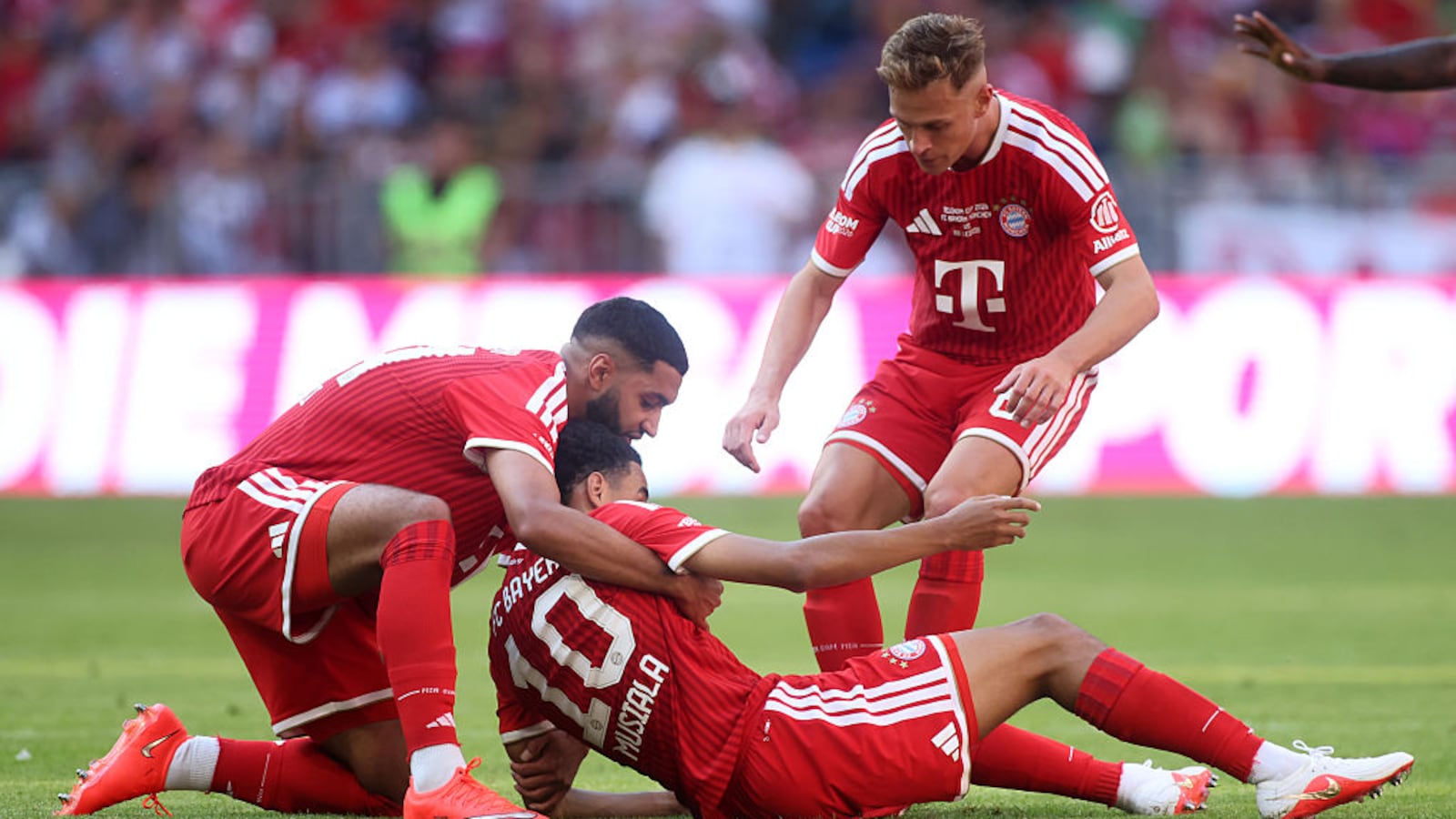
- Jamal Musiala was diagnosed with absence seizures after collapsing twice in four days during matches
- Absence seizures cause brief impaired awareness but can be managed with medication and monitoring
- Bayern are cautiously managing Musiala’s condition with specialist input and medication treatment
Dubbed the German wonderkid, the boy who is going to lead the next generation of superstars at Bayern Munich, Jamal Musiala, has been forced to face an unexpected challenge away from the usual physical demands of elite football. The Bundesliga club hadn't even had the attacking midfielder regain full form and fitness from the injury that kept him out of the majority of the 2025-26 season, and is now facing a neurological condition that saw him collapse on the field twice in four days. His diagnosis has now been made public, and it has been reported that Musiala has been diagnosed with absence seizures, a neurological condition that can cause brief periods of impaired awareness. The issue became a major talking point after Musiala experienced another episode during Bayern's game against Heidenheim, just four days after a similar incident had occurred.
For Bayern, the priority is understandably Musiala's health. But specialists treating the 23-year-old have told the club in writing that there is currently no medical reason preventing him from participating in high-performance sport. Bayern's honorary president Uli Hoeness revealed that the club had known about Musiala's condition for some time. However, seeing the episode occur again so soon after the first one came as a shock.
"We thought that if it didn't happen again so quickly, the medication he is taking would help. But when it happened again four days later, in the same way, I was stunned," Hoeness told Sky Sports.
What Are Absence Seizures?
An absence seizure is a brief interruption in a person's awareness. The episode can be so short that it may initially go unnoticed. According to Dr Meneka Sidhu, a consultant neurologist at the National Hospital for Neurology and Neurosurgery in London, some absence seizures last only a very short time, with the person able to carry on almost immediately afterwards.
"With atypical absences that last longer, people may have automatic movements like fidgeting with their hands, eyelid fluttering and lip smacking," Dr Sidhu explained.
In some cases, a person can also fall. For a footballer, an episode during a match can obviously be concerning. Football at the highest level demands continuous concentration, awareness and rapid reactions, making any sudden loss of awareness something that needs careful medical supervision.
Absence Seizures: The Risk
Repeated absence seizures occurring over more than 24 hours can be an indication of epilepsy, although the condition can be managed with medication. The precise diagnosis and treatment depend on the individual, which is why Musiala is being assessed and treated by neurological specialists.
"The doctors treating him, the neurologists and specialists, have provided us with written confirmation - because this was absolutely essential for us - that, in their view, there are no concerns regarding Jamal taking part in high-performance sport," Hoeness said. "Without that, we would have been acting negligently."
Can Jamal Musiala Continue Playing Football?
At present, there's no evidence that suggests that Musiala's football career could be under threat. Dr Sidhu stressed that an effectively treated absence seizure condition does not necessarily prevent someone from participating in sport.
"When effectively treated, there is no reason absence seizures should stop anyone playing sport," she said.
That is an important point for Musiala, whose career has already been disrupted by injury. However, continuing to play does not mean the issue can simply be ignored. Athletes may have specific triggers that need to be identified and managed.
Dr Sidhu pointed to hyperventilation and dehydration as possible triggers for people with epilepsy, factors that can become particularly relevant during intense physical activity.
But, one thing is certain, Bayern have to find a way of managing Musiala's workload efficiently in order to enable him in getting him the treatment that aids in his recovery.
What Are Bayern Munich Planning To Do?
Bayern do not appear to be considering an immediate halt to Musiala's football career. Instead, the club is taking a cautious approach and working with the specialists treating him. Hoeness confirmed that Musiala is already taking medication and that Bayern have sought the opinions of neurologists and other specialists before allowing him to continue playing. The club's next challenge is understanding how the condition responds to treatment.
The recurrence of the episodes within such a short period has clearly made the situation more complicated.
"We've already taken precautions," Hoeness said. "The doctors treating him, the neurologists and specialists, have provided us with written confirmation, that, in their view, there are no concerns regarding Jamal taking part in high-performance sport."
But Hoeness also acknowledged that Bayern are entering unfamiliar territory. "But I must say, I'm rarely at a loss for words or without a clear solution. We'll have to feel our way through this new situation first," he said.
Harry Kane Offers Support To Musiala
Musiala is not dealing with the situation alone. His Bayern teammates have rallied around him, with the club's marquee striker Harry Kane offering a public show of support.
"Jamal is obviously going through a bit of a difficult moment right now," Kane told BBC Sport. "I know he posted on social media about the small condition he has and from our point of view it is just about supporting Jamal."
Kane also spoke about the work Musiala has put in behind the scenes following his injury problems. "He has the full support from everyone here at Bayern and his friends and family, and we will be there to help him deal with it," Kane said.
"He came off the back of a tough injury last season, I know how much he works behind the scenes and on the training pitch."
The Treatment Plan
For now, there is no indication that Musiala's football career is under threat. The more immediate task is finding an effective way to manage his condition while ensuring that he remains safe on and off the pitch. Bayern have already taken the first major step by consulting specialists and obtaining written medical clearance for him to continue playing at the highest level. The recurrence of the seizures, however, means the situation will require close monitoring.
"Patients are given what are known as seizure-suppressing medications, which prevent the uncontrolled firing of neurons and are intended to suppress epileptic seizures. They take the medication daily as a preventive measure, and it builds up the necessary level in the blood within two to three weeks. During this time, doctors carry out regular checks to see how the level is developing and whether the dose needs to be adjusted. Once that level has been reached, there is normally sufficient protection against further seizures," Dr. Regina Becker, who runs the "Munich Schwabing Neuro Centre", told Goal.com.
"Even if the medications make someone seizure-free after a short time, they are taken for several months or years. In children who suffer from this form of epilepsy, there is a chance they will also become seizure-free in adulthood without medication. If the illness occurs later, lifelong therapy may be necessary," he further explained.
For now, Bayern's message is one of caution, support and patience. But, the club also understands that it is important for them to allow Musiala to continue doing what he does best, which is playing football.
 Bayern München