

India vs Pakistan T20 World Cup Match On As Pakistan Cricket Board Makes U-Turn: Sources
The India vs Pakistan T20 World Cup 2026 match is on, according to sources. As per the latest update, the Pakistan Cricket Board (PCB) has relented after its government had earlier decided to boycott the February 15 Group A match
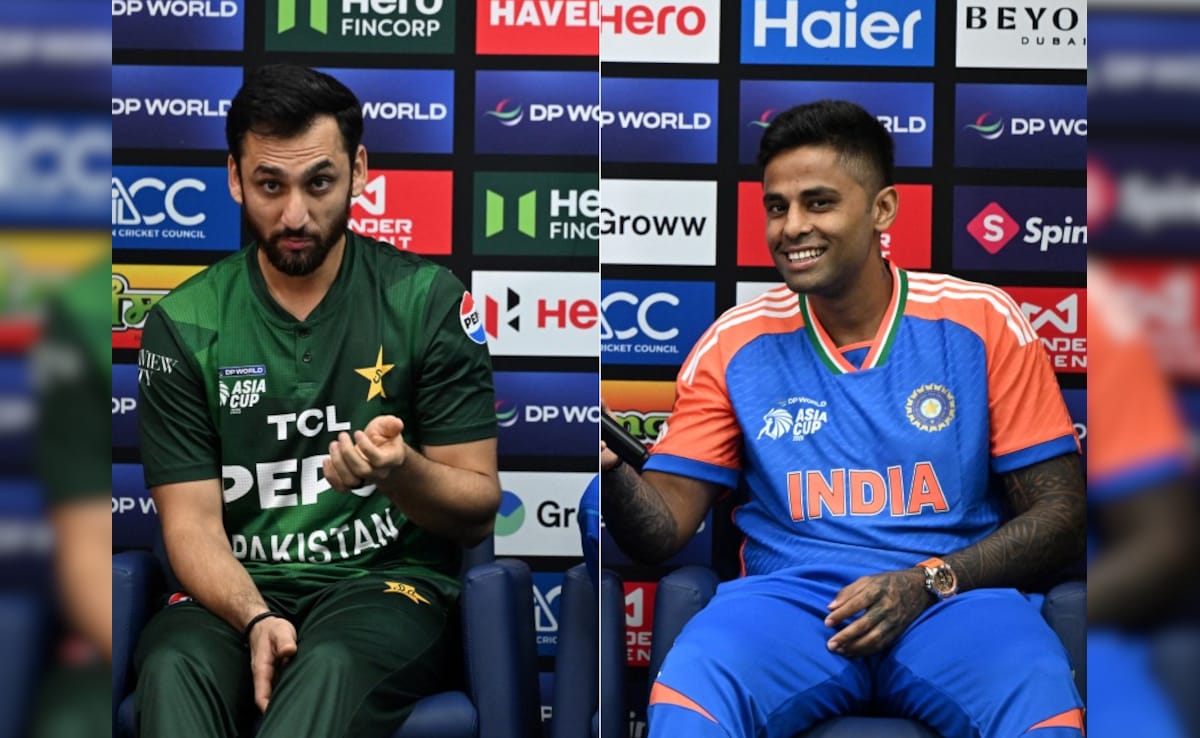
- Pakistan will play India in the T20 World Cup 2026 on February 15, according to sources
- Pakistan Cricket Board has not officially announced its participation yet
- PCB chief Mohsin Naqvi said the final decision will be announced after Prime Minister Shehbaz Sharif's input
The India vs Pakistan T20 World Cup 2026 match in Colombo on February 15 is on, according to sources. The Pakistan Cricket Board (PCB) has relented days after its government decided to boycott the February 15 Group A match in solidarity with Bangladesh, who were removed from the tournament for refusing to travel to India for their matches. The development came a day after the PCB, the Bangladesh Cricket Board (BCB), and the International Cricket Council (ICC) met in Lahore as part of ongoing negotiations.
However, the PCB is yet to officially announce its decision. According to some reports from Pakistan, PCB chief Mohsin Naqvi has said negotiations with the ICC are still ongoing, and a final announcement will be made only after consulting Prime Minister Shehbaz Sharif. Naqvi was set to brief Sharif on the latest developments later on Monday.
The PCB placed several demands before the ICC on Sunday. However, the Jay Shah-led global cricket body rejected some of the key proposals, sources told NDTV. The three demands that were turned down were: resumption of the India-Pakistan bilateral series, the start of an India-Pakistan-Bangladesh tri-series, and a guarantee about India's tour of Bangladesh in 2026.
What Is the PCB's Current Official Stand?
"We have had discussions with them. It would not be right for me to make any comments right now. Once we get their response, we will decide. We will go back to the PM (Shehbaz Sharif) for advice once the ICC replies," Naqvi told reporters. "An announcement will come tomorrow or the day after tomorrow," he said on Monday.
Mohsin Naqvi, however, refused to officially acknowledge that a "U-turn decision" has already been taken.
"Regarding the Bangladesh issue, at that time, we were not going to let their point of view slide. They are our brothers, and the entire situation was right there in front of you. Things are currently in progress, so I won't say much. I think the ICC and the Bangladesh Board are in a phase where it wouldn't be appropriate for me to comment. I am personally waiting; as soon as any information comes from their side, we will inform you immediately," Naqvi said during a press interaction on Monday.
What Are ICC and Bangladesh Saying
BCB chief Islam issued a statement in Dhaka, expressing his gratitude towards Pakistan for backing his country but requested that the team show up for the high-profile game for the greater good of the sport.
"We are deeply moved by Pakistan's efforts to go above and beyond in supporting Bangladesh during this period. Long may our brotherhood flourish," Islam said in a statement.
"Following my short visit to Pakistan yesterday and given the forthcoming outcomes of our discussions, I request Pakistan to play the ICC T20 World Cup game on 15 February against India for the benefit of the entire cricket eco system," he added.
Soon after, the ICC issued a statement of its own in Dubai, saying that it would not be penalising Bangladesh for its refusal to play in India. The country was ultimately replaced by Scotland in the tournament roster.
"It is agreed that no financial, sporting or administrative penalty will be imposed on Bangladesh Cricket Board in relation to the current matter," stated a press release from the world body.
"It is acknowledged that BCB retains the right to approach the Dispute Resolution Committee (DRC), should it choose to do so. This right exists under current ICC regulations and remains intact," it added.
In addition, the ICC also agreed to give the hosting rights of a global event to Bangladesh between 2028 and 2031
What Happened Before Pakistan's Big U-Turn
An ICC delegation led by Deputy Chairman Imran Khawaja, PCB Chairman Mohsin Naqvi, and BCB President Aminul Islam met in Lahore on Sunday to discuss Pakistan's decision to boycott the ICC Men's T20 World Cup 2026 match against India, scheduled for February 15 in Colombo.
Pakistani media reported that the lengthy negotiations have concluded, with the dispute expected to be resolved through mutual consultation in the "next few hours," with a roadmap finalised between Imran Khawaja, Mohsin Naqvi, and Aminul Islam.
This development came after the official X handle of the Pakistan Government announced that the Men in Green would not take the field in the February 15 clash. Prime Minister Shehbaz Sharif later linked this boycott to the controversy involving Bangladesh, citing it as a symbol of solidarity.
Bangladesh were replaced by Scotland in the 2026 T20 World Cup after their request to have all their matches played outside India was rejected by the ICC. Bangladesh had sought the change after Kolkata Knight Riders (KKR) pacer Mustafizur Rahman was removed from the squad following instructions from the Board of Control for Cricket in India (BCCI), amid concerns related to atrocities against minorities in Bangladesh
Featured Video Of The Day
 India Cricket Team
Cricket
India Cricket Team
Cricket
 Pakistan Cricket Team
Pakistan Cricket Board
BCCI
International Cricket Council
T20 World Cup 2026
Cricket
Pakistan Cricket Team
Pakistan Cricket Board
BCCI
International Cricket Council
T20 World Cup 2026
Cricket