


"Speak, Don't Threaten": Ex ICC Chief Ehsan Mani's Blunt Take On Pakistan's India Boycott
Former ICC chairman Ehsan Mani shared his honest views on the India vs Pakistan 'boycott' row as the fate of the T20 World Cup 2026 hangs in balance.
- Pakistan government instructed its team not to play against India in the T20 World Cup 2026
- ICC and PCB have started formal talks to resolve Pakistan's decision to boycott the India match
- Former ICC chief Ehsan Mani admitted Pakistan's 'boycott call' was an act of "frustration"
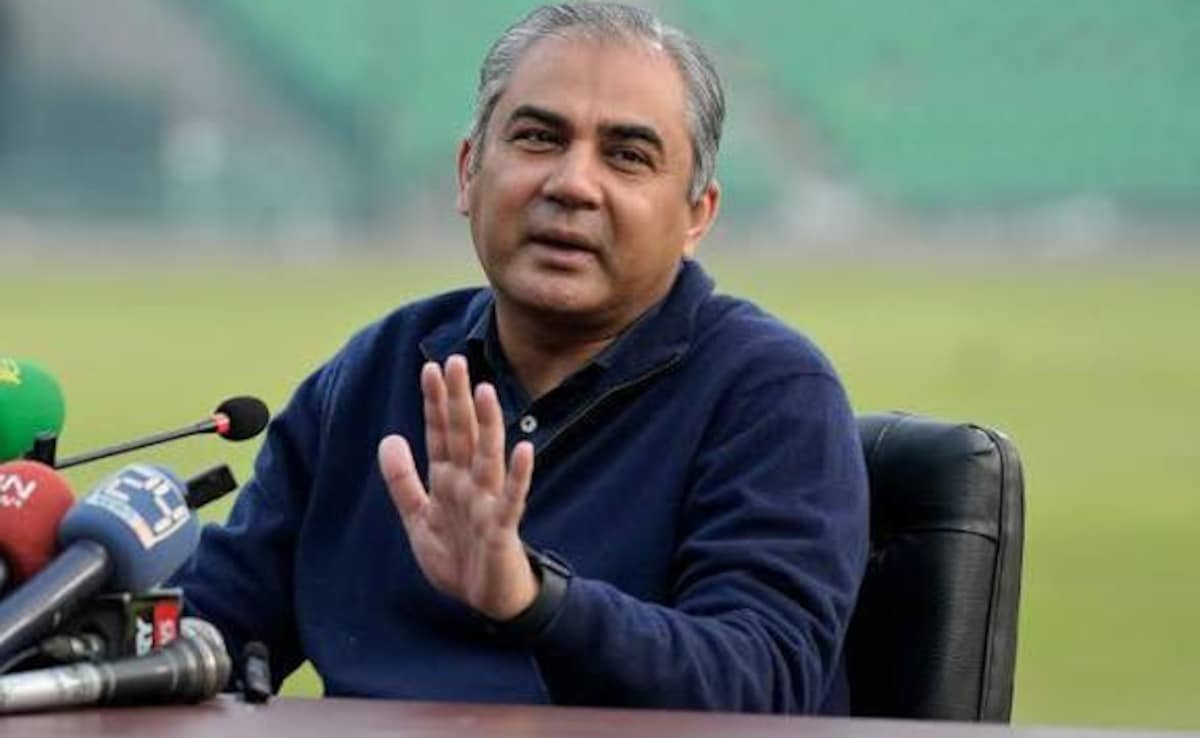
The fate of the T20 World Cup 2026 hangs in the balance following the Pakistani government's instruction to its team not to take the field against India in their scheduled 15 February match. While back-channel talks began shortly after the announcement, the International Cricket Council (ICC) and the Pakistan Cricket Board (PCB) have now initiated formal discussions to resolve the impasse. However, former ICC chief Ehsan Mani has warned fans not to keep their hopes high, suggesting the situation has already escalated too far. While Mani declined to blame a single party, he cited "political involvement" as the primary reason for the current mess. He admitted that Pakistan's decision to boycott the India match is a reaction born out of "frustration".
Speaking to Revsportz, Mani reflected on his experience as a former ICC Chairman. He emphasised that early communication is vital to prevent such crises.
"I feel that as Chairman of the ICC, I would have tried to find a solution. You don't want to throw any member out of the tournament. The PCB has taken a stand, but I would have preferred they refrained from doing so and talked instead. There is no doubt in my mind that people should be speaking, not threatening or taking drastic actions. However, this effort should have come from both sides."
Mani noted that when Jay Shah and the ICC board made their decision, it was unanimous, with the sole exception of Pakistan.
"Obviously, one should usually accept the board's decision," Mani added. "But the PCB feels strongly that it was unfair or politically motivated. This should have been nipped in the bud; Mr Shah and Mr Naqvi should have spoken directly. I feel the PCB's stance was largely a reaction to feeling ignored."
While a glimmer of hope remains, Mani maintains that only discussions at the highest level -- Chairman to Chairman -- can break the deadlock.
"To be honest, I would not hold too much hope unless the discussions happen at the top," he asserted. "I would have liked to see Mr Jay Shah make a gesture by offering to travel to Pakistan to sort this out. During my tenure, I met personally with relevant Indian ministers, such as the then Minister of Sport, Mr Sunil Dutt."
He concluded by stressing that if goodwill exists on both sides, a solution is possible: "Sending an emissary only results in messages being passed back and forth. The chairmen must meet directly."
Featured Video Of The Day
 India Cricket Team
 Pakistan Cricket Team
Pakistan Cricket Board
International Cricket Council
T20 World Cup 2026
Mohsin Naqvi
Jay Shah
Cricket
Pakistan Cricket Team
Pakistan Cricket Board
International Cricket Council
T20 World Cup 2026
Mohsin Naqvi
Jay Shah
Cricket