





From Social Media Silence To World Cup Stardom: Sanju Samson Delivers
There was a time not too long ago when Sanju Samson chose silence over noise. No tweets. No Instagram stories. Instead, there was practice, patience, and the quiet belief that his moment would come.
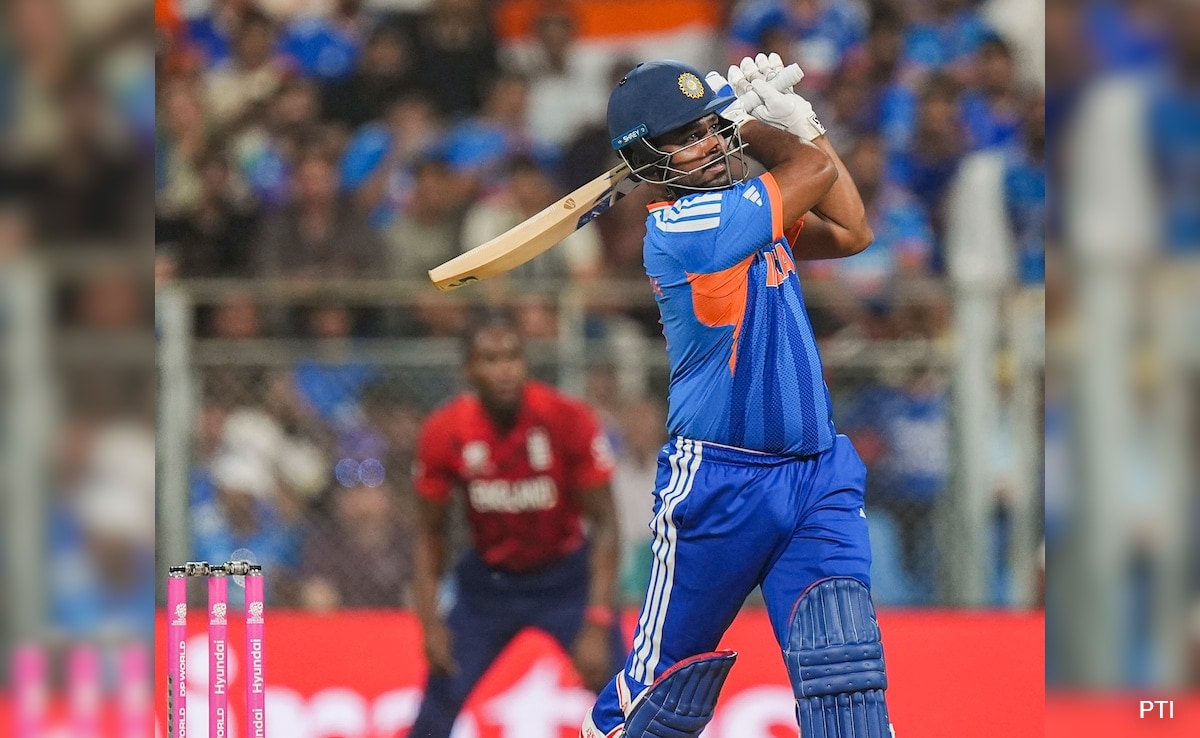
There was a time not too long ago when Sanju Samson chose silence over noise. No tweets. No Instagram stories. No public reactions to the endless debate around his place in the Indian team. Instead, there was practice, patience, and the quiet belief that his moment would come. In this World Cup, it finally did. From the City of Joy to the City of Dreams, Samson has stitched together two innings that have reshaped his international narrative - a 97 in a chase against the West Indies in Kolkata, followed by a commanding 89 while batting first at Wankhede. Two different match situations. Two different kinds of pressure. For Samson, the transformation has been as mental as it has been technical.
He said at the post-match press conference,
"It feels really great and also a bit relieving. For the last few years, I've been trying to do something like this for my country. I've waited patiently, worked hard on my game and done a lot of practice."
The innings in Kolkata were about control. India was chasing, and Samson's role was to take the game deep. The 97 wasn't just about big shots; it was about pacing a chase, understanding when to absorb pressure and when to release it.
At Wankhede, the equation flipped.
India was batting first, and Samson sensed an opportunity almost immediately. In his words,
"In the previous game, it was about taking the chase deep, but today we were batting first and I felt once I got a start, I should try to maximise the scoring for the team."
He and opening partner Abhishek Sharma quickly realised on Thursday night that the Wankhede surface was perfect for strokeplay. The strategy was laid instantly.
"After the first over Abhishek and I spoke and felt the pitch was very true. We thought a big score was possible, maybe even 250 if things went well," he said later.
What followed was a masterclass in controlled aggression. Samson's footwork was crisp, his shot selection precise, and his tempo perfectly tuned to the conditions.
But the defining moment of the innings came not from Samson, but from the field.
On 15, he offered a chance - and Harry Brook put it down. It proved costly.
The England captain said later,
"Catches win matches, don't they? Unfortunately it didn't stay in my hands. That's just one of those things. He went on to play a very good innings as well."
Samson made sure England paid for it. By the time he was done, Wankhede had witnessed another reminder of the talent that has so often flickered in Indian cricket's peripheral vision.
Samson admits the pressure to secure a place in India's World Cup squad had once pushed him into trying too hard.
"It was definitely challenging. I wanted to make an impact and cement my place in the World Cup squad, especially during the New Zealand series, but I think I was trying a bit too hard."
The solution, he says, was to step away from the noise.
"T20 cricket can be funny - even the best players struggle at times. I had to respect the game and go back to my basics. My close friends and family supported me a lot. I shut myself off from outside noise, stayed away from social media and focused on improving my game."
And it worked. The runs that followed were not just about redemption - they were about validation.
Two innings, two cities, two different match contexts. Yet both carried the same underlying message: a player who had long waited for consistency on the biggest stage might finally have found it.
Still, Samson himself isn't celebrating yet. He says,
"I'm grateful, but I still feel there's one more step to go. If we achieve that, then all the hard work will truly feel worth it."
For now, the silence that once surrounded him has been replaced by applause.
And the player who stepped away from social media to find clarity has stepped into the centre of India's World Cup story.
 Sanju Samson
 India Cricket Team
 England Cricket Team