





Sports Minister Mansukh Mandaviya Takes Big Call On ISL, Puts An End To Indian Football Crisis
Sports Minister Mansukh Mandaviya on Tuesday announced that the Indian Super League, which was on pause due to lack of a commercial partner, will start on February 14.
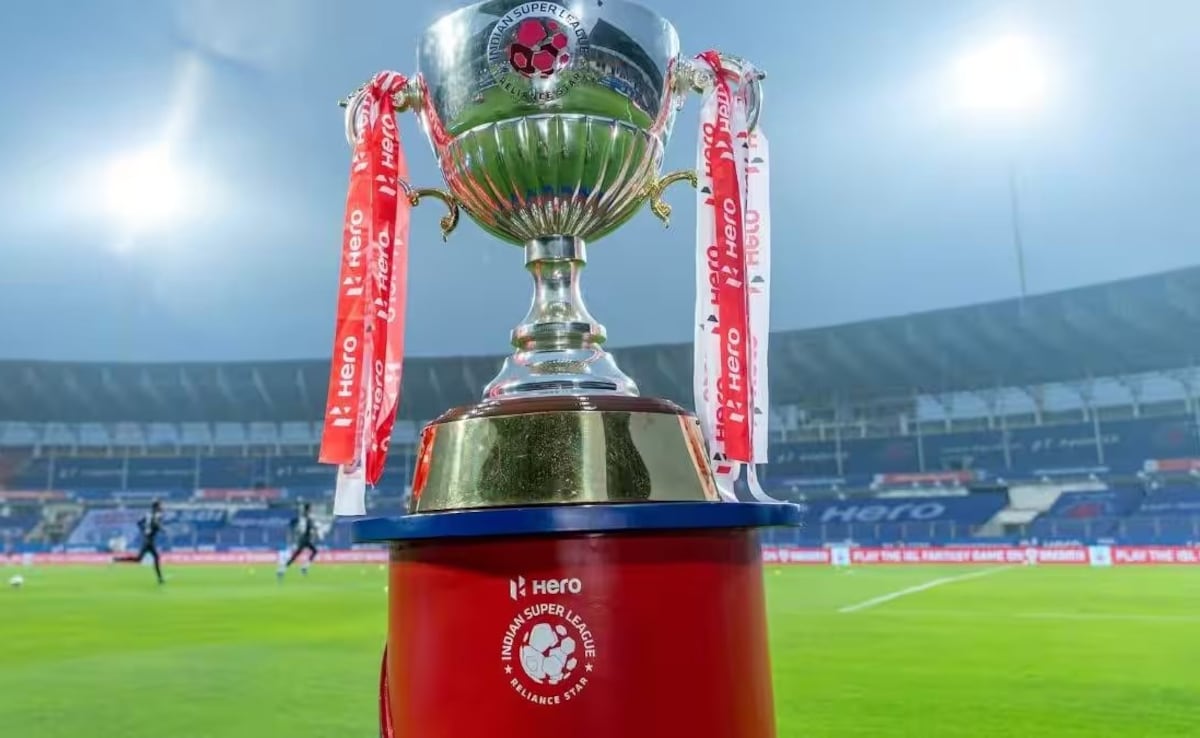
- Sports Minister Mansukh Mandaviya announced that the Indian Super League will start on February 14
- The I-League, which was also on pause, will be held "around the same time"
- The ISL will feature 91 matches on home and away basis. I-League will be a truncated event with 55 matches
Indian football finally has a kick-off date - and a sense of direction. After months of uncertainty triggered by court cases and administrative deadlock, the Indian Super League will begin its 2026 season on February 14, following direct intervention by the government. The breakthrough came after a high-level meeting involving the Sports Ministry, the All India Football Federation and representatives of all 14 participating clubs. Traditional powerhouses Mohun Bagan, East Bengal and Mohammedan Sporting sat alongside ISL regulars including Mumbai City, Bengaluru FC, FC Goa, Kerala Blasters, Chennai, Delhi, Punjab, Northeast United, Jamshedpur, Odisha and Inter Kashi, as Indian football's key stakeholders agreed on a roadmap to restart the sport.
Sports Minister Mansukh Mandaviya confirmed that legal uncertainty had been the primary reason behind the delay.
"The ISL was in limbo owing to some court cases. However, we have been able to speak to all stakeholders and the issue has been resolved and ISL will be held this year," the minister said. "It is the vision of the Honourable Prime Minister that sports in India should not suffer and I am glad that we could resolve this."
On the field, the ISL will feature all 14 clubs and be played in a single-leg home-and-away format under a Swiss module system. The structure will produce 91 matches, restoring competitive continuity after fears of a heavily curtailed or cancelled season.
Off the field, governance reform emerged as a central theme of the meeting. Clubs will form a Governing Council Board with autonomy to take commercial decisions - a move designed to reduce friction with the federation and give clubs greater control over revenues, sponsorships and operational planning.
The financial framework was also clarified. A Rs 25 crore central pool will be created, with AIFF contributing 40 percent. The league itself will receive Rs 10 crore, while the I-League will be allocated Rs 3.2 crore. The Indian Women's League (IWL) will receive 100 percent funding, a rare commitment that underlines the government's stated intent to strengthen the women's game.
Structural changes extend beyond the ISL. The I-League season will be truncated to 55 matches, while I-League 2 and 3 will be merged to streamline the domestic pyramid. Officials also committed that all six national leagues will start and end on schedule - a promise aimed at restoring credibility to Indian football's calendar.
For a sport battered by governance battles and uncertainty, the February 14 restart is more than a fixture announcement. It is a government-backed attempt to steady the ecosystem, protect clubs and ensure that, as Mandaviya put it, Indian sport does not suffer.