



Snake Enters Field During India's Practice Ahead Of Pakistan Clash In Women's World Cup
As the Indian women's cricket team went about their training at the R Premadasa Stadium on Friday evening, an unusual visitor slithered in -- a snake.
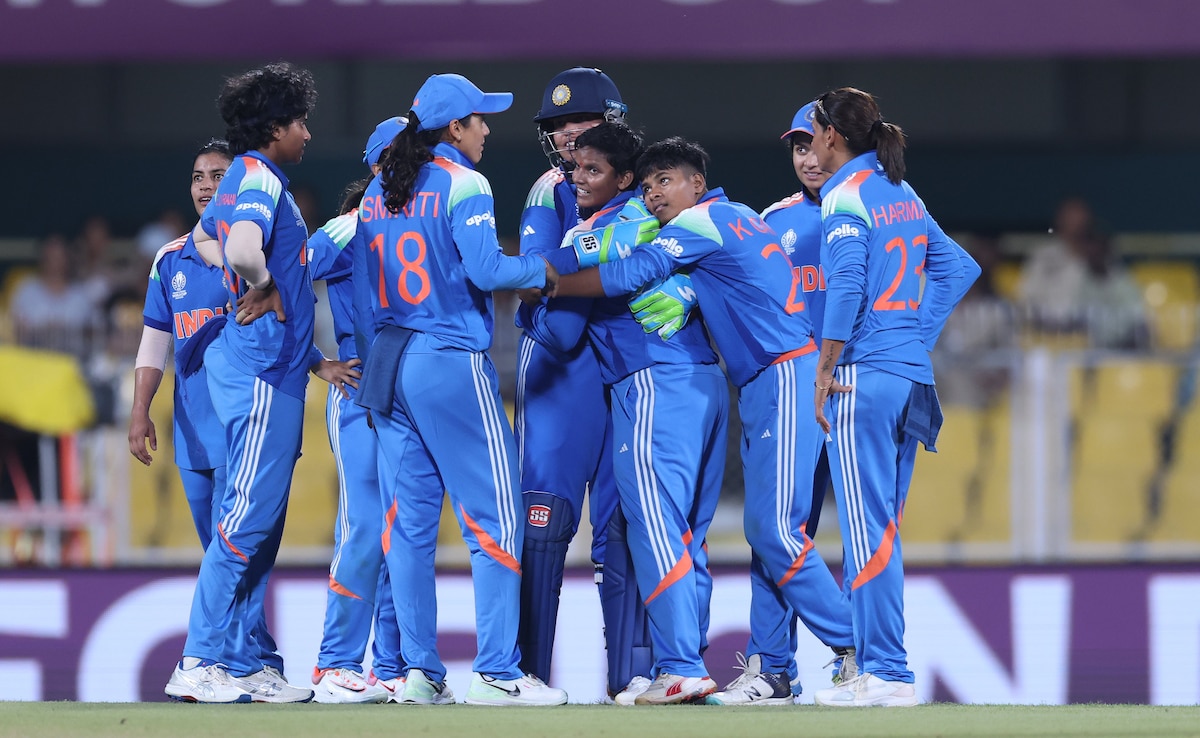
As the Indian women's cricket team went about their training at the R Premadasa Stadium on Friday evening, an unusual visitor slithered in -- a snake. The sight of the reptile, a common rat snake or “Garandiya” in Sinhalese, is not unusual at this venue. It has made appearances during Lanka Premier League fixtures and was even spotted during a Sri Lanka-Bangladesh ODI in July earlier this year, making it something of a strange tradition. "It's not venomous. It doesn't bite. It's a Garandiya, just looking for rats," a ground official said. On Friday, the greyish-brown snake was seen slithering along the drains and the stands, right when the Indian players were moving from the centre wicket towards the nets. Far from panic, the sight of the reptile sparked amusement among the Indian cricketers, support staff, and even the media contingent present.
India take on Pakistan in their second game of the women's World Cup on Sunday.
The Women in Blue had won their opener comprehensively against co-hosts Sri Lanka.
Boiling emotions, roof-cracking TV ratings, and hysterical fans — it's a common thread that connects any cricket match between India and Pakistan.
But in women's cricket, that attendant drama surrounding a game between the traditional foes takes a back-seat, at least on the field.
The usual sentiments and intensity might still give it an ambience of theatre, but, in reality, the rivalry has been a one-sided script, and heavily in favour of India.
Pakistan has managed three wins in 16 matches in T20Is but they have never beaten India in the ODIs in 11 attempts.
“It's a game of cricket and anything can happen on Sunday. But in reality there is no competition. You look at the stats, India has never lost to Pakistan,” former Indian women's chief selector Hemlata Kala told PTI.
Every time when the two teams meet, fans across the border whisper about their side rewriting history, but the gulf between the two teams remains as wide as ever.
In fact, the Indian women's team's dominance is so complete that the word rivalry feels misplaced. Rivalries are forged through balance, through blows traded back and forth, through contests where either side can win.
This match-up has been anything but that. Instead, these games have carried a different meaning.
For India, victories against Pakistan have been routine checkpoints on bigger journeys during the World Cup runs or tournament openers.
“I would say India should just focus on reaching the top four first,” Hemalata said.
On the other hand, for Pakistan, each meeting has been about survival, about trying to bridge a gap that has only widened over time.
On Sunday, the two sides will meet again, against the backdrop of three weeks of high drama involving their male counterparts at the Asia Cup, which culminated in champions India refusing to accept the trophy from Pakistan Cricket Board (PCB) chairman and Asian Cricket Council (ACC) chief Mohsin Naqvi.
In an extraordinary scene, Naqvi too refused to cede his right to present the cup, walking away with it. The trophy is yet to reach the winning team.
But going by Pakistan women's team's tame seven wicket defeat to Bangladesh in their tournament opener and India's commanding 59-run win against Sri Lanka, Sunday's fixture seems destined to follow the same script as far as the playing part is concerned.
Until Pakistan breaks the losing streak to secure that first win, the narrative will remain frozen.
But on Sunday, the R Premadasa Stadium could witness high tension beyond cricket.
The worsening of relations between the two countries, following the terror attack in Pahalgam that claimed 26 lives, has only sharpened the edge around the contest.
The Government of India continues to permit matches against Pakistan only in multi-nation tournaments, while bilateral cricket remains suspended.
As a result, the Indian women's team, much like the men's side during the Asia Cup, are also unlikely to engage in the customary handshake with their Pakistani counterparts here.
The on field action might not be a spectacle, given the prevailing trend, but the fast setting-in new non-cordial norms between the players of both the teams might give us some of it off the field.
 India Women
 Pakistan Women