



Inside Story: How Pakistan Was Forced Into A U-Turn On India Match
Pakistan Cricket Board reversed its boycott of the India match at the T20 World Cup after a week of diplomatic and financial pressure from the ICC and cricketing stakeholders.
- Pakistan Cricket Board has taken a U-turn after initially boycotting the India T20 World Cup match
- The boycott was reversed after pressure from ICC, financial penalties, and diplomatic appeals
- Sri Lanka Cricket intervened by reminding Pakistan of past support during cricket isolation
After days of defiant political signalling, the Pakistan Cricket Board finally folded - clearing the way for the February 15 India clash at the T20 World Cup and ending speculation over what many call the most valuable fixture in global sport, estimated at more than Rs 4,500 crore. What followed was presented as "protecting the spirit of cricket." In reality, it was a forced climbdown. Pakistan's withdrawal from its boycott of the February 15 India clash at the T20 World Cup was not a voluntary reset. It was the result of a week-long pressure campaign involving diplomacy, money, and ICC leverage - a political thriller played out behind closed doors.
From Political Grandstanding to Backroom Bargaining
The sequence began in early February when Pakistan's government publicly confirmed it would travel for the T20 World Cup but refuse to take the field against India - framing the move as solidarity with Bangladesh after the ICC removed them from the tournament.
PCB chairman Mohsin Naqvi echoed the line, insisting Pakistan was standing up for Bangladesh, not acting in self-interest. It was a maximalist position: participate in the tournament, boycott the marquee match. But the moment that announcement went public, alarm bells rang across the cricket economy.
The ICC's Financial Stick
Refusing to play a scheduled World Cup match carries consequences - and the ICC made that clear. Officials warned Pakistan that a boycott would trigger points forfeiture and open the door to financial penalties, including loss of ICC-generated revenues. Beyond formal sanctions, there was the reputational hit: walking away from the biggest fixture in global cricket would isolate the PCB commercially.
Broadcast partners also weighed in. The India-Pakistan game underpins the tournament's entire business model. A late cancellation threatened to punch a massive hole in World Cup revenues.
Reports indicate Pakistan's reversal saved the ICC an estimated Rs 1,470 crore. That figure alone explains how quickly the tone shifted.
Sri Lanka Steps In - and Plays the Emotional Card
While the ICC applied institutional pressure, Sri Lanka Cricket delivered the most pointed diplomatic intervention. SLC sent a formal two-page appeal to the PCB. The message was blunt and personal.
Sri Lanka reminded Pakistan of 2009 - when the Sri Lankan team bus was attacked in Lahore and international cricket deserted Pakistan. Sri Lanka, almost alone, toured during those dark years to help revive the game in the country. Now, SLC asked for reciprocity.
They warned that cancelling the India match would cause "substantial financial exposure" for the host nation and derail expected tourism and economic benefits. Pak replied, wanting to invoke force majeure. Pakistan's email to Sri Lanka Cricket lit the fuse.
After announcing its boycott of the February 15 India clash, the PCB moved to invoke the "force majeure" clause - triggering immediate intervention from the ICC. The global body demanded clarity on how political instructions could legally justify refusing to play a scheduled World Cup fixture, and laid out the strict thresholds required to activate force majeure.
The ICC also warned of the fallout: contractual breaches, disciplinary action, and potential damages if the claim failed scrutiny. In blunt terms, it reminded Pakistan that selective participation undermines the very foundation of a global tournament - and could leave the PCB exposed on multiple fronts.
Emergency Talks in Lahore
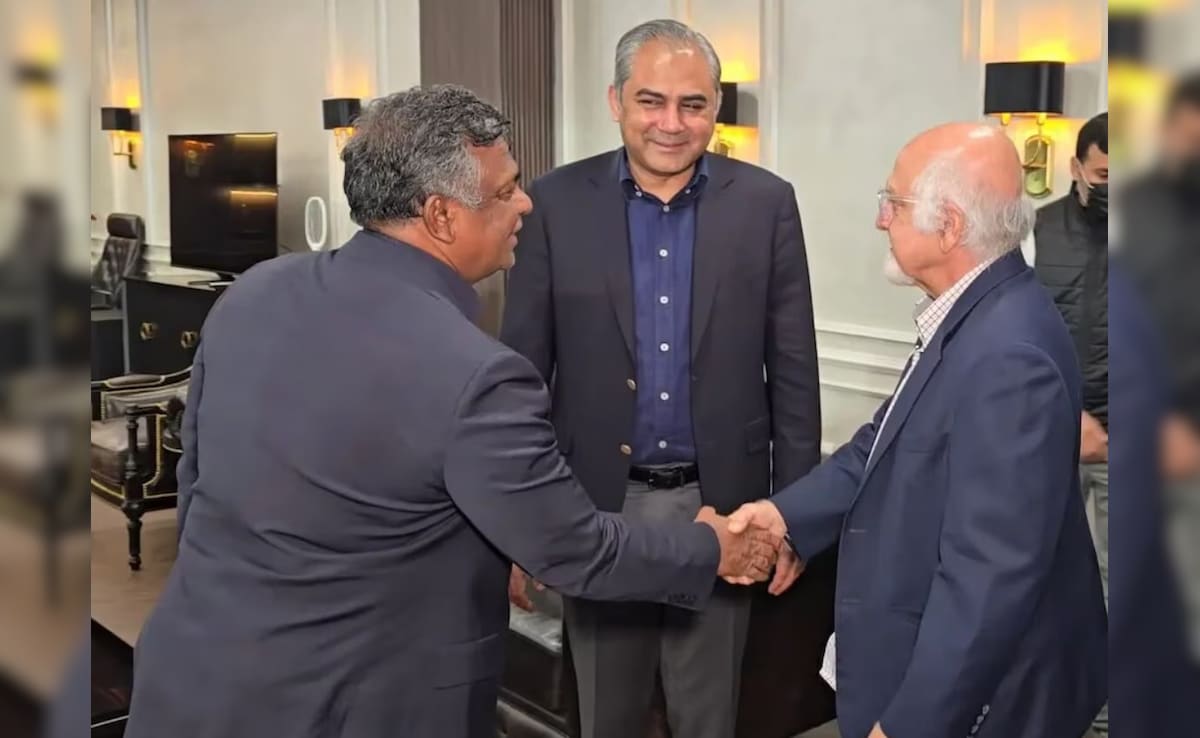
Pakistan agreed to turn up on the negotiating table. Back-channel negotiations culminated in a marathon meeting in Lahore on Sunday involving PCB chairman Mohsin Naqvi, Bangladesh Cricket Board president Aminul Islam, and ICC director Imran Khwaja.
The PCB had earlier been the only board besides Bangladesh to vote against Bangladesh's removal from the tournament. Pakistan wanted any retreat on the India match tied to relief for Dhaka.
What emerged was a quiet PCB-BCB alignment. The ICC reportedly agreed to soften its stance on Bangladesh, allowing them to avoid sanctions - a crucial face-saving measure that helped unlock Pakistan's reversal.
The Price of the Climbdown
Sources say the PCB used the moment to press for additional ICC funding and assurances of more frequent India-Pakistan fixtures in future ICC cycles.
The Emirates Cricket Board and ICC officials also highlighted how a boycott would hurt Associate nation funding tied to shared revenues - adding moral pressure to the financial squeeze.
On Monday night Pakistan's government conveyed that the team would play India after all. Publicly, Islamabad insisted no concessions had been sought from India. Privately, the message was clear: the cost of holding out had become unsustainable.
Why This Was a U-Turn Under Pressure
Pakistan began with a hard political line - no match against India. Then came quiet negotiations once the reality of ICC penalties, lost revenue, and diplomatic isolation set in. Commentators now describe it accurately: a U-turn under pressure.
First the symbolism. Then the spreadsheets. Once ICC-driven financial consequences and host-board diplomacy were applied, the boycott dissolved. Symbolism crumbles under spreadsheet reality Pakistan framed its reversal as a noble act for cricket. The reality was colder.
Facing ICC sanctions, pressure from Sri Lanka and other stakeholders, nervous broadcasters, and the prospect of bleeding hundreds of crores, Pakistan recalibrated.
The boycott collapsed not because principles changed - but because the price became too high. And that's the real inside story of how Pakistan was made to take a U-turn.
Featured Video Of The Day
 Pakistan Cricket Team
 India Cricket Team
Pakistan Cricket Board
International Cricket Council
T20 World Cup 2026
Cricket
India Cricket Team
Pakistan Cricket Board
International Cricket Council
T20 World Cup 2026
Cricket