











Chaos Was Real Madrid's Weapon, Control Became The Answer For Bayern Munich
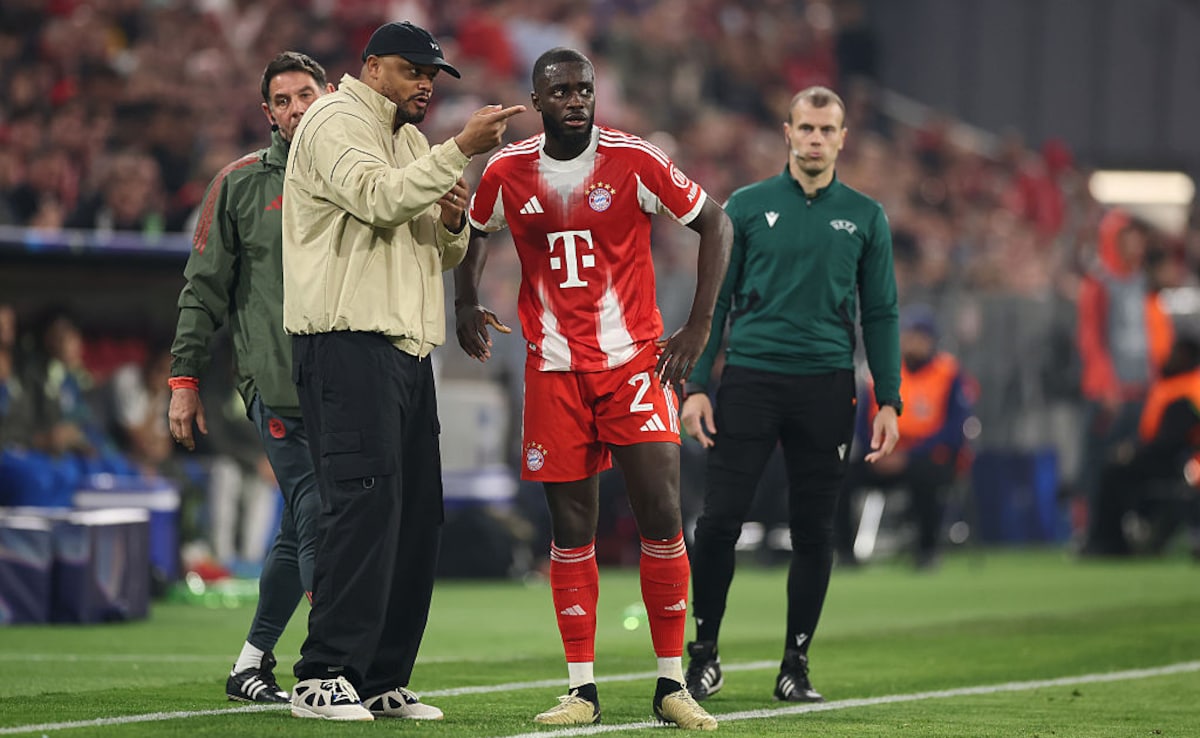
Vincent Kompany showed his astute tactical mindset as Bayern Munich countered Real Madrid's first-half chaos with absolute control in the second half.
- Real Madrid scored three first-half goals to lead 3-2 at Bayern's Allianz Arena
- Bayern manager Vincent Kompany shifted tactics in second half, increasing possession
- Real Madrid's possession and ball recoveries dropped significantly after halftime
Trailing 1-2 from the first leg of the UEFA Champions League quarter-finals at home, Real Madrid arrived at the Allianz Arena ready to prove why they are the kings of the competition. The 15 European championship titles they have in their cabinet haven't come from comfort, but rather the willingness to find answers even when their backs are against the wall. Against Bayern, that is how Real Madrid started, thanks to a loose pass by Manuel Neuer, widely recognised as the greatest goalkeeper of the modern era. Real Madrid thrived in chaos for 45 minutes, scoring three first-half goals in a breathless encounter, but a tactical shift from Bayern manager Vincent Kompany after half-time transformed the match and ultimately swung momentum in Bayern's favour.
In a high-tempo opening period at the Allianz Arena, Real Madrid capitalised on defensive transitions and minor leaks in structure, converting chances efficiently to take a 3-2 lead into the break. In matches like these, there are no real winners or losers, but rather players who are just willing to struggle, sacrifice, and ultimately survive a little more.
The first half unfolded at relentless speed, with both teams committing numbers forward and leaving space behind. Defensive organisation struggled to keep pace with the tempo, and transitions defined the rhythm of play. Real Madrid were particularly effective in those conditions. Rather than dominating possession, they focused on exploiting moments-attacking quickly after turnovers and finishing chances with precision.
It was Real Madrid's Arda Guler who converted Manuel Neuer's misguided pass into a first-time shot, putting Real Madrid level in the aggregate scoreline in the first minute. Aleksandar Pavlovic equalised from a crafty free-kick by Joshua Kimmich in the 6th minute to give Bayern the aggregate lead, levelling scores in the second leg.
Guler struck again from a brilliant free-kick right outside the penalty box in the 29th minute before Harry Kane showed the world once again why he is widely considered the greatest No. 9 in the modern era. The 38th-minute strike from the former Tottenham Hotspur man was also his 50th goal of the season (including strikes for Bayern in all competitions). Vinicius Junior, who looked frustrated the entire game due to a lack of open spaces on the left, had his only memorable moment when he set up Kylian Mbappe for Real Madrid's third goal, just minutes before the half-time whistle.
Madrid's three goals came by repeatedly pushing the Bayern defence, looking for concentration lapses, and they were rewarded almost every time. Bayern, however, ensured the contest remained alive by scoring twice themselves, refusing to allow Madrid to build a decisive cushion. Five goals in 45 minutes illustrated the chaotic nature of the match and also a style that suited the Spanish giants' transition-heavy strengths.
Kompany's Tactical Shift Choked Real Madrid
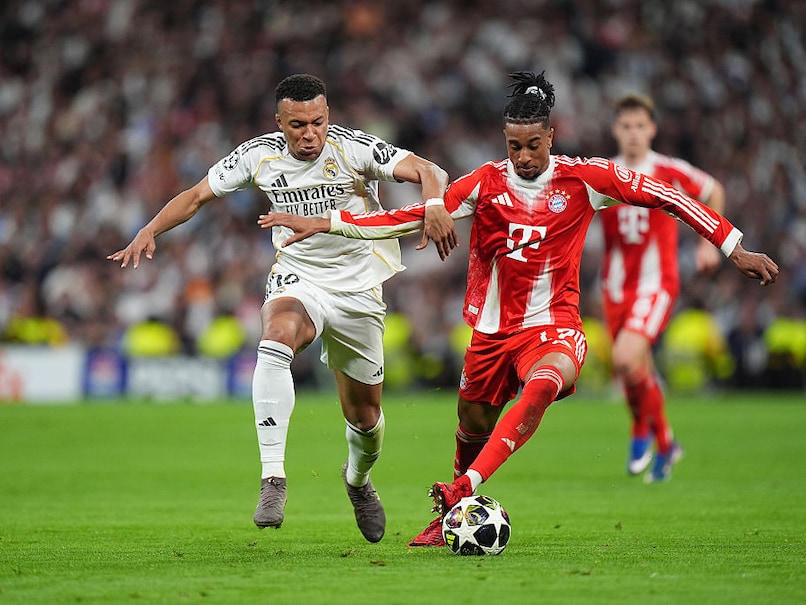
Recognising the risk of continuing at the same pace, Bayern Munich manager Vincent Kompany introduced a noticeable tactical adjustment at the start of the second half. Instead of attacking relentlessly, Bayern slowed the tempo of the game. Possession phases became longer, and the emphasis shifted toward controlled passing rather than immediate vertical attacks.
In comparison to the first half, where Bayern had about 64% possession, the percentage grew to 71% in the second half. Real Madrid, who had made a total of 185 passes in the first half, could only make 108 in the second. Even the number of times Madrid won possession dropped from 28 to just 14.
The change disrupted Madrid's rhythm. Where the first half had been dominated by transitions and rapid exchanges, the second half saw Bayern circulate the ball more patiently, reducing the number of chaotic moments that had allowed Madrid to strike earlier. By slowing the pace, Bayern reduced Madrid's ability to attack into open spaces-a key factor in the first-half scoring pattern. Kompany learned from the first half, and his strategic counter was spot on.
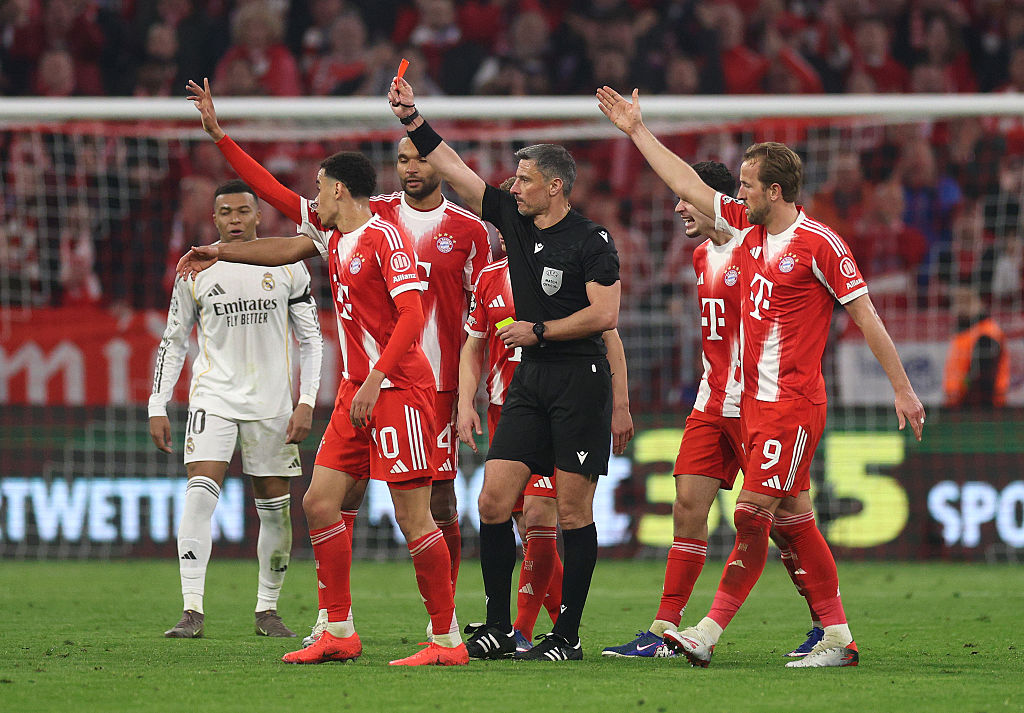
That pressure eventually resulted in a turning point when Eduardo Camavinga received a second yellow card, leaving Madrid with ten players late in the match. Though there continues to be a debate around the two bookings that the Frenchman had in the game, especially after coming on from the bench, the fact is that he lacked both the discipline and the ability to match the tempo of the game, which worked in Bayern's favour.
The Night Where Control Overpowered Chaos
With Madrid reduced to ten men, Bayern increased their attacking intensity while maintaining structural discipline. The advantage quickly translated into goals, with attacking substitutes and wide players exploiting the additional space created by Madrid's reduced defensive numbers. Goals from Luis Diaz and Michael Olise completed the turnaround.
While the football world saw two incredible solo goals from Bayern's Colombian and French wingers, their foundation was laid in the changing room, with Kompany as the strategic mastermind. While the match will be remembered for its seven goals, the tactical shift introduced at half-time proved equally significant. Madrid's first-half success came in open, unpredictable conditions. In a match shaped by speed early on, it was Bayern's decision to slow the game that ultimately changed its direction.
 Bayern München
 Real Madrid
 Vincent Kompany