









Roland Garros 2026: Vedika Anand On Why French Open is Tennis' Most Brutal Major
Ronald Garros 2026: In an exclusive interview with NDTV, Vedika Anand explained why the French Open is tennis' most brutal major.
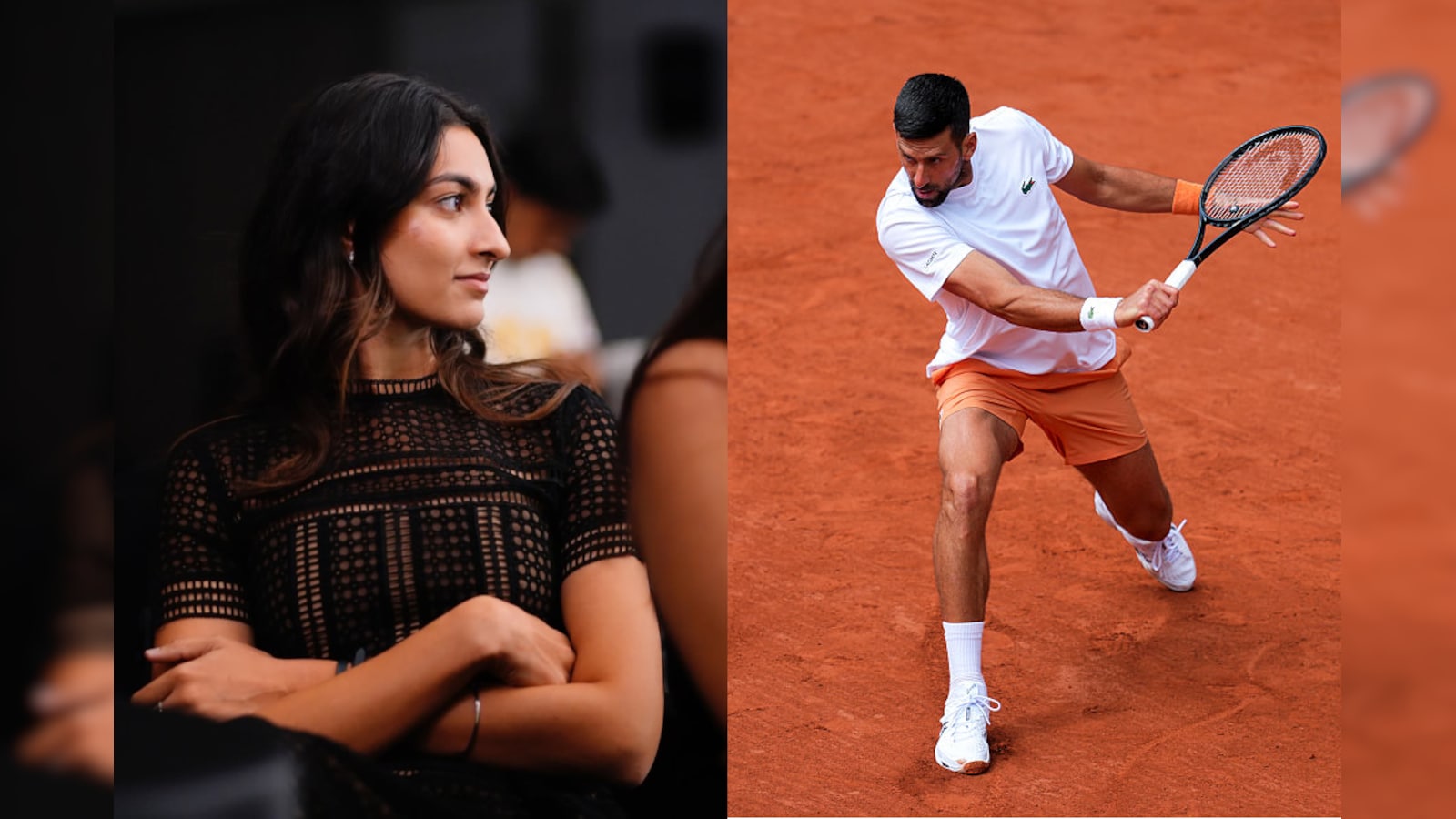
- Vedika Anand highlights India's lack of financial support and team structure in singles tennis development
- Indian doubles success is linked to consistent team backing, unlike singles players
- She called Roland Garros most demanding due to long points, clay surface, and unpredictable weather
There is something truly unique about the French Open. To capture the raw essence of the 2026 campaign, NDTV caught up with former tennis player turned sports presenter Vedika Anand, who returns to the network in a brand-new role ahead of the Roland Garros 2026. Having successfully transitioned from competing on the court to working behind the scenes at the US Open and the Professional Tennis Players Association (PTPA) -- co-founded by Novak Djokovic -- Vedika has spent the last six years breaking down the complex world of sports business for fans worldwide.
In this comprehensive interview, she shares her unique, player-focused insights into the structural gaps holding back Indian singles tennis, explains why the grueling Parisian clay remains a physical nightmare for athletes, and explores how a vibrant new generation is reshaping the landscape of the global game.
Q: Indian tennis has historically produced strong doubles players. What do you think we lack when it comes to singles events?
Vedika Anand: If you look at the top singles players in the world right now, both at Grand Slams and across the ATP and WTA Tours, the sheer size of the team surrounding them is immense. They have about 10 people around them at all times: sports scientists, coaches, physios, nutritionists, managers, and agents, all explicitly managing the athlete's career. In India, singles players simply do not have that level of financial backing or access. That is where the structural gap lies.
I recently went to watch the Billie Jean King Cup in Delhi, and it highlighted a major point. Historically, we have done very well in team events like the Davis Cup and BJK Cup because the federation provides that exact structural support during those weeks. You have a dedicated coach, a manager, and a physio travelling with the squad, which is why we see immediate progress in those environments.
When Rohan Bhopanna started the doubles dream, it allowed our doubles players to systematically afford a consistent travelling team week in, week out. If we can provide that exact level of support-and potentially even more-on the singles side, that is the only way we will see a sustainable breakthrough. To sum it up in a single sentence: we are lacking a clear developmental pathway. We have incredible pockets of excellence, but we simply do not have a streamlined, national process right now.
Q: Even in doubles, we have seen legends like Sania Mirza, Leander Paes, and Mahesh Bhupathi dominate over the years. Do we have that quality of players coming through the ranks now? Which current players have the ability and talent to inspire the next generation globally?
Vedika Anand: I certainly don't want to discount the incredible work Yuki Bhambri has been doing. Let's not forget his historic run at the 2025 US Open, where he made the men's doubles semi-finals. He has been consistently making deep runs at tournaments throughout 2026 as well, and I am incredibly excited to watch him compete at Roland Garros this month.
When it comes to inspiring the younger crop, I look directly at our juniors, where the pipeline is looking incredibly talented. We have players like Maaya Rajeshwaran, Manas Dhamne, and of course, the phenomenal 14-year-old talent emerging on the circuit. The progress is absolutely happening at the junior level.
As I mentioned, the core gap is structural and developmental. Because of that, I feel very fortunate to see legends like Sania Mirza, Rohan Bhopanna, and Leander Paes putting in the groundwork to fix this. Sania has just launched her academy, Next Gen, which focuses specifically on supporting our female players. Meanwhile, Rohan is guns blazing into his own academy full-time. It is fantastic to see our greatest icons taking the initiative to build the next generation of Indian sport.
Q: Turning our focus to the French Open, we often hear players say that Roland Garros is the most physically grueling time of the year. From your conversations with players and your understanding of the game, what makes the French Open uniquely exhausting?
Vedika Anand: Clay completely exposes your weaknesses; there is absolutely nowhere to hide. The points are significantly longer, and the movement is incredibly taxing on the body.
Parisian weather doesn't make it any easier either because the conditions are notoriously erratic. When the rain closes in, the balls get damp, absorb the clay, and become incredibly heavy. On top of that, the tournament now schedules very long night sessions. It is a brutal two weeks from both a movement and a conditioning standpoint.
Players tell me all the time that playing at Roland Garros is pure suffering-that is genuinely the best way to explain it. That being said, from a broadcasting and viewer perspective, it is also one of the most beautiful and elegant tournaments to watch. As fans, we are going to have a great time watching it, even if it involves a bit of suffering for the athletes!
Q: If you were given the opportunity to spend a full day at the French Open with just one player, observing their routines, practice sessions, and recovery, who would you choose and why?
Vedika Anand: I am going to give a slightly unconventional answer and choose Iga Swiatek. I think Iga is one of the most fascinating athletes I have ever interacted with. She is very much like her idol, Rafa Nadal-meticulous, methodical, highly schedule-oriented, and deeply process-driven. Having watched her up close, it would be incredibly fun to sit with her team and witness her exact preparation rituals for a Grand Slam match.
She also eats some rather unusual things! When I was covering a tournament with her in China, she was eating white rice with soy sauce, and she is famously known for her strawberry pasta. I remember looking at it thinking, "I don't quite understand it," but clearly, it works for her! Given her historic success in Paris, she is firmly established as the princess-if not the undisputed queen-of clay. I would love to see her exact blueprint for conquering another Roland Garros.
Q: How do you see the next era of men's singles unfolding? We had Federer and Nadal dominate for decades, and while Novak Djokovic is still elite, we now have Jannik Sinner and Carlos Alcaraz. Alexander Zverev is always in the mix too, even if he has struggled to win the absolute biggest titles. How do you see this new era shaping up compared to what the previous trio created?
Vedika Anand: I think tennis fans collectively shared a brief moment of absolute sadness when the 'Big Three' era began to draw to a close. Of course, we must remember that Novak is still very much in the draw and consistently reaching Grand Slam semi-finals and finals. But when two of them retired, there was a fear that the sport would feel empty.
Instead, Carlos Alcaraz and Jannik Sinner have brilliantly taken over the baton. They have already given us some incredible matches, including their spectacular battle at the 2025 Roland Garros. That being said, I don't think the 'Big Three' era can ever be replicated-that was a completely unique anomaly in sporting history. Fans are currently searching for that long-term emotional connectivity with this new generation. It hasn't fully locked in yet, but Carlos and Jannik are making that transition seamless because they are so thrilling to watch.
Interestingly, from a rivalry perspective, I am absolutely loving how open the WTA side is. Aryna Sabalenka has cemented herself as a consistently dominant, top-ranked powerhouse. Yet, we are seeing incredible depth-Marta Kostyuk winning a Masters 1000 on clay, Hailey Baptiste pulling off massive upsets against Sabalenka right before a Slam, and Elina Svitolina coming back from pregnancy to win the Rome Open for a third time. It keeps the women's draw completely unpredictable and incredibly exciting for the fans.
Q: Having worked extensively in the United States, you've seen the country's sporting systems and culture first-hand. What is India missing when it comes to shifting away from being a single-sport nation and building a culture that welcomes sports like tennis and football?
Vedika Anand: The US is systematically flawless when it comes to sports infrastructure; it is seamlessly integrated into their lives from childhood. In their schools and universities, sport is treated as a core component of the education system, not an alternative to it. In India, the cultural mindset is still that education is the main focus, while sports are viewed as a "side hustle" or a risky career path.
However, I am noticing a decent shift in the narrative now, especially with India actively eyeing bids for the 2030 and 2036 Olympic Games. The rise of various domestic leagues has completely changed the game. It has shown young people that you can not only play sports, but you can also build highly successful corporate careers in sports.
I have built my entire content creation career around encouraging people to work in sports management and media. The number of inquiries I get from young Indians wanting to break into the sports industry is significantly higher than you would ever expect from a country historically obsessed with only engineering, law, and medicine. The cultural shift is happening, but to complete it, we need synchronized financial backing, grassroots infrastructure, and elite coaching staff to turn that interest into an elite pipeline.
Q: I completely agree. For me, those conversations need to happen much earlier at the school level. Programs like Khelo India are great, but better synergy with our school curricula would ensure we become a true multi-sport powerhouse a decade down the line. Hopefully, professionals like you can continue to pull more people into the industry and spark that change.
Vedika Anand: Absolutely. And on that exact note, my work with the Professional Tennis Players Association (PTPA) has taught me a lot about player advocacy and what a federation needs. The most pressing change Indian tennis needs is a comprehensive athlete tracking system, similar to what the Italian Tennis Federation or the US systems use.
In India, our ability to identify raw talent at age 8 or 10 is not the problem. The problem is what happens after we find them. In systems like Italy, once a player is identified, they enter a structured ecosystem that guarantees access to a dense calendar of domestic tournaments, immediate sponsorship or scholarship opportunities, and a dedicated coach. In India, our administration remains highly fragmented. The academies, franchises, and regional governing bodies don't communicate well enough. The only way to build a sustainable sporting nation is through absolute collaboration and communication across all these entities.
Rapid-fire Q&A with Vedika Anand
Q: Rafa Nadal in Paris or Novak Djokovic in Australia?
Vedika Anand: Rafa Nadal in Paris, without a doubt.
Q: Top three contenders to win the French Open title this year, for both the men's and women's draws?
Vedika Anand: For the women: Iga Swiatek, Aryna Sabalenka, and Elena Rybakina. On the men's side: Jannik Sinner, Novak Djokovic chasing a historic 25th major, and I'm throwing in Arthur Fils because I've become a massive fan of his game recently.
Q: One player you think is going to dominate the French Open for the next three years in both categories?
Vedika Anand: I am heavily backing Rafael Foradori on the men's side. His development over the last 12 months has been staggering to watch, especially at his age. For the women, I really want to see Jessica Pegula make that final transition and secure her first Grand Slam on the dirt.
Q: One dark horse or surprise name to watch out for this year?
Vedika Anand: I have a bit of recency bias, so I'll say Elina Svitolina. Historically, players who find their rhythm and perform well at Rome go on to make incredibly deep runs at Roland Garros. On the men's side, I just want a beautiful send-off for two absolute legends who are retiring: Gael Monfils and Stan Wawrinka. I hope the fans give them the spectacular farewell they deserve.
Q: Night sessions at the French Open: great innovation or unfair on the athletes?
Vedika Anand: Look, I spend my entire life working in player advocacy, and the players absolutely hate them! So that is your answer. It is entirely a matter of recovery. Broadcasters and fans see a match finish at 2:00 AM and think it's thrilling, but for the athlete, that is when the post-match press duties, ice baths, physio rehab, and mandatory meals begin. They aren't getting to sleep until 4:00 AM or 5:00 AM. Trying to recover your body for a Grand Slam match on that schedule is brutal. It's great for television, but terrible for player well-being.
Q: Finally, give me one single word to describe the French Open.
Vedika Anand: Elegant. Out of all four Majors, it is easily the most elegant tournament in the world.
Watch Roland Garros 2026 starting from 24th May 2026 at 2:30 PM live and exclusive on Sony Sports Ten 2 SD & HD, Sony Sports Ten 5 SD & HD, Sony Sports Ten 3 SD & HD (Hindi), Sony Sports Ten 4 SD (Tamil, Telugu, Kannada), and Sony LIV