


Pak Rests All Hopes On 'Force Majeure' In T20 World Cup India Boycott Row. What It Really Means
If Pakistan then refuses to take the field, the match will be officially forfeited. India will be awarded two points, while Pakistan will receive none - and crucially, their net run rate will take a hit.
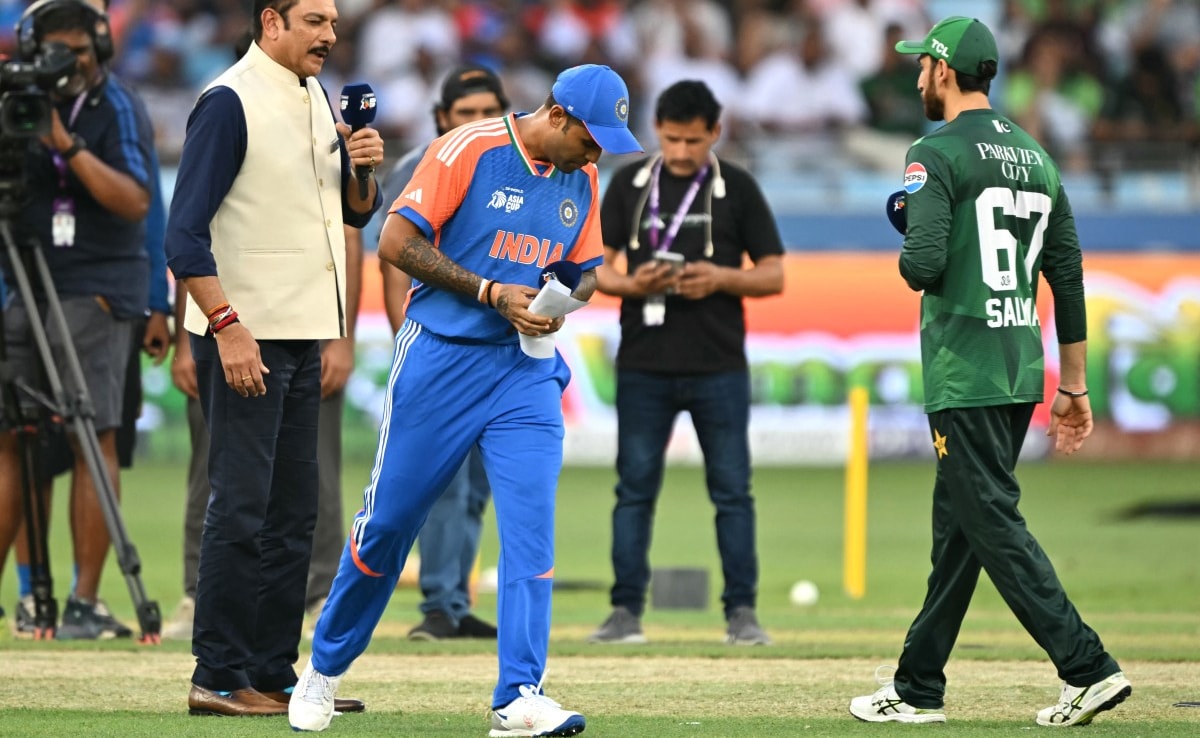
- Pakistan's refusal to play India will result in a forfeit under ICC World Cup rules
- India will receive two points and Pakistan none, with Pakistan's net run rate affected
- If India do not travel, the match is cancelled and points are split between teams
Pakistan's declaration that it will not take the field against India at the World Cup has pushed the tournament into rare and uncomfortable territory. Matches between the two sides carry political weight, but the ICC's playing conditions leave very little room for ambiguity once a team refuses to play. Under the tournament regulations, the process is straightforward. India will travel to Colombo as scheduled, train as planned and front the pre-match press conference. If Pakistan then refuses to take the field, the match will be officially forfeited. India will be awarded two points, while Pakistan will receive none - and crucially, their net run rate will take a hit.
That last part matters. In tightly packed World Cup groups, net run rate has often decided semi-final places. A forfeit is not a neutral outcome; it is a competitive disadvantage that can follow a team deep into the tournament.
There is, however, one alternative scenario. If India do not travel to Colombo, the fixture would be considered cancelled rather than forfeited. In that case, both teams would split points. But as things stand, the onus is firmly on Pakistan. The playing conditions are explicit: the team refusing to take the field bears the sporting consequences.
A Rare but Not Unprecedented Situation
Cricket history shows that forfeitures at World Cups, while uncommon, are not without precedent. During the 1996 ODI World Cup, Australia and the West Indies refused to play group matches in Sri Lanka after a bomb blast in Colombo, handing Sri Lanka full points. In 2003, England forfeited their match against Zimbabwe in Harare over political and safety concerns, while New Zealand declined to play Kenya in Nairobi citing security risks.
More recently, withdrawals at ICC events - including Zimbabwe pulling out of the 2009 T20 World Cup and New Zealand's Under-19 team exiting the 2022 U-19 World Cup due to COVID-19 restrictions - have shown that the ICC typically prioritises tournament integrity over accommodation.
Can Pakistan Invoke Force Majeure?
The key legal question now is whether Pakistan's refusal could be covered under a force majeure clause. Traditionally, force majeure applies to unforeseeable and unavoidable events - natural disasters, acts of God, or extreme political situations that make participation impossible rather than undesirable.
ICC sources suggest this would be a difficult argument to sustain. Force majeure clauses are narrowly interpreted, and political objections alone do not automatically qualify unless there is a clear and demonstrable threat to safety or feasibility. Without that threshold being met, the refusal would fall outside force majeure protections.
Beyond the Scorecard
According to ICC sources, severe sanctions - including possible suspension - could be imposed on the Pakistan Cricket Board if the refusal is deemed a breach of participation obligations. Such action would not be immediate, but the precedent exists for the ICC to act decisively when member boards undermine the competition framework.
For now, the immediate impact is sporting. India stand to gain two points without a ball being bowled. Pakistan risk damaging not just their World Cup campaign but their standing within the ICC ecosystem.
What was meant to be the tournament's most-watched fixture may instead become its most consequential non-match - decided not by runs or wickets, but by regulations that leave little room for manoeuvre.
Featured Video Of The Day
 India Cricket Team
 Pakistan Cricket Team
Pakistan Cricket Board
BCCI
International Cricket Council
T20 World Cup 2026
Cricket
Pakistan Cricket Team
Pakistan Cricket Board
BCCI
International Cricket Council
T20 World Cup 2026
Cricket