

How Bangladesh Benefited From India-Pakistan Standoff Over T20 World Cup Clash
The India-Pakistan standoff over the T20 World Cup 2026 clash ended with the Pakistan government making a U-turn on their 'boycott' decision.
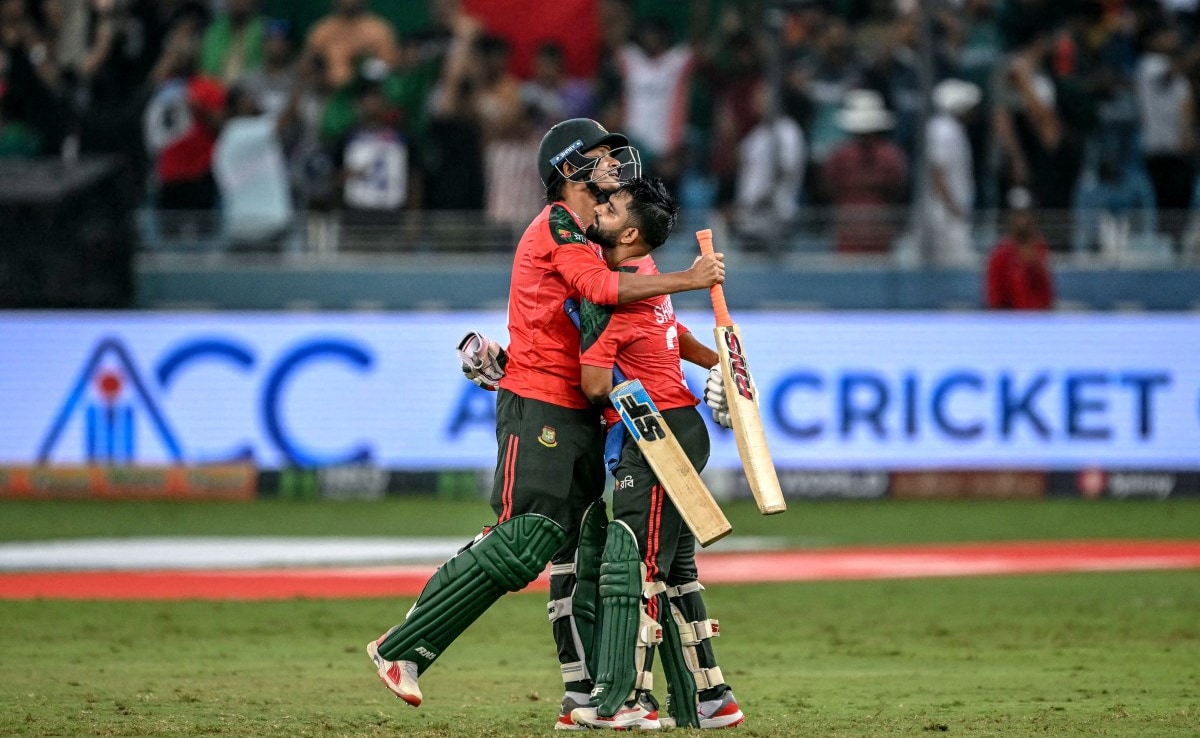
The India-Pakistan standoff over the T20 World Cup 2026 clash ended with the Pakistan government making a U-turn on their 'boycott' decision. Pakistan decided to boycott the match against India in Colombo on February 15 as a show of support to Bangladesh after the latter was removed from the competition for their refusal to travel to India for the group stage matches. The Bangladesh Cricket Board (BCB) requested the International Cricket Council (ICC) to shift their matches from India citing 'security concerns' but no changes were made to the schedule. While India and Pakistan will now play the match on Sunday as scheduled, it was actually Bangladesh who benefited quite a bit from the standoff.
According to the official ICC release, Bangladesh will not face any punishments for not taking part in the T20 World Cup, Moreover, they received assurances of future hosting rights of ICC tournaments.
The global cricket governing body explained that the decision was guided by "principles of neutrality and fairness" and reflected an objective of "facilitative support rather than punishment". The BCB also retained the right to approach the ICC's Dispute Resolution Committee under existing regulations.
Coming to the hosting rights, Bangladesh will be co-hosts with India for the 2031 Men's Cricket World Cup. The ICC also promised the nation hosting rights for another global competition.
The ICC explained that the decision makes it clear that Bangladesh remains a "priority cricket ecosystem with enduring investment potential and a key role in the sport's global growth".
“Bangladesh's absence from the ICC Men's T20 World Cup is regrettable, but it does not alter the ICC's enduring commitment to Bangladesh as a core cricketing nation. Our focus continues to be on working closely with key stakeholders including BCB to ensure the sport grows sustainably in the country and that future opportunities for its players and fans are strengthened. Bangladesh remains a priority cricket ecosystem deserving of long-term investment in its development, competitiveness and global integration, and is not defined by short-term disruptions.” ICC Chief Executive Sanjog Gupta said.
These were the two out of the five demands made by Pakistan during their negotiations with the ICC over the T20 World Cup match. Here are Pakistan's demands and what the ICC said about them:
Demand 1: No financial penalty for Bangladesh
The PCB insisted that Bangladesh must receive its full ICC revenue share even though it did not play the T20 World Cup.
ICC's response: It clarified that this was already its decision - the Bangladesh Cricket Board would not be penalised.
Demand 2: Compensatory ICC event for Bangladesh
The PCB sought an additional ICC event for Bangladesh in the next cycle.
ICC's response: An Under-19 World Cup in the next cycle is being considered.
Demand 3: India-Pakistan bilateral series
The PCB pushed for ICC intervention to facilitate a bilateral series between India and Pakistan.
ICC's response: The request was rejected, with the ICC stating that bilateral series are outside its mandate, including during the World Test Championship cycle.
Demand 4: India-Pakistan-Bangladesh tri-series - The PCB proposed a tri-series featuring India, Pakistan, and Bangladesh.
ICC's response: The proposal was turned down, again citing lack of jurisdiction.
Demand 5: India tour of Bangladesh in 2026 - The PCB sought ICC involvement in securing an India tour of Bangladesh.
ICC's response: It declined to intervene, reiterating that tours are decided bilaterally.
Featured Video Of The Day
 India Cricket Team
 Pakistan Cricket Team
 Bangladesh Cricket Team
International Cricket Council
Bangladesh Cricket Board
Pakistan Cricket Board
T20 World Cup 2026
Cricket
Bangladesh Cricket Team
International Cricket Council
Bangladesh Cricket Board
Pakistan Cricket Board
T20 World Cup 2026
Cricket