









Delhi's Iconic Nehru Stadium To Be Dismantled And Reborn As 102-Acre "Sports City: Sources
The 102 acre area of the stadium will be rebuilt completely but as of now, the plan is merely a proposal and therefore the timeline for the project has not yet been worked out.
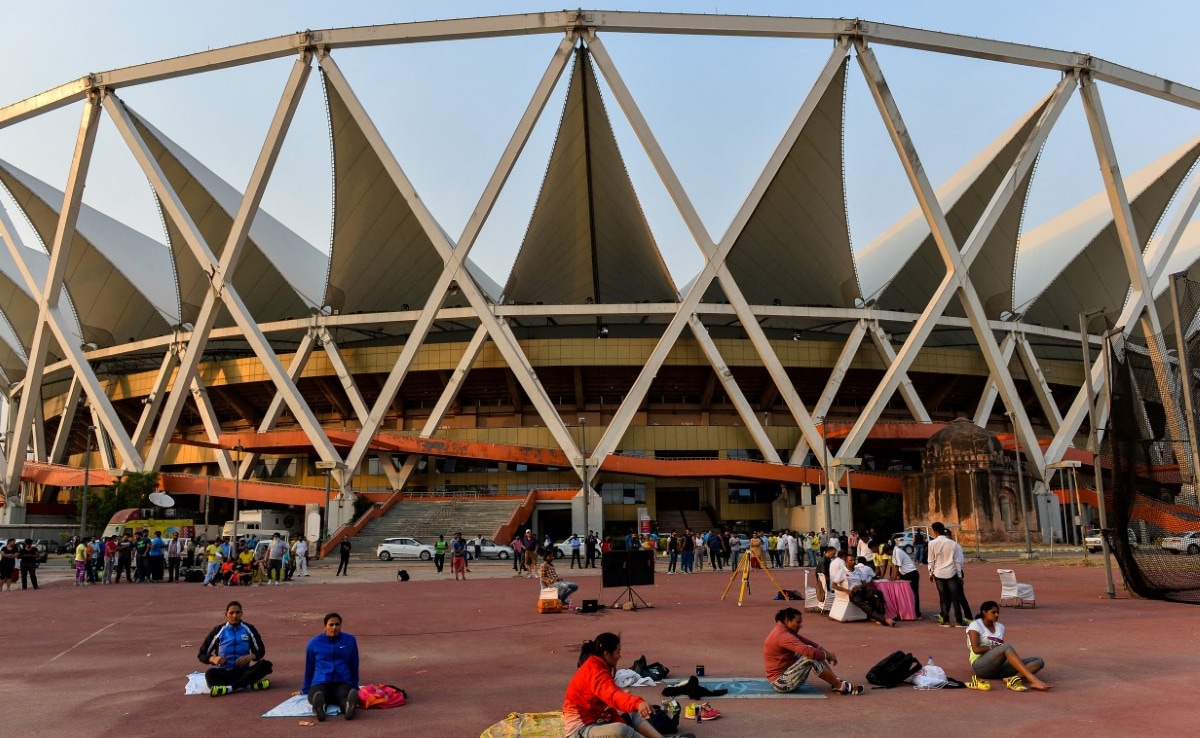
- Jawahar Lal Nehru Stadium in Delhi will be dismantled for a new Sports City project
- The 102-acre stadium area will be rebuilt with lodging facilities for athletes
- The project is a proposal with no finalised timeline or detailed plan yet
In a move that could redraw the map of sport in the national capital, government sources in the sports ministry say the Jawaharlal Nehru Stadium complex is set to be dismantled and redeveloped into a 102-acre "Sports City" - a multi-sport hub modeled on the successful, integrated precincts seen in places like Qatar and Australia. The proposal, being driven by "best-practice" studies carried out by officials (the sports minister has just returned from Qatar), envisages transforming the sprawling but underused J&L footprint into a mixed, multi-discipline campus with elite training facilities, community provisions and broadcast infrastructure.
The redevelopment would take the place of the current J&L stadium site and aims to house several sports under one umbrella, with a dedicated broadcast studio among the planned facilities. Officials caution there is no timeline yet for the start or completion of work.
"The thinking is to create a campus that supports high-performance sport, mass participation and media - all in one place," sources in the sports ministry said. "We are studying Qatar and Australia closely for lessons on legacy use, event hosting and athlete pathways."
A stadium with a modern past - and a very underused present
Nehru Stadium's story is familiar to many Indian sports fans. Built in the late 20th century, an anchor for athletics for long and marquee events in the capital, the stadium received a major overhaul ahead of the 2010 Commonwealth Games in Delhi. The CWG remaking modernized the arena's bowl, spectator circulation and field-of-play infrastructure, turning it into one of the city's flagship venues.
Yet more than a decade on, the complex is reportedly nowhere near operating at capacity: ministry sources say only about 28% of the Nehru Stadium's space is currently being used. That underutilisation - paired with growing demand for year-round training, modern media capabilities and multi-discipline competition venues - helped spur the rethink.
Why a sports city, and what it aims to fix
The sports ministry's blueprint (as outlined in internal briefings) frames the Sports City as a corrective to several long-standing gaps in India's sports infrastructure:
Legacy conversion: Rather than maintaining a single, oversized stadium that hosts intermittent events, the plan breaks the site into multiple venues so different sports can use purpose-built facilities year round.
Performance + participation: Elite training hubs alongside community courts and fields to drive both world-class results and grassroots participation.
Media and commercialization: A broadcast studio on site is designed to help federations produce more content, attract sponsors and create regular programming - something stadiums without built-in media infrastructure currently struggle to monetize.
Efficient land use: The 102-acre site makes it possible to combine indoor arenas, outdoor pitches, athlete housing, sports science centres and commercial/retail spaces - a more sustainable, revenue-generating footprint than a single bowl stadium.
What India can borrow from "sports cities" abroad
The government says it is studying models from Qatar and Australia - two very different but instructive templates. From those and other international examples, India can import several features it largely lacks today:
Integrated athlete villages: Year-round accommodation co-located with training facilities (Qatar/UK models) to reduce travel time, promote recovery and make the campus a magnet for training camps.
Centralised high-performance centres: Sports science, physiotherapy, altitude chambers and data labs under one roof - standard in Australia - to professionalize preparation.
Multi-use indoor arenas: Flexible courts and arenas that can host basketball, volleyball, indoor athletics and concerts, improving utilisation.
Public transport first design: Seamless metro and bus integration to move spectators without traffic gridlock - a hallmark of modern Australian stadia precincts.
Fan zones and retail activation: Year-round activation with museums, fan experiences and retail to turn sport precincts into daily destinations rather than occasional event sites.
Broadcast and content ecosystems: Onsite studios and mixed-reality broadcast capabilities to help federations create consistent content, grow audiences and unlock sponsorship.
Legacy planning baked in: In Qatar's case, modular stadia and legacy budget lines were planned from design stage to avoid white elephants after major events.
The tough questions
Ambition aside, the plan raises immediate practical questions. The Nehru Stadium is a landmark venue with institutional memory and routine uses; dismantling it will require careful transition plans for federations, tenants and ongoing events. There is also the perennial Indian challenge: land-use approvals, funding models, public-private partnerships, and the all-important operations plan that determines whether a precinct thrives year after year.
Crucially, ministry sources stress that while the idea has political and technical momentum, there is no firm timeline
For now the capital watches and waits. The minister's recent trip to Qatar underlines the seriousness of the study; the coming months should reveal whether the 102-acre vision will become India's most ambitious attempt yet to marry legacy, performance and public use - or another well-intentioned plan that stalls on the drawing board.