










Why Germany Stopped Producing World-Class Players: Bayern Academy Boss Breaks Down Crisis
In an exclusive interview with NDTV, Bayern Munich academy head Jochen Sauer reflects on consecutive World Cup failures, the lack of defined player profiles, and the urgent need for structural reform.
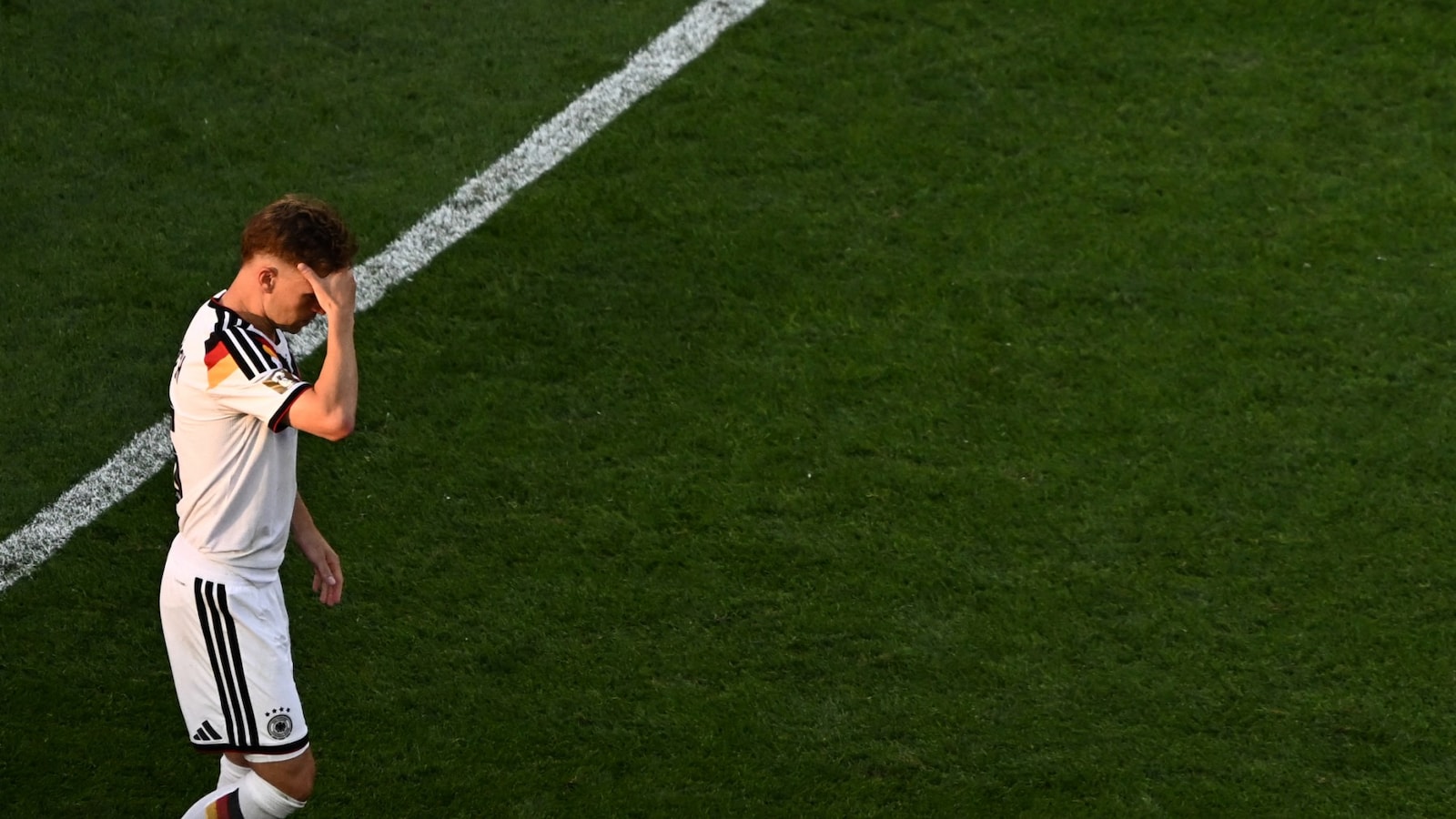
- Germany has failed to reach the World Cup Round of 16 for three consecutive tournaments
- According to Bayern Campus head, the German youth academy system focuses heavily on tactics over individuals
- Experts agree changes to Germany’s football development system are underway and needed
For three consecutive World Cups, Germany have failed to reach the Round of 16 of the tournament. With Julian Nagelsmann at the helm, the Germans were expected to reclaim the glory that made them world champions in 2014. However, the team was knocked out in the Round of 32 by Paraguay. The turn of the century saw Germany build one of the most admired youth-development systems in world football, but changes in the system and a few other factors have seen Germany lose their identity as a footballing powerhouse. The country responded to concerns about its talent pipeline by establishing a network of academies and creating a structured pathway for young footballers. But according to Bayern Munich academy head Jochen Sauer, the system has gradually developed shortcomings of its own.
The concern is not simply about results at the international level. In an exclusive 3-part interview with NDTV, Sauer said that German football has become too focussed on tactical and team development at the expense of individual qualities and clearly defined player profiles.
Q. Philipp Lahm and Toni Kroos have criticised German football's development system. Why is Germany no longer producing as many top-level players as it once did?
Jochen Sauer: It is difficult to answer this in a short period because it is a very complex topic. Germany did a lot of things right at the beginning of the 2000s, when we also had a problem producing talent. German football made many good decisions, including founding the academies we have today and building clear strategies and plans for player development.
But over the last 25 years, we probably focussed too much in one direction. We kept trying to improve the academy systems and went into intricate detail, focussing heavily on tactical issues and not enough on the individual qualities of players.
Q. What do you think is missing from the current system?
Jochen Sauer: There are several reasons, and it is not only about the academy system. It is also about selecting players for the national team. We are perhaps not at the highest level anymore when it comes to convincing players to play for Germany. Over the last 15 years, there have been many players born and raised in Germany who have a migration background and have the opportunity to play for different countries.
There are probably some countries that are better at convincing these players to play for their national teams rather than Germany. Another issue is that our youth academy system has focussed too much on tactical and team issues and not enough on individual qualities.
That is why we haven't produced as many players with a clear profile in different positions. Think about a clear number nine, or a clear left- or right-back like Philipp Lahm. He had a very clear profile. Right now, we are producing more players who can play five or six positions, but perhaps not one position at a very high level. They can play five positions at an average level.
READ | Exclusive: Success, Sacrifice And Search For The Next Thomas Muller At Bayern Campus
Q. So has German football fallen behind?
Jochen Sauer: For sure. We have fallen behind and need to change different things in the German development and academy system to get back to the highest level.
Q. Is that change already being discussed?
Jochen Sauer: For sure. We have already made some decisions after the World Cup, especially at the federation and first-team level. Jurgen Klopp is somebody who knows that countries like England are probably better than Germany. Hopefully, the changes at the first-team and national-team level will lead to a broader discussion about what we need to change. We need to change something, and this discussion has to continue.
 Germany