50 Goals Per Season Not Enough: Deep Dive Into German Youth System With Borussia Dortmund
Speaking to NDTV in Germany, the Director of Borussia Dortmund's Youth Academy, Paul Schaffran, addressed the million-dollar question regarding the country's unsuccessful World Cup runs over the last decade and explained how the club is playing a central role in its pursuit of a revival.
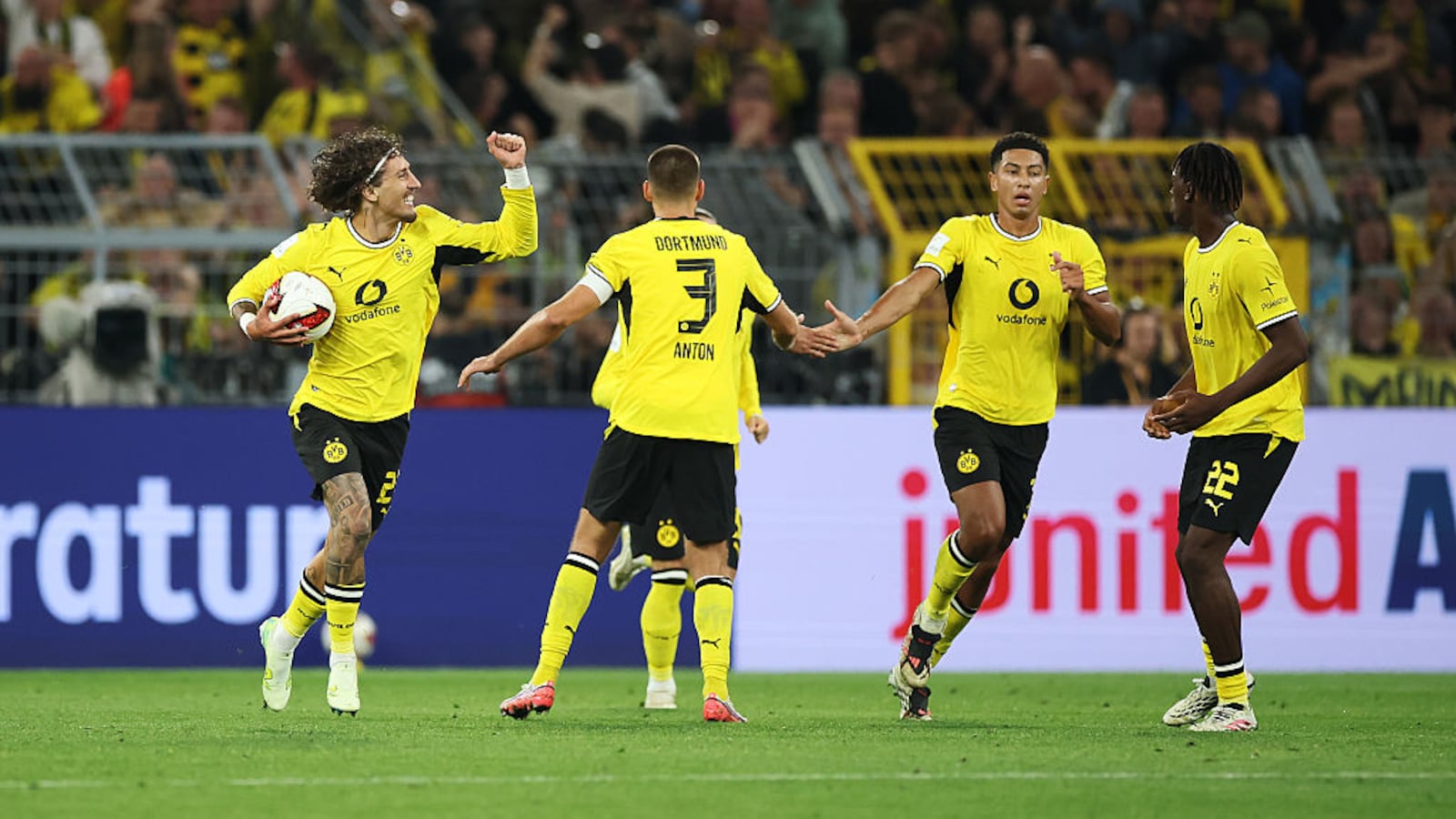
Following three successive FIFA World Cup disappointments for the German national team, scrutiny over the country's youth development is echoing in every corner of the globe. The fans of the German national team are asking questions. As the likes of Spain, France and England pull ahead, Germany is being forced to rethink its strategy of youth development. Critics point to a lack of individual game-changers, an over-saturation of central midfielders, and excessive specialisation at too early an age. Addressing these challenges, Borussia Dortmund's Director of Youth Academy, Paul Schaffran, discussed the club's philosophy, structural changes across German football, and the delicate balance between winning trophies and developing top-tier professional talent.
During the conversation, Schaffran also narrated an intriguing insight involving one of Germany's most-talked-about talent Yusufa Moukoko, who failed to adapt to the senior team at Dortmund despite scoring 50-60 goals per season in the academy.
Schaffran emphasised that the primary responsibility for player development rests on domestic clubs rather than national federations. For Borussia Dortmund, the ultimate objective remains developing local talent from grassroots levels to the first team.
"Most of the development happens within the club, so it's not the federation that shapes players-it's the clubs. Borussia Dortmund is one of the top clubs in Germany, so I think it's our main responsibility to build German players, ideally from scratch. The dream is to build a player born in Dortmund all the way to the first team.
"We have a player like Almugera Kabar, who has been here since he was 10 years old and signed his first-team contract. He is a player we all dream about-coming from grassroots right up to the first team."
Identifying structural issues in German youth football, Schaffran highlighted an over-emphasis on competitive results at young ages and high turnover rates across academies.
"I think the main problem in Germany is that we prioritised competing in youth football over long-term development. If you look at grassroots pitches, you see too many coaches trying to apply senior tactics to children's football, where winning an Under-17 or Under-8 match becomes more important than shaping the player.
"Additionally, Germany has had high movement rates between academies. In Europe's top five leagues, the average player changes academies 1.6 to 1.7 times throughout their youth career. In Germany, that number was close to 2.5. Every change requires adaptation and disrupts the developmental pathway. The federation is now making inter-club transfers harder to encourage clubs to take long-term responsibility.
"At Borussia Dortmund, we decided two years ago that youth titles mean nothing if those players don't make successful career steps. In the past, we won many trophies in youth football without successfully transitioning those players into our first team."

Picture Courtesy: Vera Loitzsch Bundesliga/Getty Images
50 Goals Per Season Not Enough
When asked by NDTV about Germany's core footballing identity and what Dortmund prioritises at the base of the pyramid, Schaffran outlined a blend of technical mastery, tactical anticipation, and high physical intensity.
"We want to build two key areas: technical skills and 'football brain.' Players need to be exceptional on the ball, which includes defensive skills like tackling. They also need to understand the game so well that they can play two or three seconds ahead-reading space and anticipating movement before it happens.
"Athletically, Germany has traditionally been very physical. We aim to combine Spanish-style technical and tactical abilities with the high-intensity 'heavy metal' football associated with Jurgen Klopp-maintaining maximum intensity in every moment."
Discussing the transition from youth academies to the professional stage, Schaffran explained why high goal tallies at the youth level do not automatically guarantee senior success, pointing to Youssoufa Moukoko as a prime example of developmental profiling.
"We always have to learn from player pathways when making decisions for the next generation. Take Youssoufa Moukoko, who scored 50 to 60 goals per season in the academy. Almost half of those goals came from him receiving the ball in the middle of the pitch and simply outrunning everyone. Except for a player like Lionel Messi, that style is almost impossible to transfer directly into a senior first-team environment.
"Knowing his athletic profile, you have to decide: Do you prioritise his short-term efficiency in youth matches, or do you develop him in a way that benefits his long-term career? If I had a player like him today, I would recognise that his future profile isn't purely a standalone No. 9 playing with his back to goal. It might be better to develop him as a No. 10 or No. 8 in the half-spaces. You might lose 30 or 40 goals a season in the youth team, but you end up with a more complete player at the end of the pathway."
 Borussia Dortmund
 Germany