










Lionel Messi's 9th Ballon d'Or Dream Isn't Dead. FIFA World Cup 2026 Could Change Everything
Lionel Messi arrived at the 2026 FIFA World Cup with questions surrounding his age, his Inter Miami move, and whether he could still influence football's biggest stage. One game later, those questions looked a little premature
- Lionel Messi scored a hat-trick against Algeria, becoming the oldest World Cup hat-trick scorer
- Messi's Ballon d'Or chances hinge on strong World Cup performance, not club season form
- Playing for Inter Miami reduces Messi's European spotlight and narrative momentum
Lionel Messi arrived at the 2026 FIFA World Cup with questions surrounding his age, his Inter Miami move, and whether he could still influence football's biggest stage. One game later, those questions looked a little premature. The Argentina captain opened his campaign with a stunning hat-trick against Algeria, becoming the oldest player to score a World Cup hat-trick and reminding the football world that, even at 38 (turning 39 in 2 days), he remains capable of deciding tournaments on his own.
Suddenly, a question that seemed unlikely a few months ago is back on the table: Could the 2026 World Cup propel Messi to yet another Ballon d'Or?
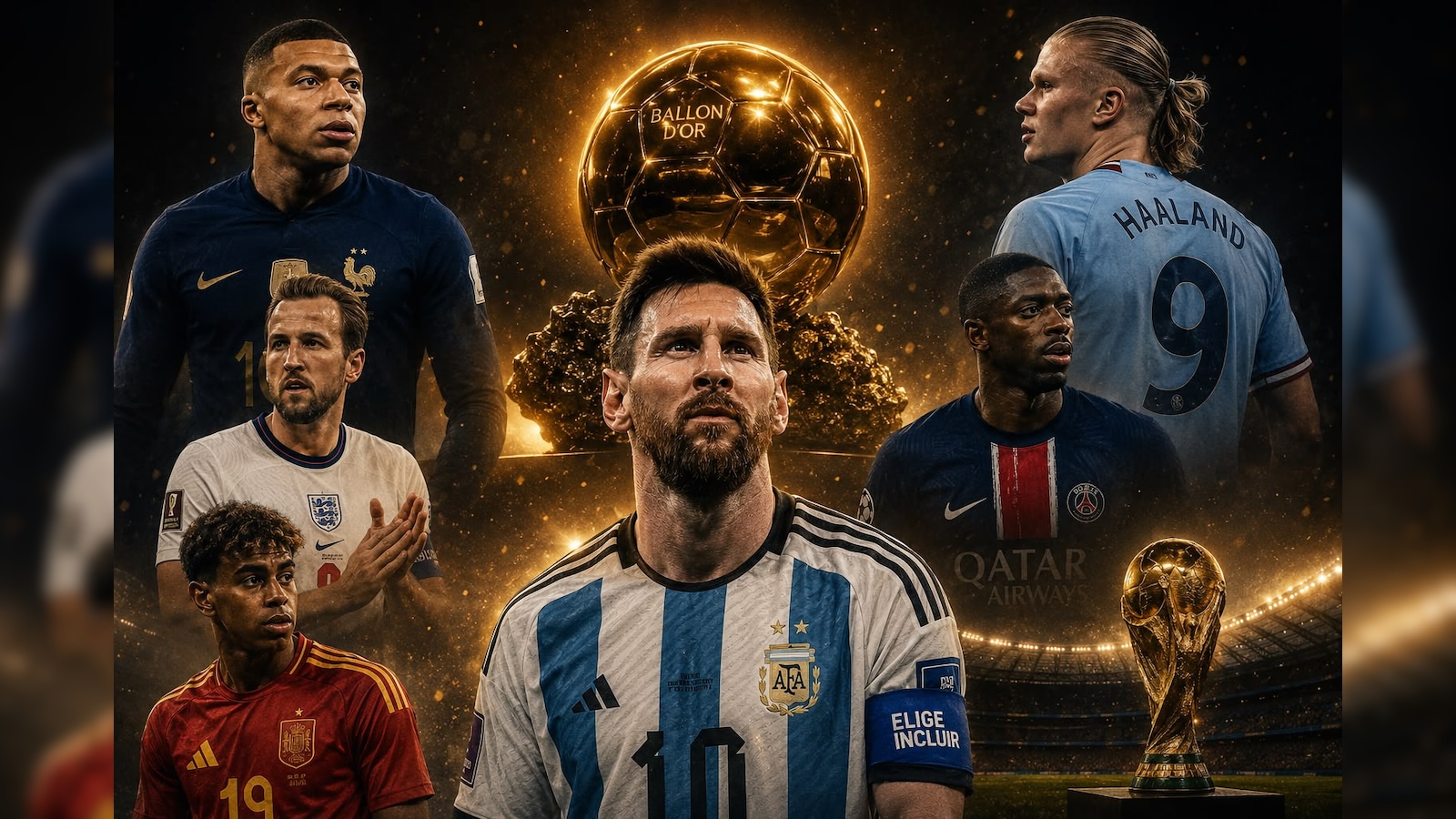
On paper, the challenge is enormous. Unlike rivals Kylian Mbappe, Harry Kane, Ousmane Dembele, Erling Haaland, and Lamine Yamal, Messi is not arriving from a Champions League campaign. Playing for Inter Miami means he lacks the weekly European spotlight that often shapes Ballon d'Or races.
But World Cups have always had the power to change everything.
The numbers Messi needs
Modern Ballon d'Or winners typically follow a clear statistical pattern:
8-12 World Cup goal contributions (goals plus assists combined)
At least one defining knockout-stage performance
A final appearance equals a major voting multiplier
A World Cup win brings near-complete dominance of the voting narrative
For Messi, projections sit at:
5-8 goals
2-5 assists
Total contribution range: 8-13
That places him firmly in contention, but not in control.
The Inter Miami factor: a different kind of disadvantage
This is where Messi's situation becomes unique.
Unlike rivals playing Champions League football in Europe, Messi is based at Inter Miami in Major League Soccer.
That creates three subtle but important effects:
First, reduced weekly visibility. Players like Mbappe, Kane, or Haaland enter the World Cup with constant elite-level European exposure, where every match feeds the Ballon d'Or narrative cycle. Messi does not have that same weekly European spotlight anymore.
Second, intensity perception. Even if Messi performs well in MLS, the statistical weight is not comparable to Champions League output in the eyes of voters.
Third, a narrative gap. The Ballon d'Or race is often shaped by momentum heading into the World Cup. Most contenders arrive with recent Champions League or European league dominance. Messi arrives almost entirely reliant on international football impact.
In short, Inter Miami does not hurt his ability, but it does reduce his pre-World Cup narrative momentum.
The contenders shaping the race
Kylian Mbappe
The most direct rival. If France go deep, his combination of goals and big-match presence makes him a natural frontrunner. A 6-10 goal tournament puts him at the top of the conversation immediately.
Harry Kane
The most consistent statistical profile among strikers. If England reach the final, Kane's goal volume and penalty reliability make him extremely difficult to ignore.
Erling Haaland
Pure numbers candidate. If Norway progress beyond expectations, his scoring rate alone could become decisive. But team progression remains the key limitation.
Ousmane Dembele (Champions League winner)
A momentum-based contender. Dembele's creative output and big-game performances could push him into serious contention.
The wildcard. Even without massive numbers, a breakout tournament with decisive moments could generate strong narrative voting support, especially if Spain go deep.
Honourable mentions: Vitinha (Paris Saint-Germain), Michael Olise (Bayern Munich), and Khvicha Kvaratskhelia (Paris Saint-Germain).
The equation Messi must beat
Messi's Ballon d'Or chances depend on a narrow path:
If Argentina exit before the semi-finals, his chances drop below 10 per cent.
A semi-final run lifts him into the 15-25 per cent range but requires decisive knockout contributions.
A final appearance pushes him into the 40-60 per cent territory, depending on direct involvement in goals.
A World Cup win would likely make him the frontrunner.
Messi's 2026 campaign is no longer about accumulation. It is about fitting legacy-defining impact into a handful of matches.
The Inter Miami factor limits his pre-tournament narrative momentum. The competition is younger, faster, and statistically louder.
But World Cup football has never been decided by season-long numbers alone. It has always been decided by who owns the biggest moments.
And Messi, even at 39 (almost), is still the one player in world football who can turn three matches into a global verdict
 Messi
Messi
 Argentina