








How Structured State-Level Leagues Are Creating The Next Generation Of Kabaddi Stars
State-level kabaddi leagues provide young players with regular competition, professional environments, and mentorship, fostering skill development and preparedness for national stages.
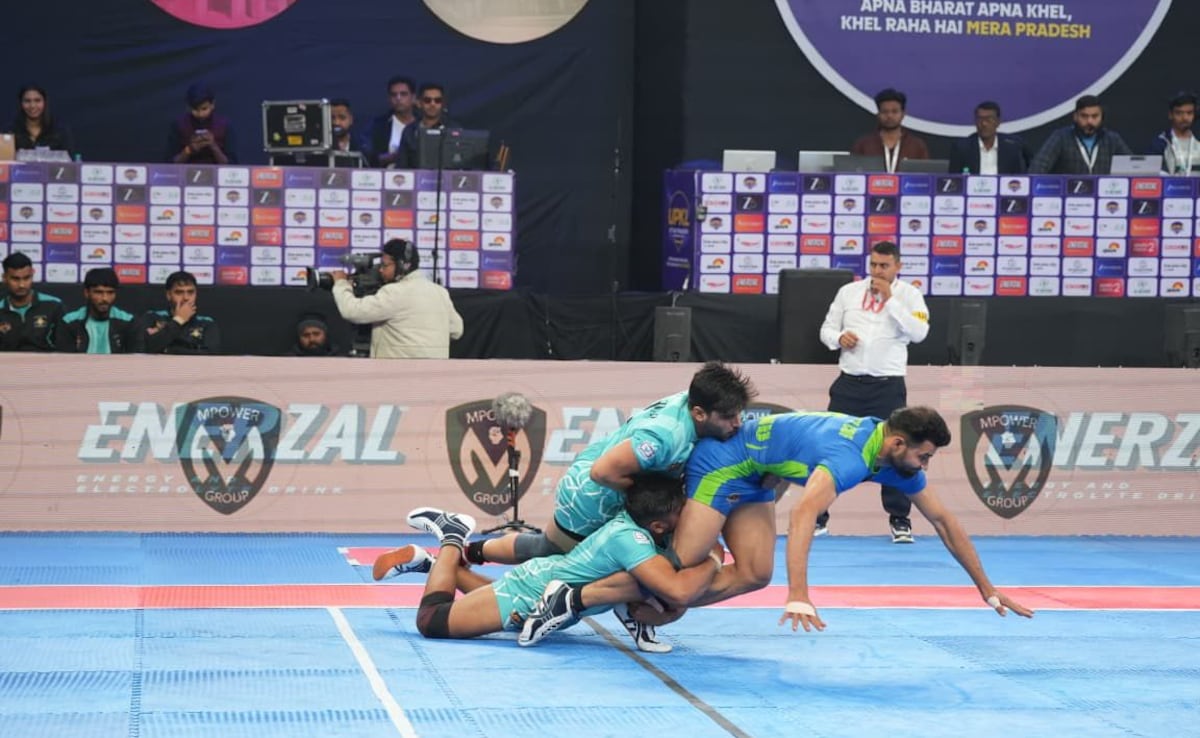
Kabaddi's next generation of stars is not being created overnight, nor only under the brightest national spotlight. It is being shaped gradually, through structured competition, repetition, and exposure, most of which now happens at the state level. National leagues play a vital role in giving kabaddi scale, visibility, and aspiration. They set the benchmark for excellence and provide the platform where the best players are showcased. But what prepares a player to succeed on that stage is the ecosystem beneath it. Structured state-level leagues have emerged as one of the most important spaces where young kabaddi players are learning how to become professionals.
From raw talent to rounded players
India has never lacked raw kabaddi talent. What young players often lacked in the past was sustained exposure to regular matches, quality opposition, and environments where learning was continuous rather than occasional.
Structured state-level competitions are addressing this gap. Across leagues in different regions, including platforms such as the Uttar Pradesh Kabaddi League and Kabaddi Champions League state competitions, players are now getting season-long exposure rather than one-off tournaments. This allows athletes to understand their own game, work on weaknesses, adapt to different defensive systems, and develop decision-making under pressure.
These are not skills that emerge from one good performance; they are built through repetition. Over the course of a season, young raiders and defenders evolve into smarter, more complete players, learning when to attack, when to hold, and how to read match situations.
Learning by playing alongside experience
One of the biggest advantages of structured state leagues is that young players share the mat with experienced professionals. Training camps, team meetings, and match situations become classrooms.
Younger athletes learn how senior players prepare for games, manage fitness, recover from injuries, and handle pressure. They understand that performance is not just about strength or speed, but about discipline, mental conditioning, and consistency. These lessons accelerate growth far more effectively than isolated coaching sessions.
For many young athletes, state leagues offer their first taste of professionalism, where training routines, diet, recovery, video analysis, and tactical planning become part of daily life. This early exposure plays a critical role in preparing them for the demands of elite-level kabaddi.
Space to experiment, fail, and improve
Another critical role of state leagues is that they give players room to experiment. Young athletes are encouraged to take responsibility, try new techniques, and push their limits in real match conditions.
Failures at this level become learning experiences rather than career setbacks. A young raider missing crucial raids or a defender struggling against stronger opposition is not written off; he is given the chance to adjust, return, and improve. Over time, this builds resilience, an essential trait for long-term success.
This process of trial, error, and adaptation is what separates short-term performers from long-term professionals.
Financial stability enables focus
Even modest financial security can dramatically change a player's development curve. When athletes are supported through structured leagues, they can focus fully on kabaddi rather than splitting attention between training and alternative income sources.
This stability enables players to dedicate more time to fitness, skill development, and recovery. It also encourages families to support sporting careers, knowing there is a clear pathway and earning potential. The result is greater commitment, longer careers, and higher performance standards.
Creating clearer pathways to the top
State-level leagues are increasingly becoming scouting grounds where consistent performers stand out over time. Selectors can track player development across multiple matches, assess temperament, and identify those ready for the next step.
This clarity benefits players as well. They understand what level they need to reach, what improvements are required, and how progression happens. When pathways are visible, motivation increases and so does accountability.
Building stars with strong foundations
Kabaddi's future stars will not be defined only by highlight moments but by durability, adaptability, and sustained excellence. Structured state-level leagues are where these qualities are being built.
By providing young players with competitive exposure, professional environments, mentorship, and opportunities to grow, state leagues are quietly shaping athletes who are prepared not just to reach the top, but to stay there.
As national platforms continue to grow in scale and stature, their strength will increasingly depend on the quality of players coming through the system. In that sense, state-level leagues are not supporting actors; they are where the next generation of kabaddi stars is truly being made.
-- By Sambhav Jain, Founder and Director of SJ Uplift Kabaddi