Nearly 200 Euros For One Arsenal Ticket But This German Club Is Hosting Fans For Free
Fortuna Dusseldorf's free ticket initiative challenges traditional sports economics by prioritising social inclusion and stable sponsorships over gate receipts, contrasting Arsenal and other top European clubs' premium pricing model.
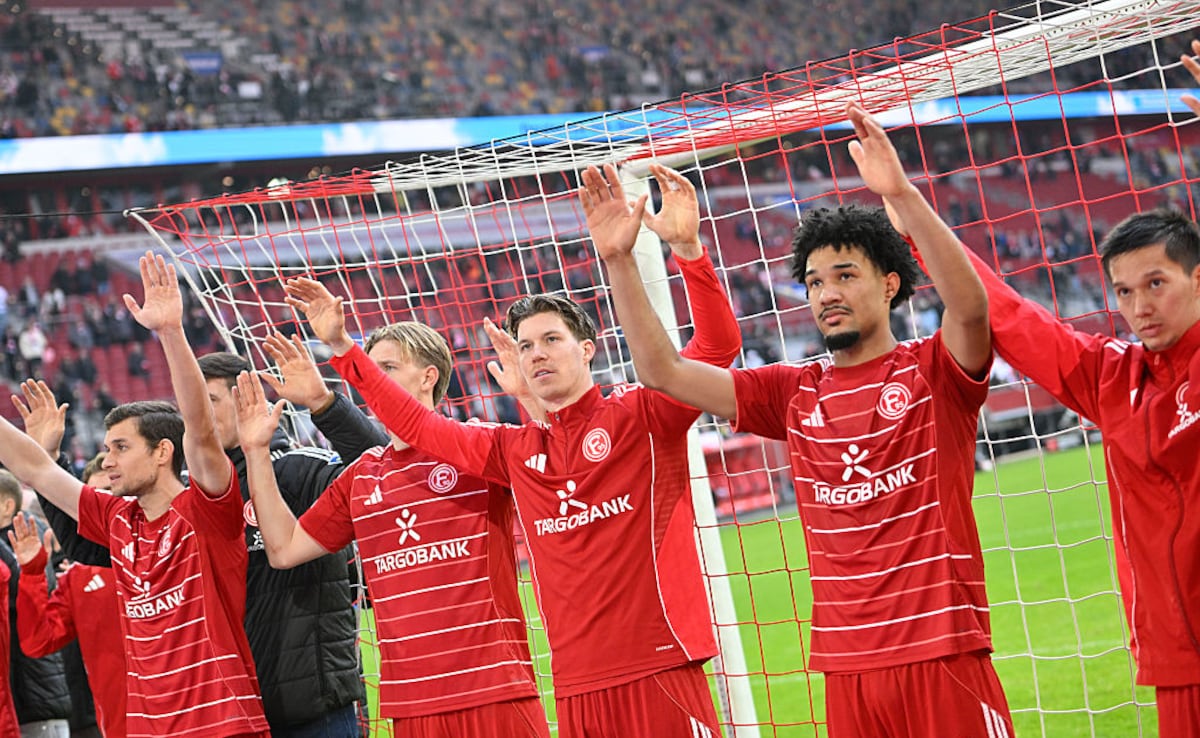
The gulf between English and German football has never been wider. As of February 2026, fans are witnessing two polar opposite experiments in sports economics. On one side, Arsenal continues to push the ceiling of what a supporter is willing to pay. On the other, Fortuna Dusseldorf -- a club in the 2. Bundesliga -- is attempting to prove that the future of football is free. Football remains a battle on the field, but there's a lot that goes into the balance sheets before the players step onto the football field. This is a competition between the sporting business and its soul.
For the North Londoner, a seat at the Emirates is becoming a luxury item, a high-status ticket in a global entertainment theatre. For a fan in Dusseldorf, a matchday is being reclaimed as a civic right. While one club builds a "revenue machine," the other is building a community, betting that if you open the gates for free, the loyalty you harvest will eventually be worth more than any individual ticket price.
Price Comparison: The GBP 168 Seat vs. The EUR 0 Ticket
For a top-tier "Category A" match at the Emirates Stadium -- such as a clash against Chelsea or a pivotal Champions League knockout tie -- Arsenal fans are now facing prices that can exceed GBP 168 (approx. EUR 200) for a single standard seat (as reported by Goal and TicketGum, Feb 2026). This follows the club's decision to increase ticket prices for a fifth consecutive season, citing rising operational costs and the need to remain competitive in the global transfer market.
In stark contrast, Fortuna Dusseldorf's revolutionary "Fortuna fur Alle" (Fortuna For All) initiative is in full swing. For the 2025/26 season, the club has expanded its "free-to-watch" pilot, offering completely free tickets to five home league matches. The costs are entirely subsidised by long-term strategic partners, such as Hewlett Packard Enterprise and TARGOBANK, who prioritise social inclusivity over traditional gate receipts.
Profit Comparison: Stability vs Experimentation
The financial health of both clubs remains robust, though their methods of achieving it differ.
Arsenal recently reported record revenues of GBP 691 million. While they recorded a marginal loss of GBP 1.4 million (a significant improvement from the GBP 17.7 million loss the previous year), their matchday income alone rose to GBP 153.9 million (Official Arsenal Financial Report, Feb 2026).
Fortuna, on the other hand, operates on a smaller scale, with annual turnover growing by 35% to roughly EUR 70 million. Membership grew 30 per cent, while merchandise revenue rose by a staggering 44 per cent. By securing EUR 45 million in guaranteed sponsorship over five years specifically for the "Fortuna For All" project, they have replaced volatile ticket sales with guaranteed corporate investment, as per Sky Sports.
This move has kept the club financially stable and prevented the "red ink" seen in Arsenal's accounts, proving that social conscience can actually be a competitive business advantage.
But, is there any club in England, or rather the rest of Europe, that can dare to go the way Fortuna did? The finest business minds in the game have been trying to find that answer for a while now.
 Arsenal