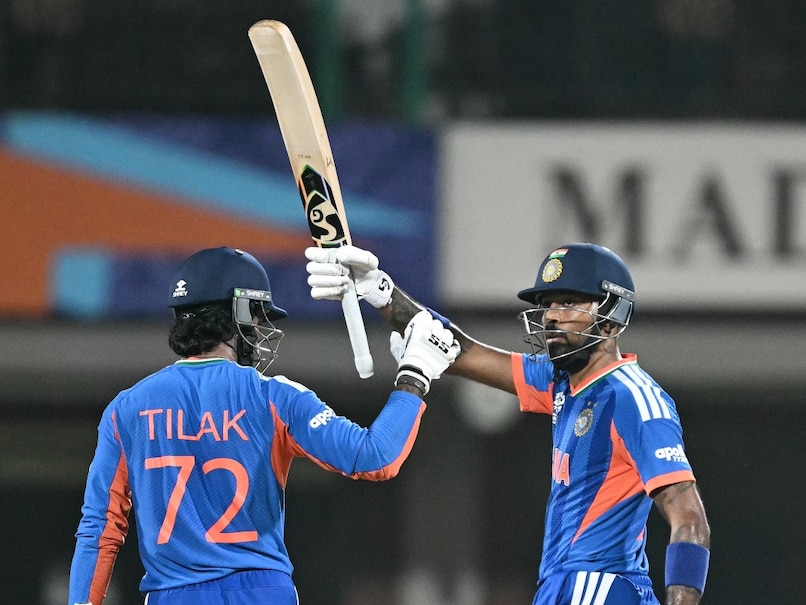
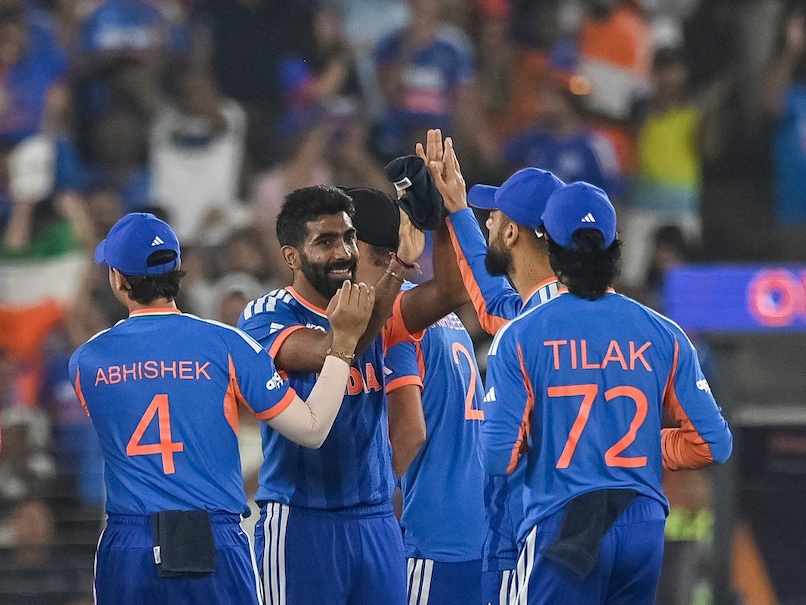
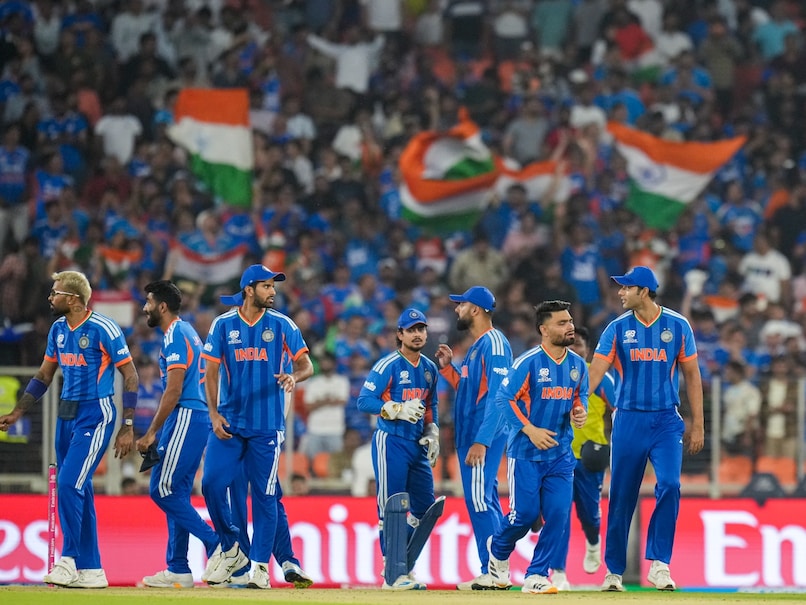
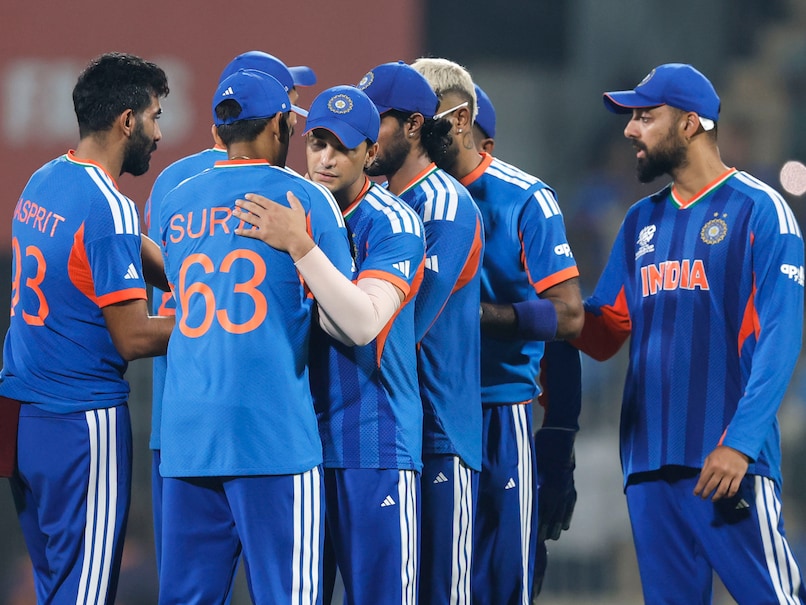
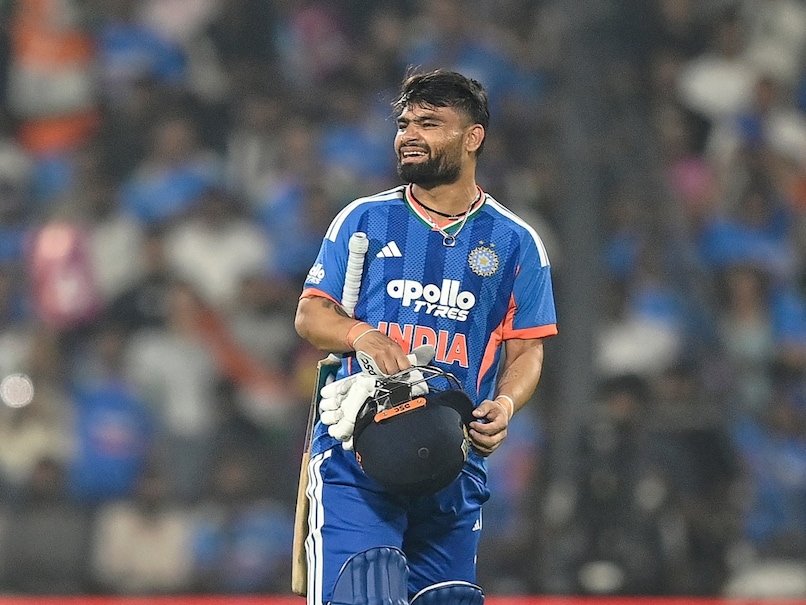
Race against the clock - As the gates begin to shut and only a handful of Super Eight encounters remain, the scramble for a top-two finish has turned into a last-minute dash for survival. Expect a helter-skelter showdown as a bruised Indian side locks horns with the fearless fighters from Zimbabwe at the MA Chidambaram Stadium in Chennai. Needless to say, both teams are under extreme pressure coming off heavy defeats in their previous matches. Do or die in Chennai - India’s T20 World Cup juggernaut hit an unexpected roadblock when South Africa handed them a crushing 76-run defeat. For once, the Men in Blue looked out of sorts in what is usually their comfort zone, which is batting. Losses are part of the game, sure, but this one came at the worst possible time. The heavy margin has taken a serious toll on their net run rate, now sitting at -3.8. Placed third in Group 1 with two Super Eight games left, India are now in a spot where every match feels like a final. One more slip, and the gates might just shut on them. Zimbabwe’s story is a mix of heart and harsh reality. They deserve full credit for punching above their weight in the group stage and making it this far when not many gave them a chance. But the Super Eight stage has been unforgiving. A brutal 107-run defeat to the West Indies has pushed them to the bottom of the table. To make matters worse, their net run rate has taken a massive hit and now stands at -5.350, the lowest among all eight teams. The Kohli-sized gap - The Men in Blue may have won four games before that loss to the Proteas, but they, too, might agree with the fact that they have been far from being invincible in this tournament. And it’s the batting unit that hasn’t quite hit its full potential just yet. And here is a number that will sting. India have successfully chased targets above 160 only three times in T20 World Cup history. And it was Virat Kohli, who was the top run scorer in all three of those occasions. For a team that prides itself on a fearless batting identity and has enjoyed so much white-ball success over the years, that statistic feels surprisingly underwhelming. Which brings the bigger question into focus. When the scoreboard climbs past 160, and the pressure tightens, who steps up now? Who becomes India’s Kohli in that moment? The batting conundrum - Cricket is a huge leveller. 0, 0, 0, 15. These are the scores of Abhishek Sharma in this World Cup. A bloke who has terrorised almost every bowling unit in the world with his fearless batting approach upfront, is desperate to get runs under his belt. And as a result, the middle order keeps getting dragged into repair duty far too early. In a format as fickle as T20Is, one innings can change everything, and Abhishek has the game to turn it around. But in a tournament of this magnitude, time is a luxury you rarely get. Suryakumar Yadav, instead of being the explosive force that defines him, has had to dial it down and play the role of a stabiliser with a strike rate of 127.65. It says a lot about how unsettled the top order has been, with Tilak Varma yet to really find his groove. However, Shivam Dube and Hardik Pandya have been steady hands in that middle order. The pattern has been hard to miss. India have repeatedly lost their first wicket with barely anything on the board. The highest opening stand so far has been just 25, between Ishan Kishan and Sanju Samson against Namibia. Apart from that, it has mostly been early jolts, single-digit scores, and an immediate sense of damage control kicking in. Bumrah - The infallible engine - While the batting unit has struggled for consistency, Jasprit Bumrah has remained a trump card for the Indian side. His report card for the tournament illustrates a player operating at the peak of his powers, with seven wickets from four matches and an economy rate of just 5.30. Bumrah’s best figures of 3/15 and his ability to maintain a metronomic pressure under the most intense scrutiny make him the anchor of the pace attack. His presence allows Arshdeep Singh to attack from the other end and mark his territory as the silent assassin. On the spin front, Varun Chakaravarthy has been a crucial cog, leading India with 10 scalps. Yet even he is not immune to off-days, as seen in the 1/47 outing against South Africa. With Chennai’s traditionally turn-friendly tracks and Rinku Singh sidelined due to a family emergency, India face a tactical headache to either stick with Axar Patel’s all-round stability, or gamble on Kuldeep Yadav’s craft to break partnerships. Or will Sanju get another nod if India plan to add an extra full-time batter? Questions. Lots of questions to be answered. The 24-month blueprint - Zimbabwe’s presence in the Super Eight is far from accidental. According to batter Ryan Burl, the team’s success is the result of a deliberate 24-month plan that began after the 2024 T20 World Cup. The squad focused on returning to basics and developing specific blueprints for various match situations. Their journey through the sub-regional and regional qualifiers was dominant, setting the stage for an inspired group phase in the main tournament. However, the Super Eight has introduced a higher level of intensity. Their 107-run defeat to the West Indies highlighted the gap in depth when facing power-hitting units on flat tracks like the Wankhede. The sixless marvel - In an era defined by strike rates and boundary percentages, Brian Bennett has emerged as one of the most intriguing statistical anomalies of the 2026 T20 World Cup. The 22-year-old opener reached the end of the group stage without being dismissed, accumulating 175 runs across three innings. Remarkably, Bennett achieved this total without hitting a single six, relying entirely on technical proficiency, gap finding, and strike rotation. Bowling threat - Height and discipline - Zimbabwe’s bowling attack is spearheaded by the 6-foot-6-inch Blessing Muzarabani, whose height and steep bounce present a unique challenge to modern batters. Muzarabani has taken 11 wickets in the tournament at an average of 10.27, demonstrating an ability to extract life from diverse surfaces. His performance against Australia, where he claimed 4/17, was the catalyst for the biggest upset of the group stage. Muzarabani is supported by Richard Ngarava and Brad Evans, both of whom have shown the ability to adapt their lengths to suit the conditions. For Zimbabwe to challenge India, their bowlers must maintain discipline and avoid being predictable, a flaw highlighted by coach Justin Sammons after the Mumbai fixture. Perspective over panic - In the wake of the 107-run loss to the West Indies, Zimbabwe captain Sikandar Raza chose a path of ‘measured honesty’ rather than frustration. By noting that both India and Zimbabwe had lost a game each, Raza subtly levelled the playing field and reminded his squad that the competition is fluid. Raza has embraced the underdog tag, noting that the pressure of the occasion sits primarily with India, who are playing at home in a format they have historically dominated. He has emphasised that the goal for Zimbabwe is to earn respect and prove that their presence in the Super Eight is not accidental. The off-spin trap - A recurring tactical issue for India throughout the 2026 tournament has been their performance against right-arm off-spin. With a lineup that can feature up to six left-handed batters, opposition teams have increasingly turned to off-spin as a containment and wicket-taking tool. The struggle is not limited to the left handers, even right-handed batters like Suryakumar Yadav and Hardik Pandya have shown restraint or vulnerability against the variety. Sikandar Raza, an experienced off-spinner, will be acutely aware of this trend. Zimbabwe are likely to utilise Raza and perhaps other part-time off-spin options early in the innings to disrupt the rhythm of the Indian top order. India’s ability to counter this specific threat will determine whether it can post the massive total required to repair their net run rate. Team form (Last 5 completed T20Is, recent first) IND - LWWWW | ZIM - LWWWL. The Chepauk puzzle - Chennai is often described as a haven for spinners and slower bowlers. However, the reality of the 2026 edition suggests a more nuanced surface. Recent matches at the venue have seen scores above 180 become common, with New Zealand recently chasing 174 in just over 15 overs, and that too twice. The ball is coming onto the bat better on both red and black soil pitches, which could provide relief for India’s power hitters. However, the humidity and the evening start time introduce the dew factor, which typically favours the side batting second by making the ball difficult to grip for spinners. Interestingly, in night games so far at this venue, teams batting first have successfully defended scores of 196 and 200, suggesting that scoreboard pressure might be a more decisive factor than the dew. A psychological burden - The loss to South Africa marked the end of a 17-match winning streak for India in ICC white-ball events and was a stark reminder of the unexpected roadblocks that can occur in tournament play. The atmosphere at the MA Chidambaram Stadium will be intimidating at best, but Zimbabwe has already demonstrated it can handle such pressure. Their win over Sri Lanka in front of a strong Colombo crowd showed a team that does not overcelebrate and remains focused on the larger goal. For India, the challenge is to avoid being overwhelmed by the occasion and the necessity of a large win. With an overall tally of 10-3 against the Chevrons in T20Is, India would aim to keep that record intact. But they not only need to win their remaining games, but they will have to win massively in both. Zimbabwe face a similar pressure cooker. A win over a powerhouse like Australia would boost their belief, and a bruised Indian side presents a golden opportunity. The question is whether they can maintain composure and seize the moment when it matters most. A blockbuster clash awaits at Chepauk. Should be the one worth gold.