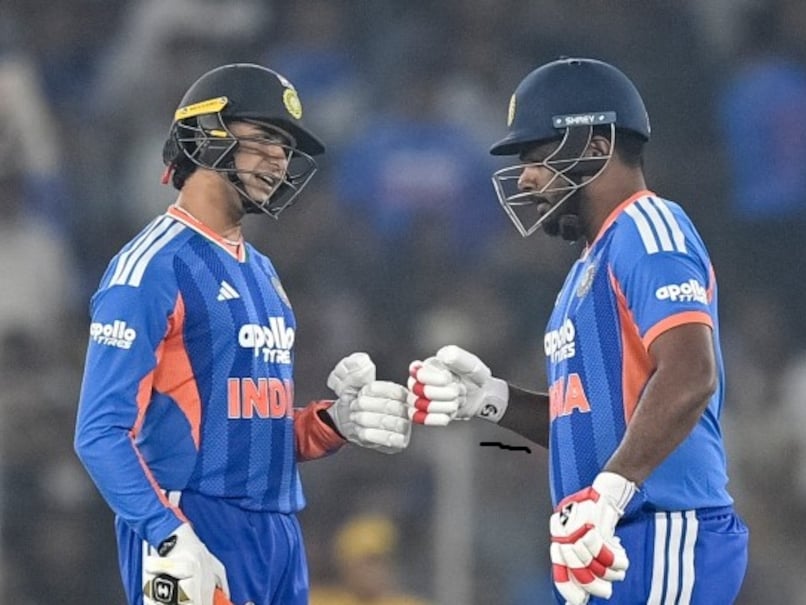
It’s crunch time - Virtual quarterfinal. That is what this contest has been labelled, and rightly so. After a dramatic chain of events, the Super Eights of the ICC Men’s T20 World Cup arrive at their final stop before the semifinals. Fitting, perhaps, for a tournament that has refused to offer clarity till the very end, where even now, the identity of the final four could hinge on the last ball of this game. India versus West Indies. At the iconic Eden Gardens. With everything on the line. One spot up for grabs. Two teams are in contention. No second chances. Boy, this is going to be a delicious one. The Group 1 crucible - The competitive landscape of Group 1 underwent a significant shift following the matches on February 26. India kept their title defense alive by securing a comprehensive 72-run victory over Zimbabwe in Chennai, a result that notably improved their Net Run Rate from a previous deficit of -3.800. Meanwhile, the West Indies suffered a setback against the unbeaten Proteas, which halted their momentum and placed them in a direct points tie with the Men in Blue. Currently, both sides possess two points from two matches. While the West Indies maintain a superior Net Run Rate of +1.791 compared to India's -0.100, the winner-take-all nature of this final fixture renders the NRR calculations secondary for qualification. A victory for either side guarantees a semifinal berth alongside South Africa. India’s tactical reset - After a tumultuous start to the Super Eight, India's top order appears to have found its rhythm at a critical moment. The primary breakthrough for the management was the return to form of Abhishek Sharma, who dismantled the Zimbabwean attack in Chennai with a mature 30-ball 55. This innings followed a lean patch of three consecutive ducks and was characterized by technical discipline and a pure focus on hitting straight down the ground. Furthermore, India's middle order looked revitalized by the explosive flavor returning to the fore. The larger gain, however, lay in the opening partnership. Before that fixture, India’s highest stand at the top had been 25, with single digit efforts punctuating the innings around it. The 48-run association in quick time between Abhishek and Samson altered more than just the scoreboard. It changed the tempo of the innings. Strong starts in T20 cricket function as psychological cushions. They reduce decision strain on the middle order and allow power hitters to operate without the burden of repair. The batting stabilizers - If the top order has recently set the tone, the middle order has consistently protected it. That has been India’s underlying safety net in this campaign. Ishan Kishan and skipper Suryakumar Yadav have been the most productive, both crossing the 200-run mark and separated by the finest of margins. Their contributions have often arrived when the innings has threatened to drift. Alongside them, the presence of Tilak Varma, Hardik Pandya and Shivam Dube has added a layer of stability that has quietly held the batting together. It is not always about standout knocks, but about absorbing pressure, stitching phases, and preventing collapses from deepening. In a tournament where volatility has been the norm, India’s middle order has functioned as a buffer, ensuring that setbacks do not spiral into breakdowns. Early strikes, early control - With an average economy hovering in the 6.5-7 range, the Indian bowling attack has more often than not made a strong impact inside the Powerplay itself. Only once (against Namibia) have they conceded more than 50 runs in the restrictions. A deeper dissection shows that the Men in Blue have picked up 12 wickets in the Powerplay phase in six completed matches this tournament. While Varun Chakaravarthy has been more expensive than usual in the last couple of games, he remains India's leading wicket-taker with 11 wickets. Jasprit Bumrah, meanwhile, has been virtually unplayable as his economy rate of 5.62 in this tournament speaks for itself. Add to that Arshdeep Singh’s three-wicket burst in the previous match, and India’s new-ball attack looks sharp, threatening, and ready to dictate terms yet again. The Caribbean flair - West Indies enter this match with a batting unit that is arguably the most explosive in the competition. Their philosophy is centered on boundary hitting and a deep lineup that allows them to take risks even when early wickets are lost. This resilience was perfectly demonstrated in their match against South Africa, where they recovered from a precarious 83/7 to post 176/8. The record eighth-wicket stand of 89 runs between Jason Holder and Romario Shepherd serves as a warning to India that the Caribbean side bats deep into their order. They have shown a penchant for massive totals in this tournament, highlighted by their 254 for 6 against Zimbabwe. This record-setting performance featured 19 sixes, matching the all time T20 World Cup record for a single innings. With the short square boundaries at Eden Gardens, the West Indian power hitters will look to exploit any lack of discipline in the Indian bowling, particularly during the middle overs where they have traditionally been most dangerous. Build big, back it better - West Indies have batted first five times out of six matches, and have succeeded on four occasions while defending their scores. The dominance has been so much so that their average first inning score has been in excess of 190. The only blemish came in the previous game against the Proteas, where their bowling attack was blown away in the wind. At the heart of their batting surge is Shimron Hetmyer. With 17 sixes, he leads the tournament by a distance in that column. Batting at number three, he has blurred the line between an aggressor and a finisher, ensuring the momentum never dips once West Indies get going. With Shai Hope in a decent nick, the Windies would want Brandon King to get among some runs as well. He hasn’t lit up the stage as yet and is due for a big score as well. Rally ‘round the quiet constant - One of the most dependable figures in the West Indian setup has been the tall, ever-composed presence of Jason Holder. In adversity and in ascendancy, he has remained a constant, quietly holding the side together with his all-round value and calm assurance. He may not boast the headline-grabbing scores, but his impact has been undeniable. Those quickfire cameos, 49 off 31 against South Africa, 13 off 4 against Zimbabwe, and 33 off 17 against England, have carried immense value in shifting momentum down the order. And with the ball as well, he has been just as effective. Standing tall (quite literally) as the second leading wicket taker for West Indies after Gudakesh Motie, his 8 wickets have often come at crucial moments, breaking partnerships in crucial times. Motie himself has been the assassin in that middle phase. With 10 wickets in his bag and the best of 4/28 in this World Cup, he averages 15.5, which is insane. He is just one wicket away from completing 50 T20I scalps. Team form (Last 5 completed T20Is, recent first) - IND - WLWWW | WI - LWWWW. What do the numbers reveal? Eden Gardens has largely favoured batters this tournament, with only one first-innings total slipping below 160. Big scores have not been rare. Scotland piled up 207 against Italy, while England followed with 202 against the same opposition. Setting a target has proven to be the safer route, with four of the five matches here won by the team batting first. The average first-innings score sits just above 180, reinforcing the value of scoreboard pressure at this venue. India - 1. The Men in Blue have turned Eden Gardens into a fortress, winning seven of their eight T20Is here. 2. They are on a seven-match winning streak at this ground. 3. Their last defeat in a T20I at this venue dates back to 2011 against England. West Indies - 1. The Men in Maroon share iconic memories here, most notably their 2016 World Cup final triumph against England. 2. Their overall T20I record at the venue stands at three wins and four losses. 3. Against India at Eden Gardens, however, they are yet to register a win, having lost all four encounters.