









Why The FIFA World Cup Remains A Two-Continent Monopoly
Every FIFA World Cup winner has come from only two continents - Europe and South America. Despite the tournament expanding to include teams from every corner of the globe, the trophy has never left these regions.

Argentina and Spain have entered into the 2026 FIFA World Cup final. Both teams are from South America and Europe. In fact, all the four semi-finalists were from these two continents. On the surface, it looks like another successful tournament for football's key teams. But it also raises a bigger question: why has the rest of the world still not managed to produce a men's FIFA World Cup champion?
Nearly a century after the first World Cup in 1930, the answer remains unchanged. Every FIFA World Cup winner has come from only two continents - Europe and South America. Despite the tournament expanding to include teams from every corner of the globe, the trophy has never left these regions.
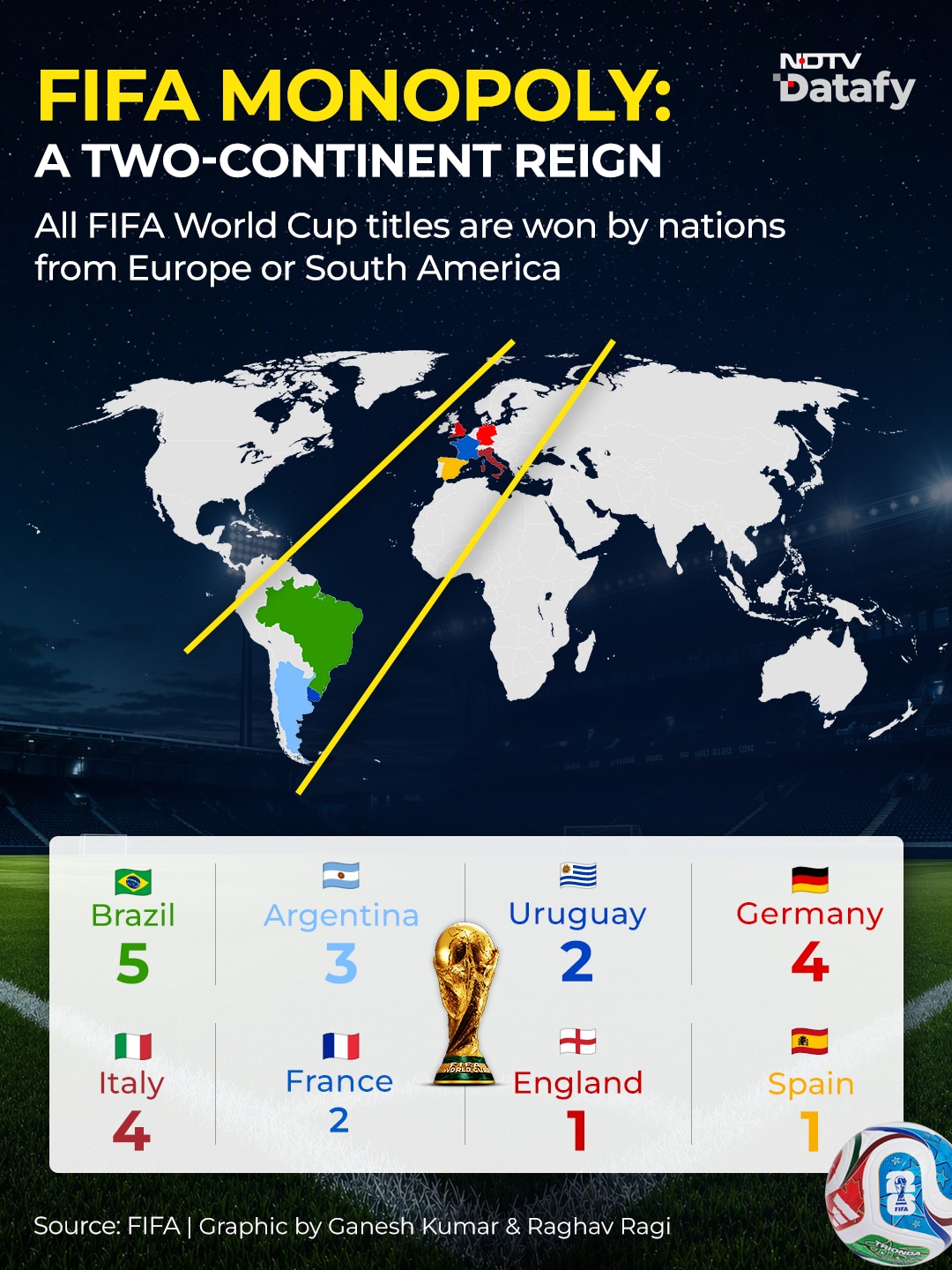
Only eight countries have ever won the FIFA World Cup: Brazil, Germany, Italy, Argentina, France, Uruguay, England and Spain.
This dominance did not happen overnight. Modern football was codified in England in 1863, giving Europe a significant head start in building organised leagues, coaching systems and football institutions. The game later spread to South America through trade, migration and cultural exchange, where countries such as Brazil, Argentina and Uruguay embraced it as part of their national identity.
Those early foundations continue to shape global football today. As outlined in FIFA's historical timeline and talent development documents, decades of investment in coaching, youth academies and domestic competitions have created systems that consistently produce world-class players, according to the FIFA Talent Develoment Report.
According to FIFA's talent development analysis, 18 of the world's top 20 football federations are from Europe and South America. Europe alone accounts for 13, while South America contributes five.
This institutional loop is powered by an infrastructure gap that completely isolates Europe and South America from the rest of the world. According to the FIFA Global Transfer Report 2025, out of an all-time high of $13.08 billion spent globally last year on international transfer fees, clubs under UEFA (Europe) and CONMEBOL (South America) alone accounted for over 85 per cent of that market.
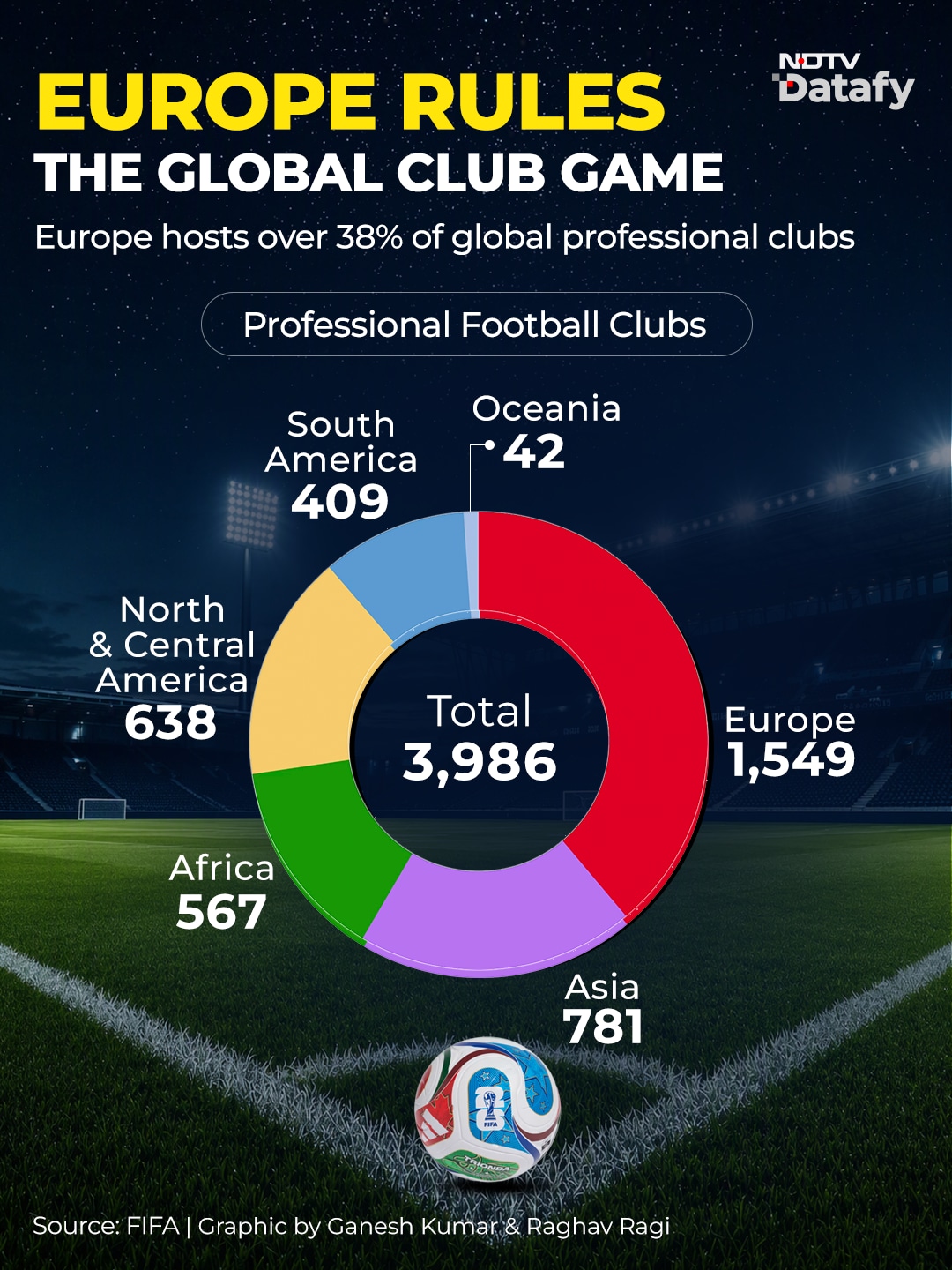
UEFA and CONMEBOL together possess the largest professional football ecosystem, accounting for 1,958 professional clubs and over 80,000 active registered professional players, according to the FIFA Professional Football Report 2023. This concentration of elite clubs and professional players within the European-South American corridor has fostered stronger domestic leagues, advanced player development pathways, and sustained competitive excellence.
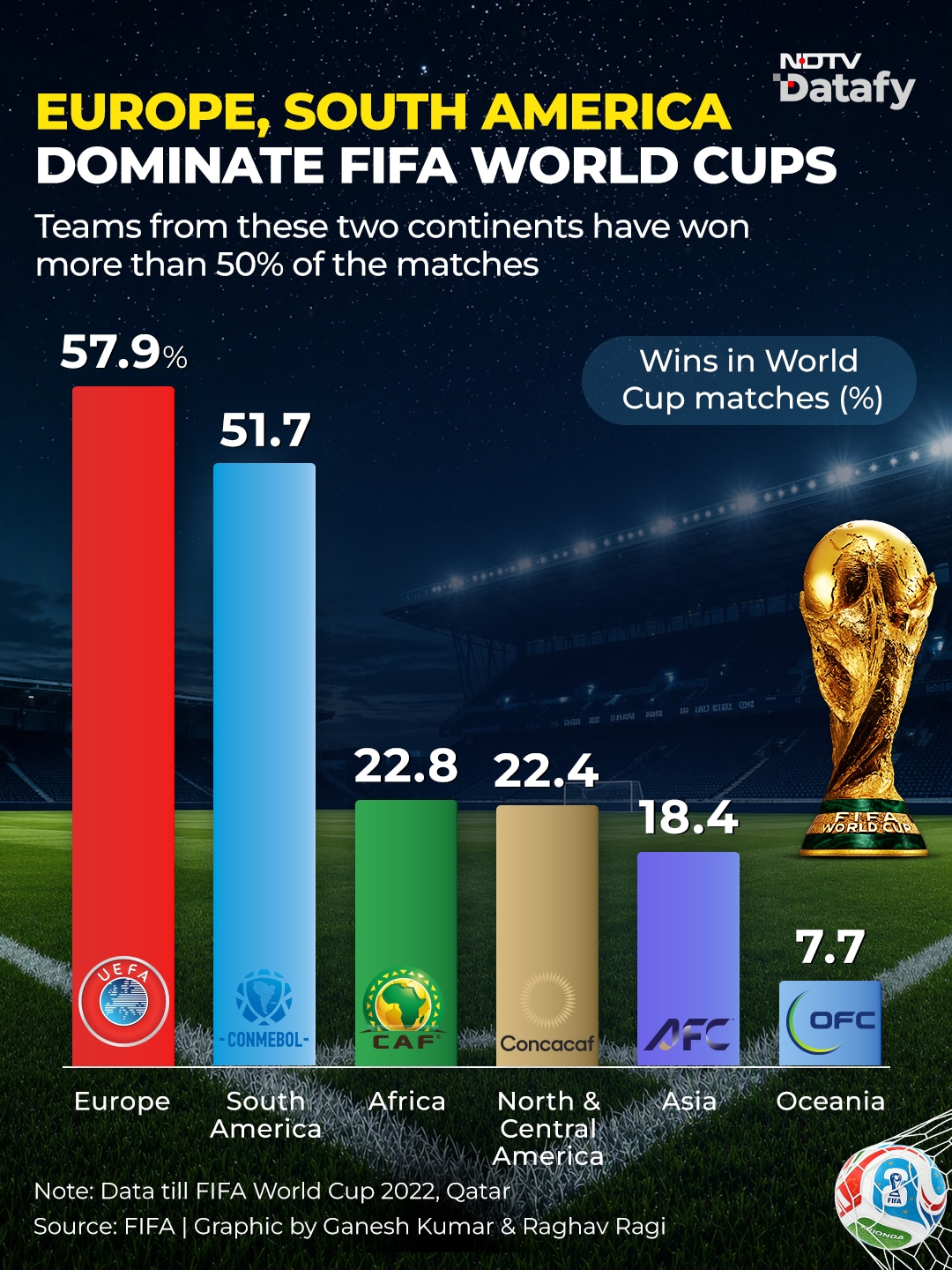
These two confederations have an unparalleled track record. UEFA nations have won nearly 58% of all World Cup matches, while CONMEBOL nations have won more than 51%. Every other confederation trails well behind, underlining the competitive gap that still exists at the highest level.
The 2026 World Cup has once again shown that football is becoming more competitive, with teams from Asia, Africa and North America making deeper runs in the tournament. Yet when it comes to lifting the trophy, Europe and South America continue to set the benchmark.