










Why An English Referee Can't Officiate if Argentina Reach FIFA World Cup 2026 Final
Even in the case of Argentina beating England in the FIFA World Cup 2026 semi-final and making the final, the English referees will be barred from officiating, because of the political sensitivities surrounding the Falklands dispute.
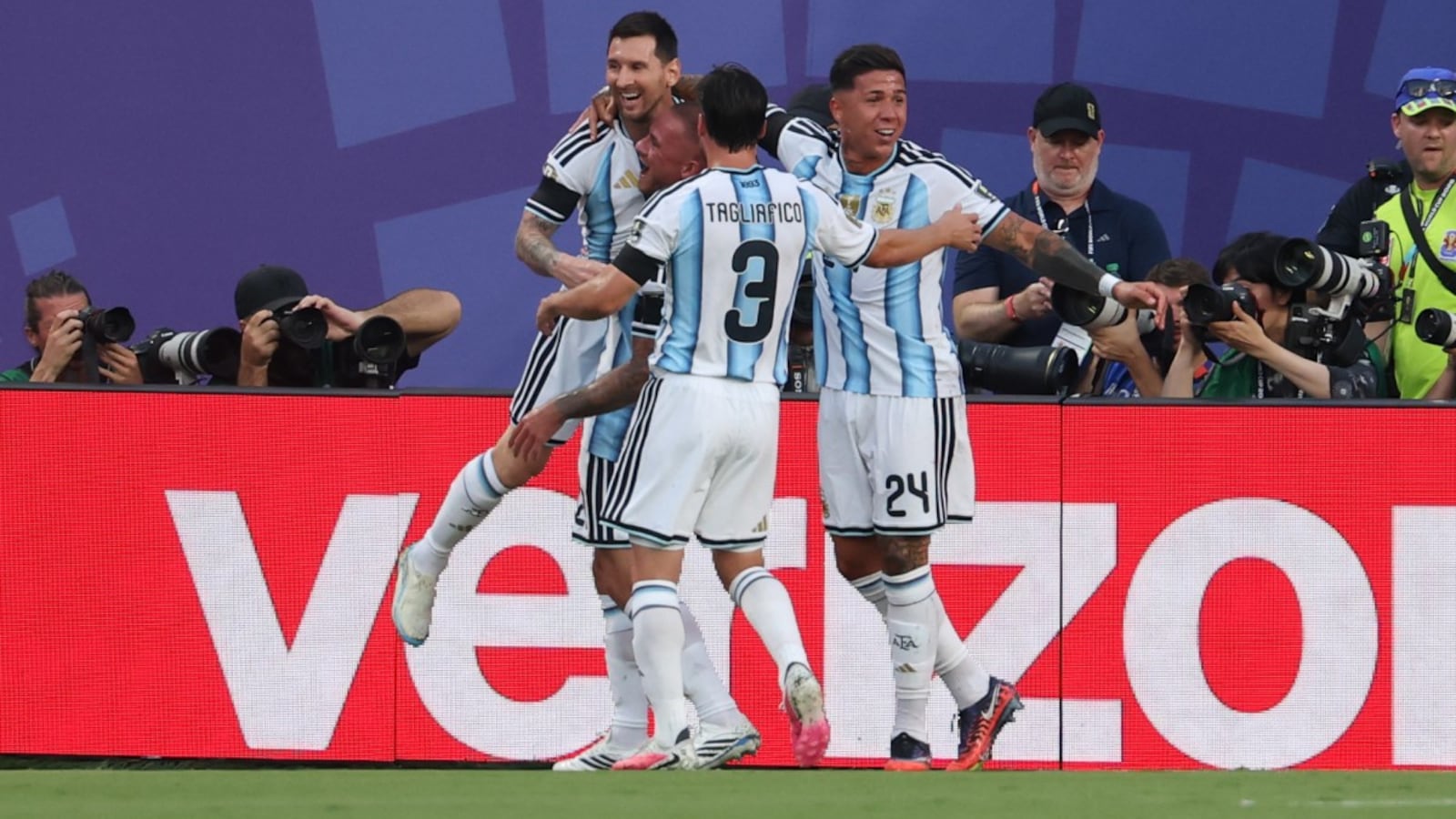
- If Argentina reach the FIFA World Cup 2026 final, there will not be an English referee in charge
- English referees will be barred, because of the political sensitivities surrounding the Falklands dispute
- The legacy of the 1982 Falklands War continues to shape FIFA's referee appointments
Argentina are back in the FIFA World Cup semi-finals. Lionel Messi's side is two games away from another title. But as their run gathers momentum, so do the familiar accusations. Every major Argentina victory seems to trigger another round of debate over refereeing decisions. Social media has once again been flooded with claims that officials have favoured the South Americans. Whether those allegations have any substance is a separate discussion. But if Argentina reach the World Cup final, there will not be an English referee in charge. Here is why.
Michael Oliver holds the rare distinction of being the English referee to officiate the most World Cup games in a single edition. On merit alone, Oliver has strengthened his credentials for the final at MetLife Stadium on July 19. But merit is just one part of FIFA's selection process.
Should Argentina make the final, Oliver and fellow English referee Anthony Taylor would automatically be ruled out.
Now if England reaches the final, it is quite straightforward that they won't be eligible.
But even in the case of Argentina beating England in the semi-final and making the final, the English referees will be barred from officiating, because of the political sensitivities surrounding the Falklands dispute.
The legacy of the 1982 Falklands War continues to shape FIFA's referee appointments more than four decades later.
The Falklands War lasted 74 days in 1982 before ending with Argentina's surrender and Britain retaining control of the islands. The conflict left 649 Argentine soldiers, 255 British servicemen and three Falkland Islanders dead. More than four decades later, the issue remains politically sensitive. Argentina continues to claim sovereignty over the islands, a position reiterated by President Javier Milei.
That is why FIFA takes no chances. The question isn't whether a referee would favour one side. It's whether the appointment could invite questions over neutrality.
The principle extends beyond the final. With England and Argentina on the same side of the draw, English and Norwegian referees were not in contention for Argentina's quarter-final against Switzerland either. The winner of that tie was destined to face England or Norway in the semi-finals, so FIFA removed any possibility of a perceived conflict before the last four had even begun.
For FIFA, the concern is not whether a referee would actually be biased. It is whether appointing one could create that perception.
Because England and Argentina sit on the same side of the draw, referees from England and Norway were not considered for Argentina's quarter-final against Switzerland. The outcome of that match directly influenced England's potential semi-final opponent, making neutrality a factor even before the last four.
The same principle applies across the competition.
American referees are generally not considered for Iran matches, and Iranian officials would likewise not oversee games involving the United States. FIFA routinely factors geopolitical tensions into its appointments alongside nationality.
Referees are also kept away from matches that could directly affect their own country's route through the competition. That is why Oliver and Taylor were not assigned to other matches involving England's group rivals earlier in the tournament.
The philosophy mirrors domestic football.
The same thinking applies in domestic football. Premier League referees are kept away from clubs they support or have strong regional ties to. That's why Michael Oliver, who comes from England's North East, is never appointed to Newcastle United or Sunderland matches.
The World Cup simply applies those principles on a global scale.
Appointments are made on a match-by-match basis by FIFA's refereeing department under the leadership of chief refereeing officer Pierluigi Collina. Performances remain the biggest factor. But politics, geography and competitive neutrality all form part of the equation.
Anthony Taylor found himself in exactly this position four years ago. He had enjoyed an outstanding tournament in Qatar and was firmly in the conversation to referee the final. But the moment Argentina booked their place against France, his chances disappeared.
The same could happen again. If Argentina reach this year's final, neither Taylor nor Michael Oliver will be eligible for the biggest game of the tournament.
 Argentina
 England