










1.4 Billion People Not Enough: Bundesliga Club Stuttgart Explains India's Football Crisis
In an exclusive chat with NDTV, Bundesliga club VfB Stuttgart highlighted India's challenges in football, including lack of culture, early training, and local competition, stressing long-term development and cultural adaptation.
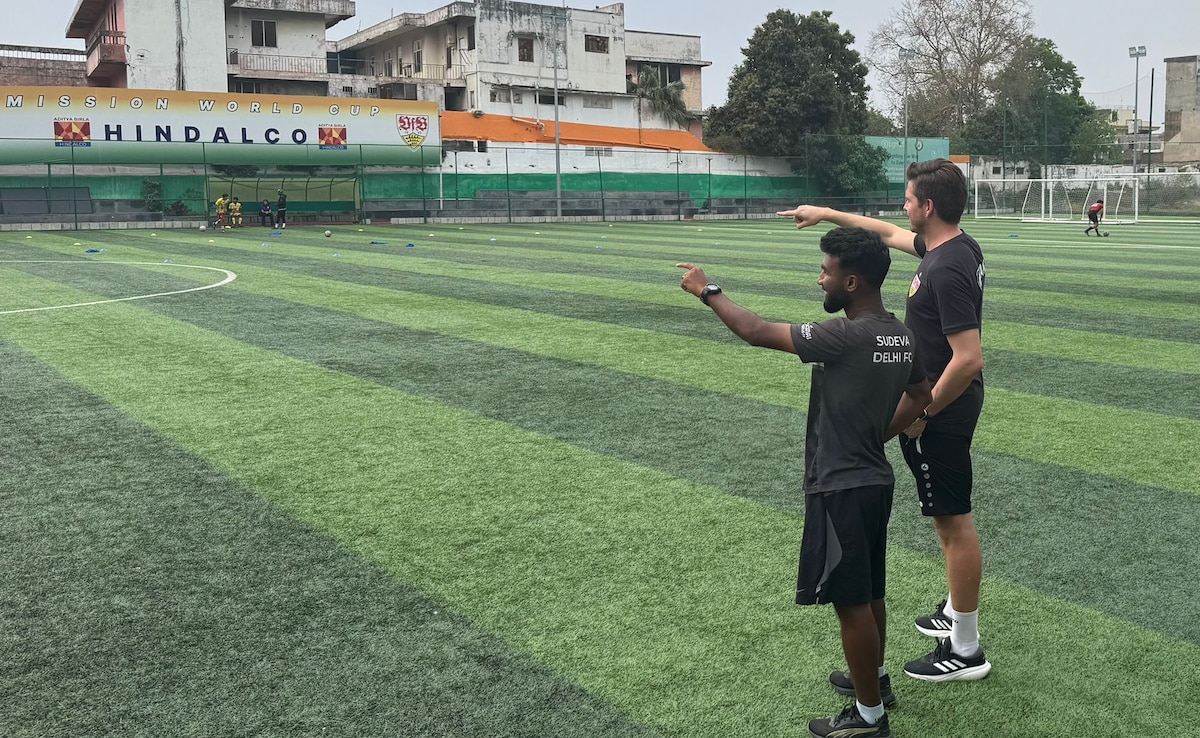
Even the finest of AI models would struggle to decode the problems that exist in Indian football. Why a country with a population of over 1.4 billion people is struggling to produce 11 good players who can take the nation into the FIFA World Cup, despite the competition's recent expansion to 48 teams from 32, remains a pressing question. Bundesliga club VfB Stuttgart's Head of Internationalisation, Simon Gubisch, shared his first-hand experience of India's unique challenges-ones that go beyond the sporting field. The sheer absence of culture, coaches, and competition at the foundation level is what Simon Gubisch sees as the biggest challenge in the Indian football ecosystem at present.
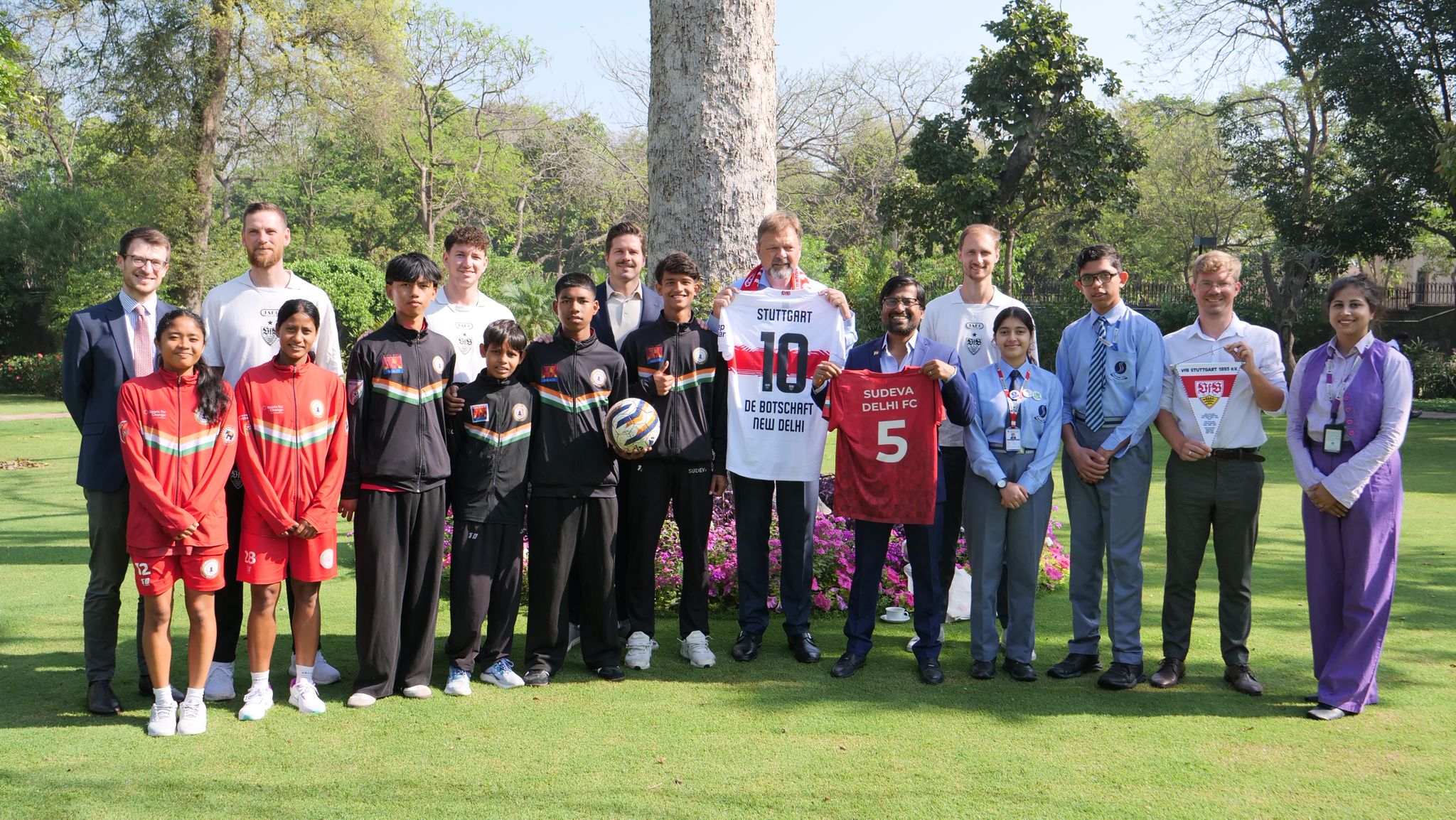
Through a partnership with Sudeva Delhi, a club that currently plays in I-League 2, which focuses on grassroots football, Stuttgart has tried to bridge the gap between Indian and German football, even if only a little. The German club, known for producing top talents like Joshua Kimmich, Mario Gomez, Antonio Rudiger, and Serge Gnabry, is arguably among the best when it comes to nurturing talent.
In their partnership, Stuttgart didn't just offer their expertise in talent development on paper but also sent some of their finest youth academy coaches to Delhi, in the hope of helping Sudeva build a foundation-a structure that accelerates the growth of young aspirants who dream of becoming professionals one day and competing to represent India at a FIFA World Cup.
The road, however, isn't just rocky but also foggy, making it difficult for stakeholders to even see a clear way forward. During a chat with NDTV at the Sudeva Delhi academy, Simon Gubisch reflected on the "challenges" he sees in Indian football and the "hope" he has started to witness as the country looks to realise its long-standing dream of qualifying for the FIFA World Cup.
Q: VfB Stuttgart entered into a partnership with Sudeva Delhi. Why did you choose to invest in Indian football through Sudeva?
Simon Gubisch: At the end of the day, we looked at the Indian market and considered India a key market for VfB Stuttgart for different reasons. Obviously, it is a very important market for the Bundesliga, and we are a Bundesliga club and therefore an ambassador. We understand that there are expectations for us, as an internationally active club, to represent the Bundesliga in markets like India.
We also understand our role in representing the state of Baden-Wurttemberg, the city of Stuttgart, and our partner network. Our partners expect that if they invest money in us, we behave like a global brand.
These aspects led us to consider the Indian market. It wasn't that we directly contacted Sudeva and said, "Let's do this." Through our network and many conversations with different people, we eventually met Anuj Gupta, the president of Sudeva Delhi. He presented his vision, and we presented our ambitions, and in the end, it was a good match.
For us, the core of international business is football because that's our core product. We are good at developing players, developing coaches, and sharing know-how. Sudeva was looking for input-they wanted to grow, learn, and develop-and we were able to provide exactly what they were looking for.
So we entered into a partnership in 2024 with clear ambitions and a vision. It's not just about us coming to India to share knowledge and help develop a quality academy, but also about Sudeva coaches and kids coming to Germany. That intercultural exchange gives young players the opportunity to understand what it means to play for a Bundesliga academy.
I think it's very important that kids have a realistic understanding of where they stand quality-wise. Every kid has a dream of becoming a professional, and it's a huge benefit when they actually see what it takes to reach a certain level.
Now it's the second year of the partnership, and development is happening on many levels-coaching, infrastructure, player quality, and methodology. It's going in the right direction, which is a good sign that we chose the right partner.
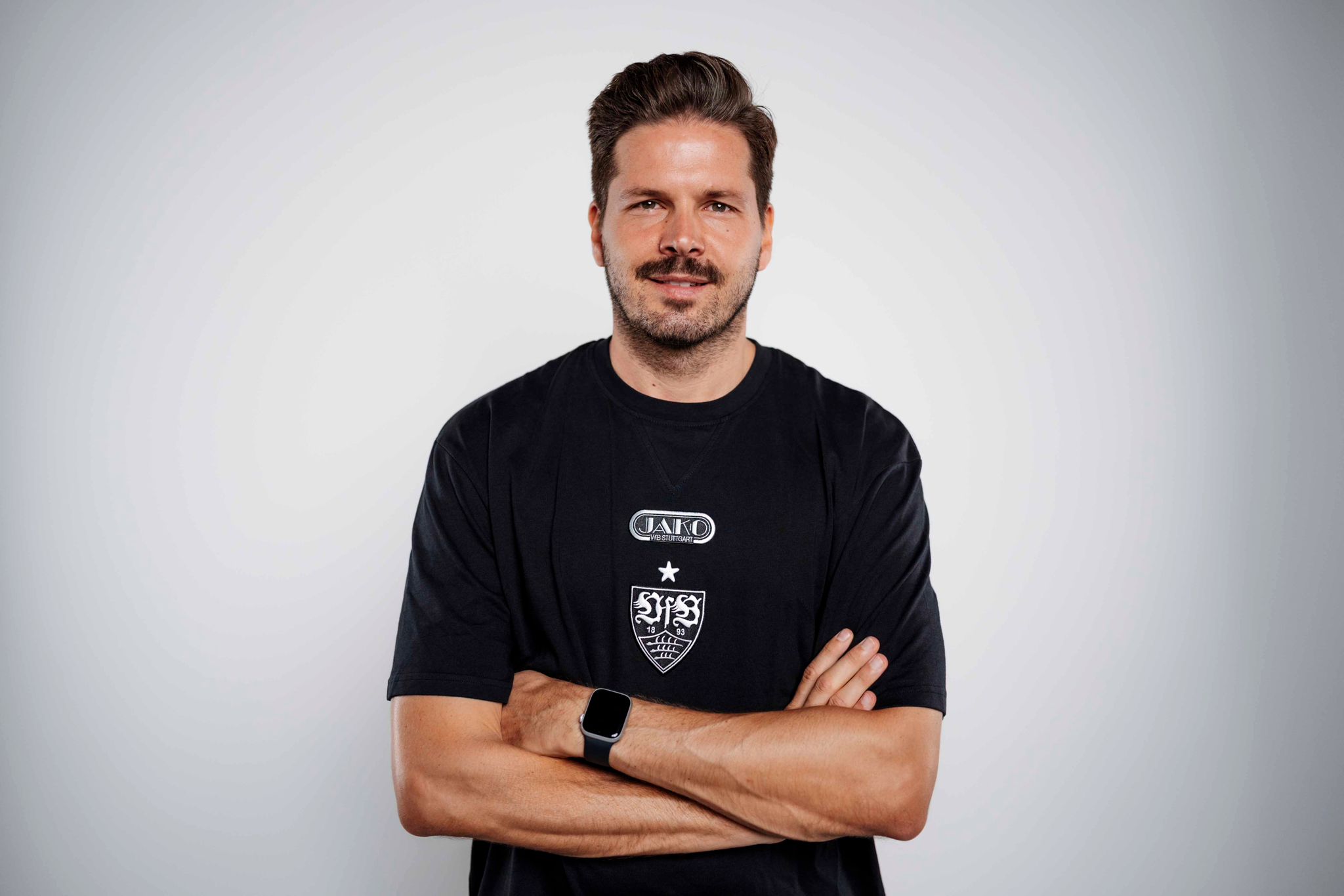
Q: Did you ever consider investing in an Indian Super League club, as some other European clubs have done?
Simon Gubisch: When it comes to investing in leagues like that, it is often more about brand awareness. It's not necessarily about something meaningful, which is what we have here: developing kids and giving them opportunities.
It's also a little different compared to Germany. In Germany, kids in academies usually have stable backgrounds. If they don't make it professionally, they simply play for another local club.
Here in India, it's different. Many kids come from rural areas, and for them this is an opportunity, not just to play football, but to receive education and housing. Football becomes part of a broader support system.
So we were looking for something meaningful-something with a CSR approach that we could truly develop. CSR is a very important topic for us as a club. We know our responsibility as part of the community in Stuttgart, and we want to share those values when we work internationally as well.
Q: How has your experience been working with Indian partners and authorities? How do you see football being operated as a business in India?
Simon Gubisch: When you work internationally as a Bundesliga club, it's always a challenge, no matter the market. You deal with different cultures, people, business practices, and ways of life. For us, it was very important to learn how things work here-how the structure operates, what the requirements are, and what the rules look like.
We believe there is still a lot of room for improvement. When developing kids, one of the most important aspects is competition, local, high-quality competition. These are areas where Sudeva is trying to do a good job, but it also depends on the federation and the national football system.
It's obviously different compared to Germany. In Germany, there are many local clubs, and almost every child plays in an organised, structured system under the federation.
But I wouldn't say everything is bad here. There are different circumstances in India, and there are reasons why football is where it is today. We are just trying to help guide things in the right direction and support football development the way people here want-and deserve-it to be.
Q: There is growing talk about India targeting World Cup qualification in the future. If India were to aim for qualification, say by 2030 or later, what are five or six things that need to improve?
Simon Gubisch: One of the biggest differences is the age at which kids start playing football. This is not just about India-it applies to many markets.
In India, football is not the number one sport-it's second after cricket. That's a huge difference compared to Germany, where football is by far the number one sport.
I started playing football when I was four years old. You play with your friends at home, outside your house, at school during breaks, and after school. In Germany, infrastructure supports this-there are football pitches everywhere. Schools have small pitches, and even small villages have multiple places where kids can play safely.
By the age of 12 or 13, when kids might enter academies, the number of hours played by kids in Germany compared to kids in India is already massively different. That gap is very difficult to close later, even with intense training.
So this is also a cultural issue, and culture cannot be changed overnight. Football needs to grow organically. Kids need to develop the desire to play, and football needs to become more important in everyday life.
If that happens-if infrastructure improves and kids start playing earlier-then the potential is huge. Just look at India's population. If large numbers of children start playing football at a young age, the chances of building a strong national team increase significantly.
The other part is the system itself: What infrastructure do you have? What kind of coaching do you provide? What is the quality of coaches?
There are different coaching styles worldwide, and it's not about copying German coaching. It's about developing your own philosophy and methodology, learning from other countries, but adapting it to the culture and needs of Indian players.
If that happens, India definitely has a chance to develop football into a very successful sport. But this takes time and patience-and as we all know, human beings are not always the best at patience.
That's why I hope our project with Sudeva Delhi continues long-term. With time and consistency, there is definitely a chance to develop quality players.
 VfB Stuttgart