



What Prompted Donald Trump's Intervention In FIFA World Cup? Controversy Explained
Donald Trump's intervention into FIFA World Cup affairs has left a political scar on the tournament that was arguably never witnessed before.
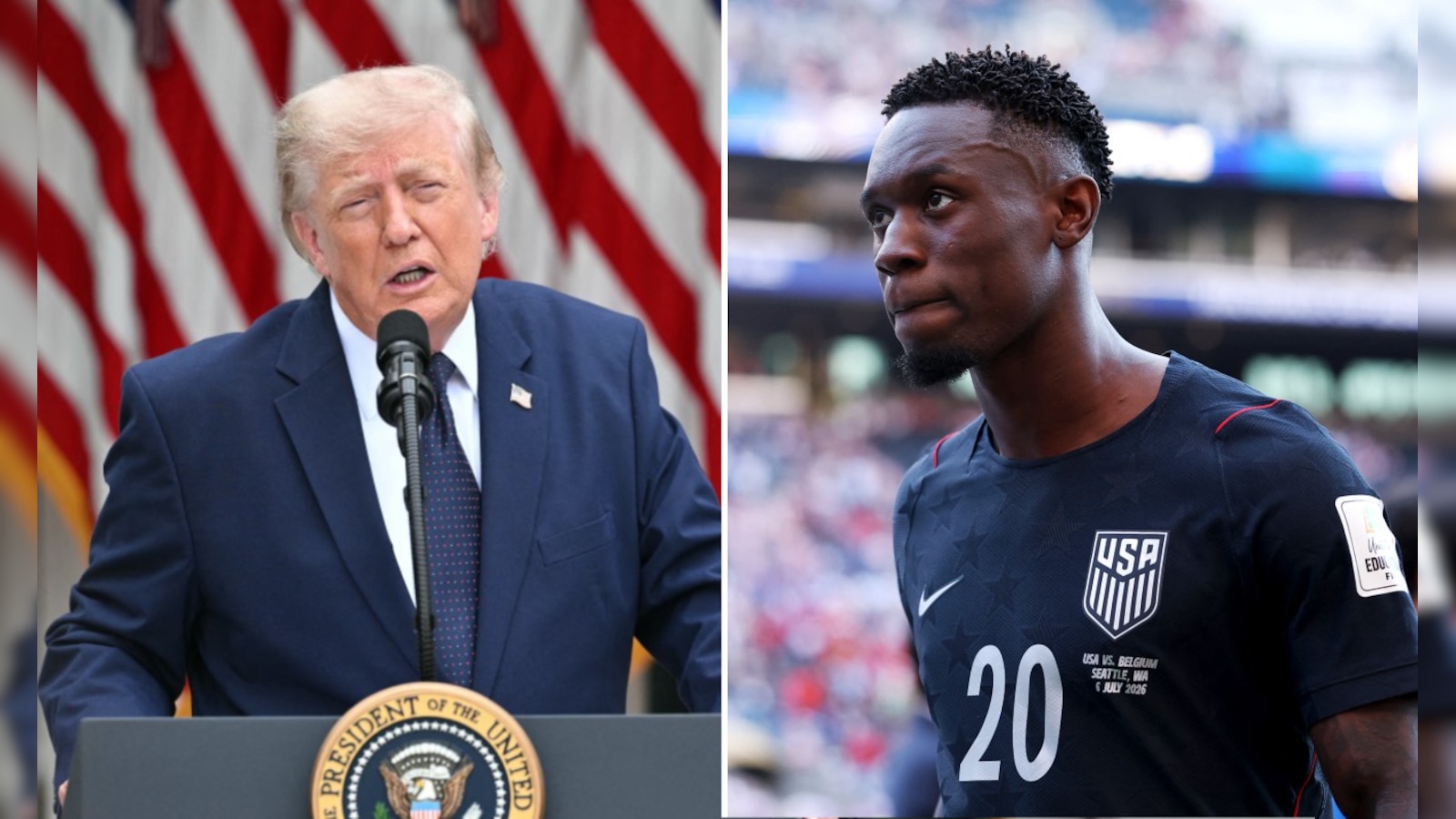
- US forward Folarin Balogun received a red card versus Bosnia, triggering a one-match ban
- President Donald Trump called FIFA chief Gianni Infantino to request a review of Balogun's suspension
- FIFA deferred Balogun's ban for 12 months, allowing him to play against Belgium
The 2026 FIFA World Cup has witnessed goals, assists, splendid saves, and also a few controversies, but nothing prepared the footballing world for the political theatre that erupted ahead of the United States' Round of 16 clash against Belgium. What was meant to be a showcase knockout tie in Seattle turned into a geopolitical firestorm, culminating in a humbling 4-1 dismantling of the US men's national team by a ruthless Belgian side, who looked more fired up for this contest than they have been the entire tournament.
At the centre of the storm was US President Donald Trump, whose unprecedented direct intervention to overturn a standard sporting disciplinary measure has left FIFA facing severe scrutiny regarding its regulatory independence.
The Red Card Incident
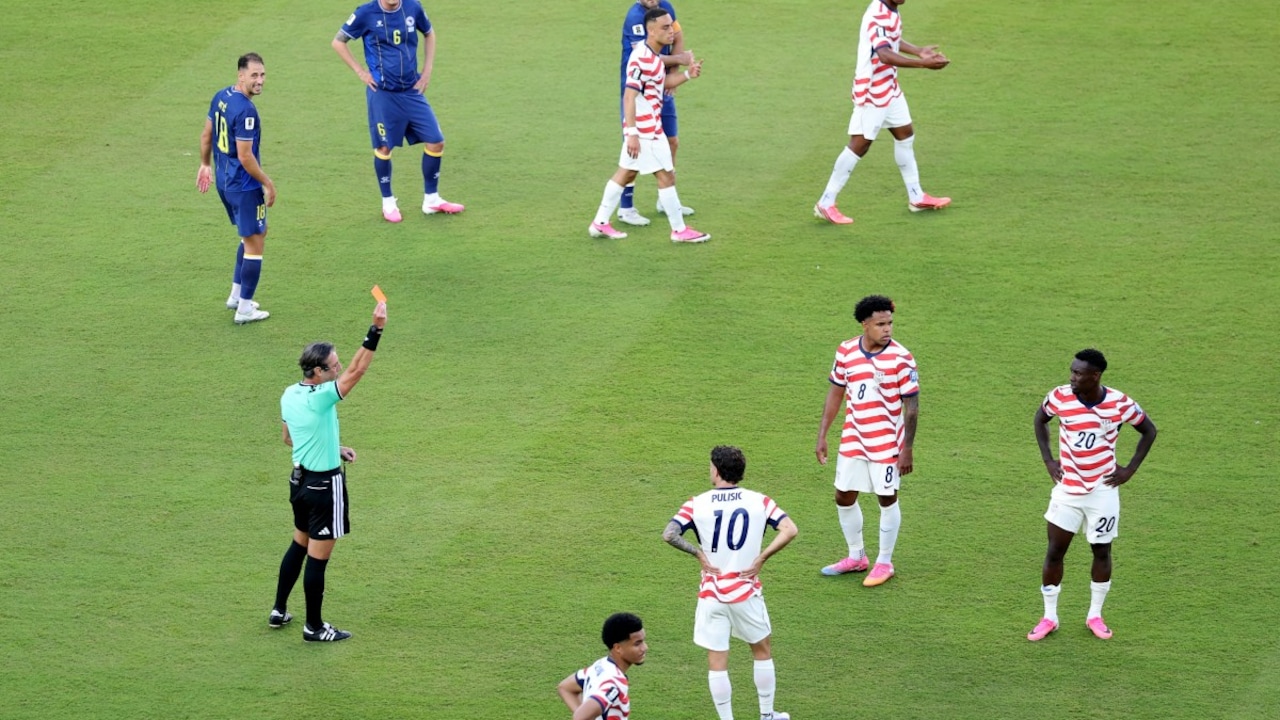
The controversy began during the USA's 2-0 Round of 32 victory over Bosnia and Herzegovina. In the second half, star American forward Folarin Balogun committed a heavy challenge, planting his studs directly onto the ankle of Bosnian defender Tarik Muharemovic. Following a Video Assistant Referee (VAR) review, Brazilian referee Raphael Claus issued a straight red card for reckless challenge.
Under standard tournament regulations, a straight red card triggers an automatic minimum one-match suspension. For the co-hosts, this meant their primary forward would be forced to sit out the high-stakes knockout game against Belgium.
The Donald Trump Intervention
Unwilling to accept the sporting reality, the White House swung into action. President Donald Trump placed a direct phone call to FIFA President Gianni Infantino, asking him to review the decision, as, according to him, it was harsh.
Trump even confirmed reaching out to Infantino during a press briefing and defended his actions.
"I saw the play, and I'm a person that loves sports and was a good athlete. I understand sports really well. That wasn't a foul. That was two guys running full speed that happened to crash into each other. When they take your best player and say he can't play, that's very unfair. How do you penalise them for a game that hasn't been played yet?"
In a move that stunned veteran football administrators, fans, pundits, former players and even coaches of other teams participating in the World Cup, FIFA's disciplinary committee seemingly bowed to the pressure. The result was the sport's governing body putting into use the highly irregular application of Article 27 of its disciplinary code, FIFA announced that Balogun's one-match ban would be provisionally deferred for a 12-month probationary period, clearing him to play against Belgium while imposing a minor fine of USD 40,000.
READ | Balogun Red Card Ro No Excuse For USA Coach After World Cup Elimination
The Backlash
FIFA's decision blurred the line between political and sporting governance, triggering backlash from all corners of the global football spectrum. Even European football's governing body, UEFA, released a hard-hitting statement condemning the world body:
"When the certainty of rules is no longer guaranteed by its guardians, the integrity of the game is at stake, and the credibility of a competition is undermined. A minimum automatic suspension following a red card is not a discretionary option. FIFA has crossed a red line."
Former FIFA President Sepp Blatter weighed in sharply on social media, stating, "Red cards are not overturned by political phone calls. They are overturned by rules, evidence, and independent bodies."
The Royal Belgian Football Association (RBFA) launched a frantic, last-minute legal appeal to contest Balogun's eligibility. However, in a tense bureaucratic standoff just eight hours before kickoff, FIFA's appellate panel summarily dismissed Belgium's challenge on the technical grounds that the Belgian FA lacked standing in the case.
The Aftermath of Controversy
Ultimately, the political intervention did more harm than good. It couldn't protect the United States from sporting reality on the pitch. Balogun, despite being cleared to start, looked entirely isolated, starved of service by a disciplined Belgian midfield and managing just 10 touches in a dismal first half.
Instead, the night belonged to Belgian star Charles De Ketelaere, who silenced the hostile American crowd with a brilliant, clinical first-half brace. While Malik Tillman's first-half goal gave the co-hosts hope of a comeback, Belgium remained relentless in the second half too. Hans Vanaken capitalised on a catastrophic defensive error to score a third before substitute Romelu Lukaku hammered the final nail into the coffin with a stoppage-time goal to seal the 4-1 rout.
USA's impressive run in the FIFA World Cup 2026 came to a harrowing conclusion, and the entire FIFA-Donald Trump red card row does seem to have played a role.
 United States