PV Sindhu Exclusive: On Gold Ambitions, Virat Kohli's Advice And Life Beyond Badminton
NDTV caught up with the superstar ahead of the Asian Games, who talked about advice from Virat Kohli, using the Trunome device, and her husband's special gift.
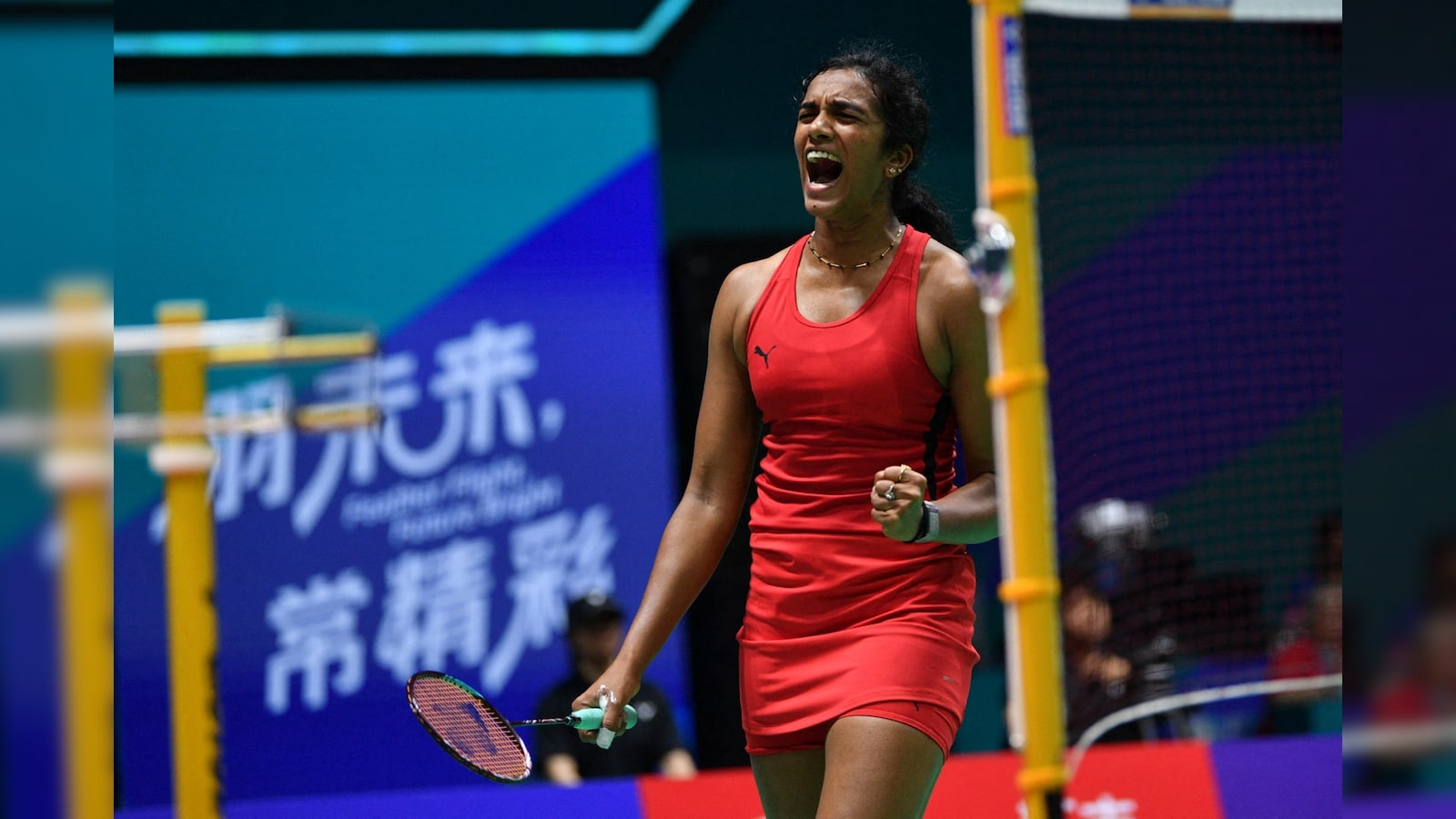
- PV Sindhu won her second Olympic medal in Tokyo during the 2020 Olympics
- Sindhu is aiming for gold at her fourth Asian Games after winning bronze and silver before
- Sindhu emphasized smart training and body management after multiple injuries
For PV Sindhu, Japan is a happy hunting ground. It was here that the badminton legend won her second Olympic medal. Back in July 2026, Sindhu beat local favourite Akane Yamaguchi in straight games and clinched her maiden BWF Super 750 title at the Japan Open 2026. This time, the veteran is here for the 2026 Asian Games. Having won a bronze medal at the 2014 Incheon Asian Games and a silver at the 2018 Jakarta edition, Sindhu is eyeing gold at her fourth Asian Games. NDTV caught up with the superstar, who talked about advice from Virat Kohli, using the Trunome device, and her husband's special gift.
Q: We are in Japan and we are in the happy hunting ground of the athlete I am sitting with right now, PV Sindhu. It was your second Olympic medal that you won here in Tokyo, during the COVID Olympics. Tell us a little bit about coming back to Japan, Sindhu.
A: Well, it's nice to be here in Japan. I'm really looking forward to the competition, and I hope I do well here and come back with a medal.
Q: When you come back to a venue where you have already won a medal and experienced success, how does that feeling translate into a major event like this?
A: Actually, this is a new venue. When we came to Japan for the Olympics, we played in Tokyo, but this time it's in Nagoya. It's a different stadium altogether. We had our first practice session, and it has been quite good. The overall atmosphere is great. It's an Asian Games venue, so athletes from different sports are here, and we compete both as individuals and as a team. It's a different feeling altogether.
Q: Are you already feeling the Asian Games buzz and vibe?
A: I've reached a bit late. I landed yesterday, and today was my first practice session. In badminton, especially in the women's team, we all come together and play as a unit. Generally, badminton is an individual sport, so we don't often get opportunities to compete in team events. That's what makes tournaments like the Asian Games special.
Q: This time there is no traditional Games Village. Athletes are staying in cruise ships, cabins, and hotels. What do you make of that?
A: It's sad that there is no village this time. Usually, at the Asian Games, Commonwealth Games, or Olympics, you get to interact with athletes from different sports and countries. You get to see some of the world's best athletes in one place, and those interactions are always special. This time, athletes are staying in different locations and competing at different venues, so that experience is missing. It's unfortunate, but we have to adapt because everything has already been decided.
Q: At this stage of your career, after dealing with several injuries, is it more about managing your body than making technical adjustments?
A: I think it's both. But yes, managing your body is very important. Sometimes you may not be able to give your 100%, and there's nothing wrong with taking a break or telling yourself that it's okay. You can always come back stronger the next day or train more smartly. Training smartly is very important because I'm not 19 or 20 anymore. Once you're past 30, it becomes essential to take care of your body and work in a much smarter way.
Q: You've been using the Trunome device for over a year now. What kind of readings does it provide, and how does it help your training?
A: Trunome is very accurate when it comes to monitoring heart rate, HRV, sleep, cognitive load, physical strain, and recovery. It's important for an athlete to understand all these aspects. It helps me assess how much strain I'm under, how focused I am, and how well I've recovered. Every athlete is different, so these insights help me decide what I should or shouldn't do in training.
Q: You won an Asian Games medal as a teenager in Incheon and then a singles silver in Jakarta. What about gold this time?
A: Absolutely, why not? I'm all set and ready. I have to give my best regardless of the circumstances. Every day matters, irrespective of the draw, and I'll make sure I give 100% every time I step on court.
Q: Who do you think will be your toughest opponent, and how close do you think you are to a gold medal?
A: We only have the draw for the team event so far. The individual draws will come next week. In the team event, we face Kazakhstan first, and if we win that tie, we'll face Japan, which will be tough. There are a lot of strong players in the tournament. My main aim is to contribute a point for my team and create a positive impact.
For the individual event, it will be a very tough tournament because the top Asian players will be there, including athletes from China, Japan, Korea, and Thailand. Every match will be challenging right from the first round.
Q: This is your fourth Asian Games. What role do you play in the team setup?
A: That's for my teammates to decide, but as an experienced player competing in my fourth Asian Games, I do feel a sense of responsibility. Whether it's being a role model or supporting the team, I try to contribute. I share my experiences with the younger players, guide them on how to approach matches, and help them learn from mistakes.
Q: We saw you interacting with Virat Kohli last year. What advice did he give you?
A: Yes, I was going through a difficult phase at the time. I had injuries, was making a comeback, and was losing in the early rounds of tournaments. When I met Virat, we spoke about what I was going through. He told me to simply enjoy playing badminton and enjoy the sport.
That really struck me. Sometimes you'll play well, and sometimes you won't. What matters is continuing to enjoy the game. We also discussed how important it is to remember that your opponent is working just as hard as you are. When you step on the court, focus on playing your game and enjoying the process. That conversation really changed my perspective.
Q: What strategies have you adopted to deal with younger opponents?
A: Younger players are definitely quicker and faster, and many talented youngsters are coming through the system. But experienced players have other advantages. We know how to handle pressure, both mentally and physically. We understand how to manage difficult situations. So while younger players may have speed and power, experience can be a major advantage as well.
Q: I noticed your shuttlecock-shaped earrings. Is that your way of carrying a piece of badminton with you?
A: (Laughs) Actually, these were gifted by my husband. I really like them.
Q: Finally, what message would you like to give NDTV viewers and your fans ahead of the tournament?
A: I'm sure many fans are here in Japan supporting me, and there are plenty of Indians cheering as well. To everyone back home, thank you for your constant love and support. Please continue supporting me. I hope I do well, and I promise to give my best and give 100% on court.
Q: We'll be supporting you all the way for a gold medal.
A: Thank you.
 PV Sindhu