Back After Six Decades: Historic Mile Set For Commonwealth Games Revival, With Women's Debut
Sixty years after disappearing from the Commonwealth Games programme, the sport's most romantic race is back, inviting a new generation to chase a piece of history.
Some races become bigger than the medals they award. The Mile is one of them. It is the distance that gave athletics the elusive four-minute barrier, the immortal "Miracle Mile" and two enduring names in Roger Bannister and John Landy. Sixty years after disappearing from the Commonwealth Games programme, the sport's most romantic race is back, inviting a new generation to chase a piece of history.
Its return in Glasgow is more than a nostalgic throwback. For the first time in Commonwealth Games history, women will also compete in the Mile, ensuring that the revival celebrates not only the past but also how far the sport has travelled.
Replacing the traditional 1500 metres, the Mile returns to the Games for the first time since 1966. Measuring 1,609.34 metres -- 109.34 metres longer than the Olympic-standard 1500m -- it occupies a unique place in athletics as the only imperial distance for which World Athletics officially ratifies world records.
From the inaugural Commonwealth Games in 1930 until 1966, the Mile was the blue-riband middle-distance event of the competition. Over the decades, races over the distance acquired names that reflected their place in sporting folklore -- the Miracle Mile, the Dream Mile, the Golden Mile and the Mile of the Century.
Its mythology was cemented at the 1954 Commonwealth Games in Vancouver.
England's Bannister had become the first man to break the four-minute barrier just two months earlier.
Australia's Landy soon followed, setting up one of the most anticipated duels in athletics history between the world's only two sub-four-minute milers.
What unfolded became known simply as the "Miracle Mile".
Landy led almost from the start and still held the advantage entering the final bend.
Then came the moment immortalised in one of sport's most famous photographs.
With around 90 yards remaining, Landy glanced over his left shoulder to check Bannister's position. At that exact instant, Bannister surged past on the right before pulling away to win in a Commonwealth record 3:58.8.
Landy also dipped under four minutes, clocking 3:59.6, making it the first race in which two athletes broke the barrier in the same contest.
More than seven decades later, Glasgow hopes to reconnect with that glorious chapter by restoring the Mile to the Games programme.
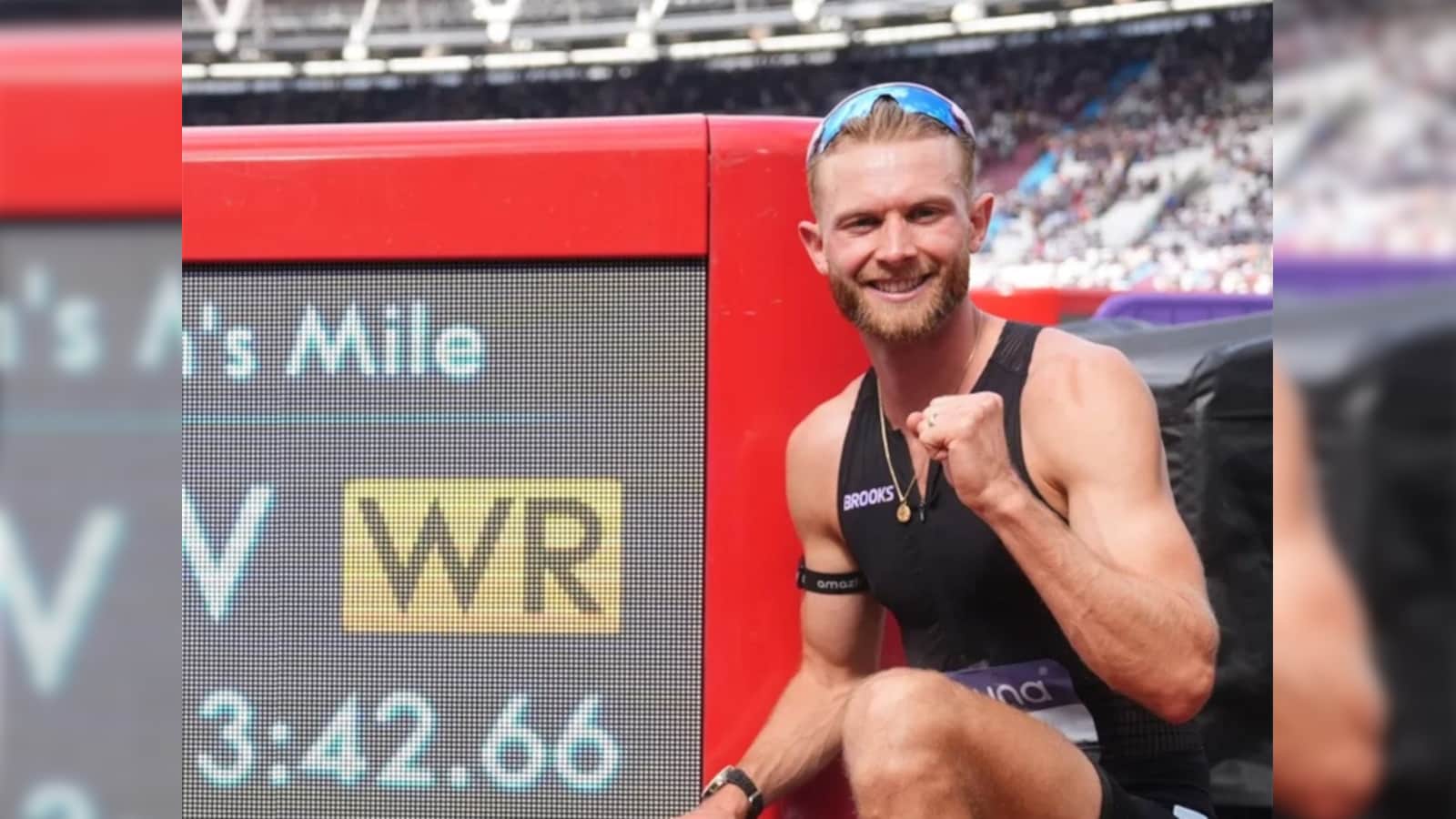
The presence of Scotland's new world record holder Josh Kerr only adds to the anticipation.
Kerr recently lowered the men's Mile world record by half a second, eclipsing the 27-year-old mark set by Moroccan great Hicham El Guerrouj in 1999, and the home favourite is relishing the chance to race before a Scottish crowd.
"It's going to be very nostalgic to be back and to have family in the crowd as well. Back in the day they'd be there with a picnic of sandwiches, spending the whole day at Scotstoun.
"And I was picking all sorts of distances to run for me and my brother. There'll be javelin and high jump and all sorts in the records. A well-rounded athlete winning team points; it was all about team points. It's an absolute honour to go back and represent Scotland there," Kerr said.
The return of the Mile was championed by World Athletics president Sebastian Coe when Victoria was originally due to host the 2026 Games before the Australian state withdrew.
"The One Mile is the quintessential Commonwealth athletics event whose return to the Games in Glasgow 2026 I very much welcome," Coe had said.
"The event's place in international sporting lore was secured when Sir Roger Bannister broke the four-minute barrier in May 1954. Ever since, the world has enjoyed the Miracle Mile, the Golden Mile, the Dream Mile and countless other similarly dubbed races over the distance." Glasgow's Mile is not only about honouring history.
For the first time, women will race over the iconic distance at the Commonwealth Games, adding a new chapter to an event long defined by Bannister, Landy and the mythology of the men's race.
The Mile itself predates modern athletics by centuries. Standardised as 1,760 yards through an Act of the English Parliament in 1593, it became a popular distance for wagering contests before emerging as one of track and field's marquee events in the late 19th century.
Although the 1500 metres eventually replaced it as the premier championship middle-distance race, the Mile never lost its mystique. The four-minute barrier remained one of sport's most celebrated frontiers and the distance continued to serve as a benchmark of middle-distance greatness.
No one expects Glasgow to recreate the drama of Vancouver in 1954. Some moments belong to history alone.
But for the first time in six decades, the Commonwealth Games will once again crown Mile champions. And for the first time, a woman's name will be etched alongside the men who made the imperial distance immortal. PTI APA APA AH AH
(Except for the headline, this story has not been edited by NDTV staff and is published from a syndicated feed.)