








FIFA World Cup: Breel Embolo Red Card Explained As Controversial VAR Call Rescues Argentina Again
Switzerland's Breel Embolo was sent off after receiving a second yellow card for simulation. The decision was taken after yet another VAR intervention in an Argentina match at the FIFA World Cup 2026.
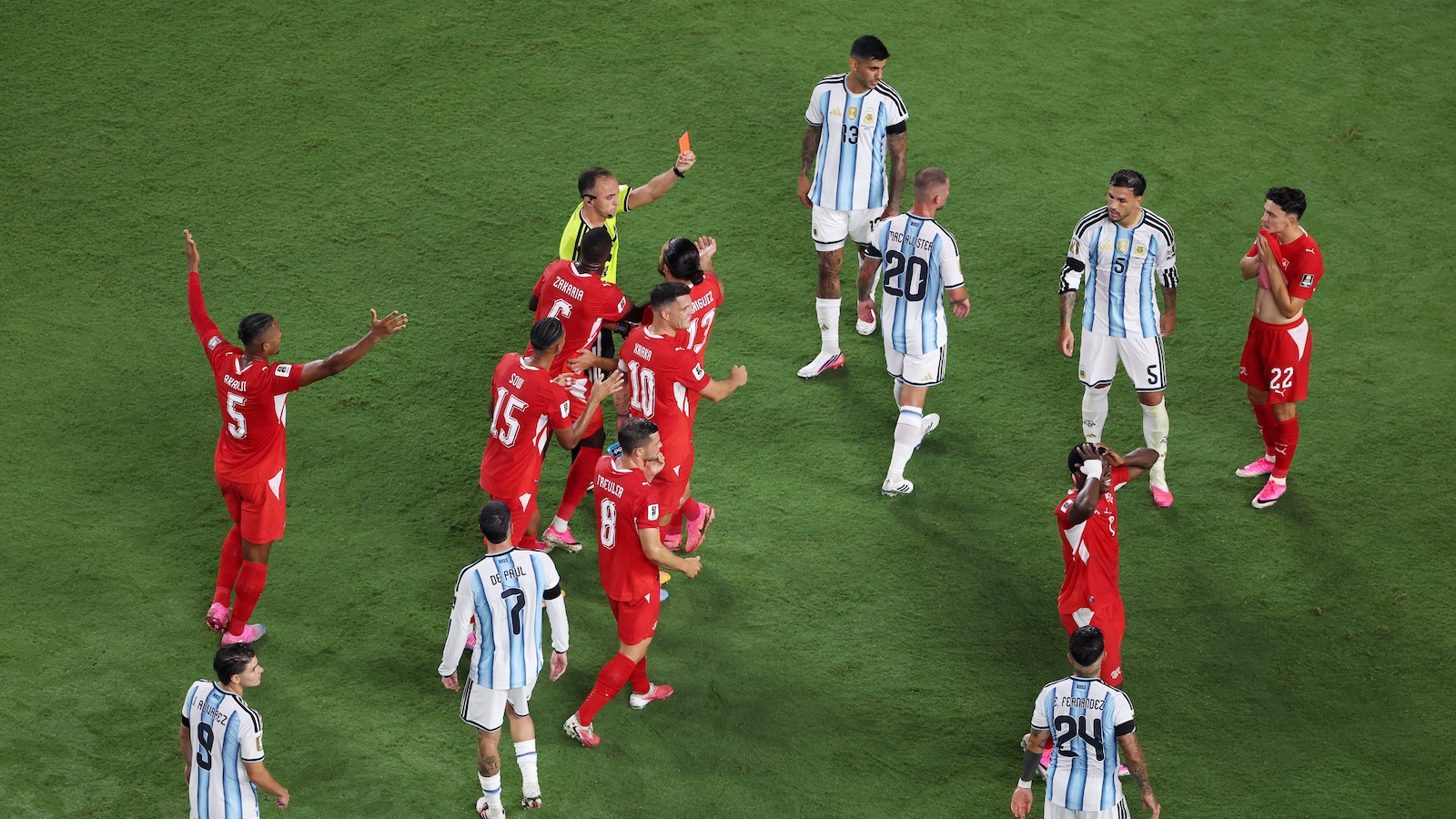
- Lionel Messi's Argentina benefited from a controversial VAR decision against Switzerland in the 2026 World Cup
- Swiss player Breel Embolo was sent off after receiving a second yellow card for simulation during the match
- The referee rescinded a yellow card for Argentine Leandro Paredes before booking Embolo for simulation
Not for the first time this tournament, Lionel Messi's Argentina benefited from a highly controversial VAR (Video Assistant Referee) decision, after Switzerland's Breel Embolo was sent off in the second half of their FIFA World Cup 2026 quarter-final match on Saturday. The drama unfolded when Argentina's Leandro Paredes was initially booked for what appeared to be a rash challenge on Embolo. However, the VAR team intervened, suggesting that the yellow card for the Argentine midfielder was unfair and should be overturned, prompting referee Joao Pinheiro to review the footage on the pitchside monitor. What followed triggered yet another massive refereeing controversy involving Argentina at this World Cup.
After a thorough review, Pinheiro concluded that Paredes had committed no foul and rescinded his yellow card. Crucially, however, immediately after cancelling Paredes' booking, the Portuguese referee decided to issue a yellow card to Embolo for simulation.
Such a decision might have passed without major incident had the Swiss forward not already been booked for a challenge earlier in the game. The entire Switzerland team vehemently protested the decision, while a distraught Embolo seemed to beg the referee not to ruin the match by sending him off. Embolo was reduced to tears as he was eventually led off the pitch by his teammates so play could resume.
Booking a player for a second time in a match purely for simulation is an exceedingly rare sight. For many on social media, the decision was incredibly harsh, instantly reigniting the fierce online debate surrounding VAR decisions allegedly favouring Messi's Argentina.
Leandro Paredes NEVER touched Embolo.
— GoalAlert HQ (@GoalAlertHQ) July 12, 2026
Correct decision by the referee. Embolo already had a yellow card, and received a 2nd yellow card for diving: Red card.pic.twitter.com/nAQs1tVxdG
The IFAB Rule on Simulation
According to the IFAB (International Football Association Board) Laws of the Game, simulation falls strictly under the category of Unsporting Behaviour. The rule book dictates that a player must be cautioned (shown a yellow card) if they are found guilty of attempting to deceive the match officials.
Under Law 12 (Fouls and Misconduct), Section 3: Disciplinary Action, the rules explicitly state that a caution for unsporting behaviour must be issued if a player: "...attempts to deceive the referee, e.g. by feigning injury or pretending to have been fouled (simulation)."
Is a Second Yellow Card for Simulation Common?
Receiving a second yellow card strictly for simulation is highly uncommon in professional football. While the regulatory framework clearly marks diving as a cautionable offence, it rarely results in a second yellow and subsequent dismissal due to several tactical and structural factors.
Referees generally maintain a much higher threshold when issuing a second yellow card, fully aware that reducing a team to 10 men drastically alters the dynamic of the match. While an official might quickly brandish a standard caution for a reckless tackle or for breaking up a promising counter-attack, they are historically hesitant to dismiss a player for a subjective, non-violent infraction like diving.
However, as the fiery Argentina vs Switzerland quarter-final proved, historical leniency counted for nothing under the clinical eye of modern video review.
In fact, Embolo is the fourth player on record to receive a second yellow card for simulation in the FIFA World Cup history, and the first since Asamoah Gyan for Ghana vs Brazil in 2006.
 Argentina
 Switzerland